Search
Search
Medical Education and Clinical Outreach
Overview
Medical Library Programs, integrated within the Research Services Department, provides specialized research assistance and instructional support for the UCR School of Medicine, which includes the Doctor of Medicine (MD), Graduate Medical Education (Residency, Fellowships), MS/PhD in Biomedical Sciences, and Master of Public Health (MPH). Offering expert guidance in navigating the complex landscape of biomedical literature and evidence-based resources, we support students, faculty, staff, and clinicians at the School of Medicine.
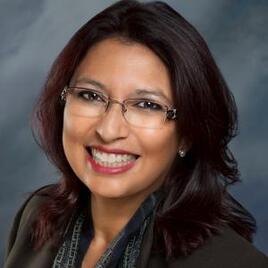
Elisa Cortez
Elisa's main responsibility is to support, develop and implement instructional, outreach and liaison services that support the needs of the faculty, students, staff and affiliated faculty and clinicians of the School of Medicine.
Elisa earned her Master of Information and Library Studies (MILS) from the University of Michigan. Elisa joined the Library in 2018.
Subject Specialties
- School of Medicine
Medical Education and Clinical Outreach Librarian
Collections
African American Life & Culture
Print and electronic resources highlighting the pivotal sociological, literary, and artistic achievements of people of African descent in America.
Chicano/Latino Studies
Resources on Chicano/Latino ethnicity, gender and sexuality, demographics, migration and diaspora communities.
How Do I Find - K-12 Curriculum Materials
Curriculum materials include
History/Social Sciences Instructional Materials Now Available for Review
California’s textbook adoption process is ready to take its next step forward – but first, the State Department of Education needs your input.
All of the History/Social Science instructional materials currently up for consideration are now available in Room 217, the Learning Resources Display Center (LRDC), on the second floor of Tomás Rivera Library. These materials are intended for use by elementary and middle school students, ranging from kindergarten through eighth grade.
“The LRDC provides a way for all interested parties to have some input into the textbook adoption process,” said Christopher Martone, UCR Library’s Coordinator of Education Services and one of the State Board-appointed reviewers for History/Social Sciences instructional materials.
“If you want to review any of the materials, you can make an appointment to meet Christopher in Education Services,” explained Christina Cicchetti, Education / Reference Librarian. “He will make the materials available for your review.”
This invitation is open not just to educators but also to interested students, faculty, staff, and community members. After reviewing the materials, patrons can submit their comments directly to the California State Department of Education by following these instructions.
“California has a network of Learning Resource Display Centers throughout the state,” Cicchetti added. “We serve Riverside County specifically, but anyone could come from anywhere to use our LRDC.”
Each LRDC can choose whether they want to display the materials while they are being reviewed, or only after the state's adoption has been approved. In the inland southern California region, UCR Library's LRDC is the only one that has instructional materials currently under review. “The next closest LRDCs that have materials under consideration for adoption are in Ventura, Santa Barbara, or San Diego,” Cicchetti said. “San Bernardino County and Cal State Fullerton are post-adoption only.”
In addition to evaluating instructional materials during the review process, school district personnel can also come to the LRDC after the adoption has been finalized. They can review the wide variety of approved textbooks to determine which ones to use in their classrooms.
Maker Week
Glad Giving at UCR Library
The holiday season tends to inspire a spirit of giving and goodwill. Access Services Desk Supervisor Leslie Settle has discovered a way to extend that magnanimous feeling throughout the whole year.
It began five years ago, when Leslie first heard about the Guardian Scholars Program during a Staff Assembly. “I recognized one of the students in their advertisement photo as someone who comes to the front desk all the time,” Leslie explained.
Connecting a familiar face to the mission of Guardian Scholars is what inspired Leslie to make a monthly donation to the program via payroll deduction. “When I was a student here, I never knew that UCR did this,” Leslie said. An alumna of UC Riverside (class of 2006, B.A. in Political Science and Ethnic Studies, and 2009, M.A. in Public Administration), Leslie understands well the demands of student life.
Learning about what the Guardian Scholars Program does was eye-opening in many ways for Leslie. “I didn’t know that kids in the foster system get completely cut off when they turn 18, so it’s like becoming homeless all over again,” she explained. “I thought to myself, ‘That isn’t right and I must help.’ A lot of these scholars are young, single parents, and they’re trying to go to school and take care of their family at the same time. I remember as a student having no home to go home to, since my mother was homeless. And now that I’ve been blessed, I want to help by blessing others.”
“The Guardian Scholars Program provides housing for them, it gives them school supplies, and money for things like going to the movies with their kids,” Leslie continued. “Some of the Guardian Scholars will write a personal thank-you note and send it to your house. Some will even send you pictures of their kids. It’s very sweet.”
“Guardian Scholars is among a few of the popular, ‘feel good’ programs that UCR staff and faculty can donate to,” explained Lily Barger, Director of Annual Giving. Lily stated that others include R’Pantry, Scholarship Assistance, the Living the Promise fund, and R’Garden.
“The R’Garden is a great link between the community and the university,” said Lily. “People who live in Riverside can get a plot in the garden. Food grown there goes to the families, to the UCR Food Pantry, and to a few local food pantries, as well.”
“It blesses me to give because I love helping people. I know without help, I would not be where I am today,” Leslie explained. “I felt like I could do more, so I told some coworkers about Guardian Scholars. A few others signed up to give, too, because of what I had shared, which was great to see. And giving to UCR is so easy – one form to fill out, and you never have to think about it again.” In addition to giving to the Guardian Scholars Program, Leslie also donates each month to Society 54, which supports the UC Riverside Staff Assembly.
If you feel inspired by Leslie’s story, there are many programs that could use your support. You can learn more about the different ways to give to UCR, or speak with any member at UCR’s Office of Development to learn about how to participate in the Faculty and Staff Giving Campaign.
“The library would be thrilled to be a leader on campus, not only in our services, but also in our sense of community, spirit, and campus-wide support,” said Samantha Lang, Director of Development for Campus-wide Initiatives, “The library would love to achieve 100% participation in the Faculty and Staff Giving Campaign, which is part of UCR’s Living the Promise Comprehensive Campaign. And ‘participation’ can be a simple, one-time $25 donation to anywhere on campus, not just the library.”
An added bonus is that each donation counts as a charitable deduction come tax season. “This is a great alternative to giving just at the end of the year,” Leslie explained. “If everybody who works at UCR gave a little each month, we could raise millions of dollars each year.”
Special Collections & University Archives Reproductions Policy
Submit Reproduction Requests
Submit requests for scans as “Reproduction Orders” in the Special Collections Request System. Scans will be delivered electronically to your Request System account.
A flag – and a story – for every hero
Volunteers at Riverside National Cemetery’s annual “A Flag for Every Hero” event on Memorial Day weekend 2019 can now read biographies for many of the Veterans whose graves they adorn with flags, thanks in part to the work of two UCR Library employees.
When UC Riverside partnered with the U.S. Department of Veterans Affairs National Cemetery Administration’s Veterans Legacy Program on a multi-year, federally-commissioned project called Along the Chaparral: Memorializing the Enshrined, Principal Investigator Allison Hedge Coke asked Data Librarian Kat Koziar to build the foundation for the project’s data management, and Special Research Projects Director David Rios to assist with local history and archival genealogical research.
Project funding comes from contracts totaling nearly $700,000 over three years, beginning on Feb. 27, 2018.
“It’s important that we recognize that people who served in the military who are interred in RNC – that they had a life beyond the military – and that’s what we’re trying to capture,” Koziar said.
“It was a project that mattered to me,” Hedge Coke explained, because it blends creative writing, local history, archival research, digital media, geospatial resources, and more. “You don’t create a project to push your agenda into the community. You fashion a project to fit what already exists there.”
According to the U.S. Department of Veterans Affairs, the Veteran population in California in 2016 was 1.74 million, the highest of all 50 states; and 131,000 Veterans resided in Riverside County. Those are among the reasons why Hedge Coke believed that the project’s aim and impact would be deeply meaningful to this community.
Hedge Coke’s project proposal intended to create an interactive GIS (geospatial information systems) application so that visitors or researchers could discover the life stories of the Veterans interred at RNC, which would be written by participating K-12 students. GIS consultant Mike Cohen developed the GIS application, which launched at the Closing Celebration on Nov. 29, 2018. The project also generated nine documentary films.
When Hedge Coke visited the RNC site with Koziar she was convinced that, with Koziar’s expertise and with UCR’s on-campus research libraries, they would be able to accomplish this colossal task.
“A lot of people have done work on this – but the base is the base, to give credit where it’s due,” Hedge Coke said. “Everything could not operate without the work that Kat put into it.”
Koziar created and runs the foundational hub of the project, on which everything else continues to expand, Hedge Coke explained. “Everything is semi-reliant – if not completely reliant – on that hub. We absolutely have to have that base to make a project of this breadth successful. It’s quite a bit of exemplary work from this brilliant woman.”
Koziar designed a filing and labeling system to allow the graduate fellows to claim particular people so they could divide up the work while avoiding duplicate efforts, and then to give K-12 students access to basic information about the interred for their research while writing the memorials. “The majority of the students working on this – they’re not data scientists, they’re in humanities,” she said. “I was able to teach some of these other skills because, even if they don’t think about it explicitly, they still have to use it. I enjoyed that.”
To assist with the project, Koziar recruited Rios for his expertise in local history, genealogical research, and his work with Inland Empire Memories -- a fledgling local cultural heritage collaboration; and Brian Geiger from the CHASS Center for Bibliographical Studies and Research.
Geiger helped tremendously because of his connection to the California Digital Newspaper Collection, which the students relied upon significantly while researching, Koziar said.
Hedge Coke acknowledged that Rios and Geiger have done a phenomenal job teaching the graduate fellows and K-12 students about local history, historical research, and where to find archives to learn more about the lives of the interred.
“The children are learning about some of the people who were little-known soldiers,” Rios said. “It gives them an idea of the sacrifices that people have made, and that it’s not just one particular group of people – it’s a wide variety. It’s great because this is Inland Empire Memories and that’s what our responsibilities are: to share resources about the history of people in Riverside and San Bernardino counties.”
The team dedicated to Along the Chaparral has included 75 adults and 2700 K-12 students to write the biographies – from Riverside Unified School District, Sherman Indian High School, Highland Academy in Beaumont, and other schools in Anza and Temecula. At times, up to one-third of the students in a class have discovered they were related to the person they were assigned to research, Hedge Coke said.
The Veterans Legacy program has created partnerships with nine universities across the country. “Our partnership with UC Riverside is one of our largest and our most dynamic,” said Bryce Carpenter, Program Manager for the Veterans Legacy Program. “I think it’s going to raise the bar for all future Veterans Legacy program partnerships.”
The Along the Chaparral team is developing a curriculum so that this project can be duplicated for other Veterans’ cemeteries with K-12 students nationwide, Koziar said.
To date, the students have published more than 500 life stories on the app. Considering the involvement with research, with story craft, with innovative digital platforms, and with K-12 students creating publishable work that heightens memorialization of these lives, the future impact of the project with K-12 students and teachers, UCR students and community, the city, county, Riverside National Cemetery and the greater region is truly immeasurable.