Search
Search
Director of Teaching and Learning releases her first book
UCR Library’s Director of Teaching and Learning, Dani Brecher Cook recently published her first book, Learner-Centered Pedagogy: Principles and Practice.
Cook co-wrote the book with Kevin Michael Klipfel, who also contributes to their shared blog, Rule Number One. “It was something we’ve talked about doing since library school,” Cook said of their collaboration.
Inspired by the research of the humanistic psychologist and educator Carl Rogers, the book presents an empathic approach to information literacy sessions, reference service, and outreach. It offers concrete, evidence-based practices to implement these ideas and to connect with learners at all levels.
“Most librarians who come out as credentialed MLSs don’t have a background in teaching, but when they come onto their job, a huge amount of their work is in teaching,” Cook explained. “We hope this book will help librarians who don’t necessarily have a background in education to put their students at the center of their work.”
At UCR Library, Cook’s primary responsibility is to provide teaching and learning services that support curricular and research activities of faculty, researchers, and students.
Learner-Centered Pedagogy: Principles and Practice is available for purchase at Amazon.com, the ALA store, and other online retailers.
Introducing Mary-Michelle Moore: Our Newest Addition to the UCR Library Team
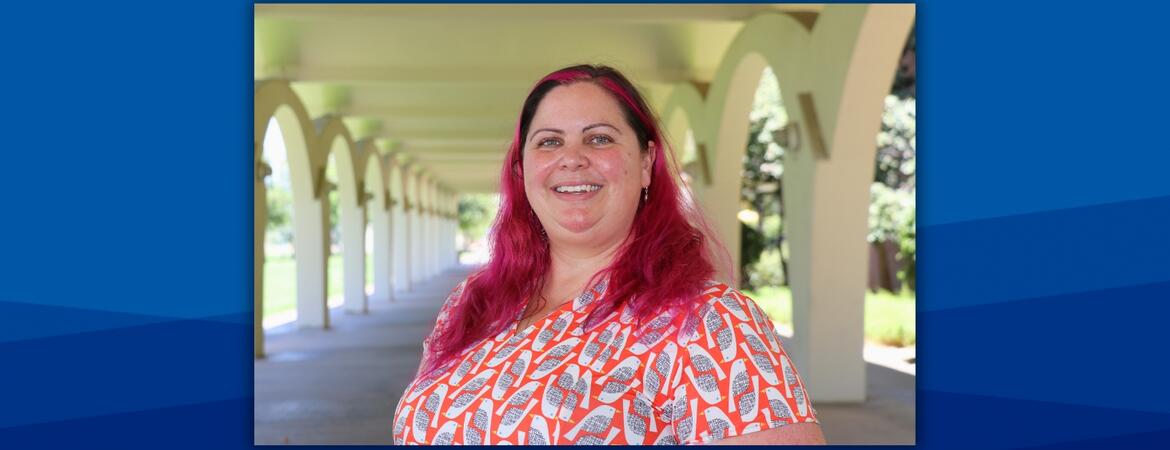
We are excited to welcome Mary-Michelle Moore to the UCR Library as our new STEM Teaching Librarian in the Teaching and Learning Department.
Mary-Michelle's journey into the library field began during her undergraduate years working at UCLA's Charles E. Young Research Library, where she started as a stackie and later worked in interlibrary loan. "After graduation, I tried a couple of jobs in small companies but they weren't the best fit, so I went back to working in the library," she shared. This decision led her to roles at the UCLA Lab School, UC Irvine's Law Library, and UCI’s main library. She eventually decided to pursue a library degree from Rutgers University.
“At some point, I realized that if I wanted to continue to move up, it was either stay in the paraprofessional space and wait for the head of ILL to retire or get my library degree and switch to the librarian side of the library,” she explained.
Her career has taken her to various institutions, including her most recent position at UCSB in the Teaching & Learning Department, and a part-time role at Allan Hancock Community College as a reference librarian. "I've enjoyed all of my library jobs to date and have learned so much at all of my previous institutions," Mary-Michelle said, reflecting on her journey.
Mary-Michelle's educational background includes a Bachelor of Science degree in Anthropology from UCLA, with a minor in Philosophy. Initially, Mary-Michelle had her sights set on an Astrophysics major but made the switch to Anthropology. Her genuine interest in the sciences and humanities has equipped her with a diverse skill set that she brings to her library roles.
When asked about her interest in joining our library, Mary-Michelle explained, "When I was a librarian at CSU Dominguez Hills, I was the liaison to the Natural Sciences half of the College of Natural and Behavioral Sciences, and I really enjoyed the work. As someone who comes from an interdisciplinary science background, the blending of information literacy and science needs for students in the library was enjoyable and appealing."
In addition to her professional excitement, Mary-Michelle has personal ties to the area. "I grew up in Redlands and have family nearby, so in addition to a new work environment, I'm looking forward to seeing my family more often," she said.
Mary-Michelle’s enthusiasm for teaching and her interdisciplinary science background will be tremendous assets to our library. We look forward to the innovative ideas and energy she will bring to our team. Please join us in welcoming Mary-Michelle to our library community!
Basque Scholar to Read from New Novel
UCR education professor Begoña Echeverria will discuss “The Hammer of Witches” on Jan. 22
RIVERSIDE, Calif. – Noted Basque scholar Begoña Echeverria will read from her novel, “The Hammer of Witches: A Historical Novel,” at UC Riverside at noon on Thursday, Jan. 22, in Orbach Library, Room 240.
The event is sponsored by the Librarians Association of the University of California, Riverside Division, and is free and open to the public. Parking permits may be purchased at the kiosk on West Campus Drive near the University Avenue entrance to the campus.
Echeverria is an associate professor in the UCR Graduate School of Education who is known for her ethnographic and archival research on Basque identity, language and culture.
“The Hammer of Witches” (2014, Center for Basque Studies) takes place in a small Basque town convulsed by accusations of witchcraft in 1610. The novel tells the story of Maria, a girl determined to honor her mother’s memory by learning to read and improving her lot in life; the priest Salvador Zabaleta, who has sworn to protect Maria but whose own identity is beset by struggles; and the mysterious and sophisticated Sabine Elizalde. Based on historical events during the Spanish Inquisition, “The Hammer of Witches” shows that even in the face of tremendous evil, justice can prevail.
For more information contact Christina Cicchetti, education subject specialist in UCR’s Rivera Library, at (951) 827-5138 or christina.cicchetti@ucr.edu.
Library Administration Welcomes New Administrative Assistant
UCR Library is pleased to welcome Rochelle Settle as the Administrative Assistant in Library Administration, effective April 3, 2017.
Rochelle's work station is at the front desk in suite 141 of Rivera Library. She will manage supply orders through the Library’s supply database, as well as scheduling, cash/check deposits, and other library projects and administrative duties.
Rochelle has over nine years of experience working in an educational environment. Most recently, she worked with the Raytown C-2 School District in Kansas City, Missouri.
Rochelle earned her Master of Arts in Theological Studies at the Central Theological Seminary, Shawnee, Kansas. She also has a Bachelor of Science in Biblical Studies from Calvary University, Kansas City, Missouri.
Poster contest for GIS Day 2018
The UCR Library will host a poster contest as part of Geographic Information Systems (GIS) Day 2018 activities at UC Riverside.
The UCR Library presents its GIS Day event series in collaboration with the Center for Geospatial Studies, the School of Public Policy, the Department of Computer Science and Engineering, the Department of Environmental Sciences, the Department of History, GradQuant, and Capital Asset Strategies.
GIS Day, first established in 1999, provides an opportunity for people to learn about geography and the uses of GIS. This year, UCR will observe GIS Day on Thursday, Nov. 15.
Both undergraduate and graduate students are encouraged to enter posters that highlight their use of GIS. All academic disciplines are eligible, including humanities as well as natural and social sciences.
Acceptable formats
Printed posters and a limited number of dynamic displays (such as Story Maps) will be accepted. Students whose abstracts were accepted must submit their posters for printing, or bring their printed poster, to the Map Collection in Orbach Science Library by 5:00 p.m. on Wednesday, Nov. 7. Poster printing fees are waived for the contest.
Collaborations are allowed, as are multiple entries. Please note that for group entries, the first author listed will be eligible for any prizes, should that entry win.
How to enter
Prior to entering, students must submit an abstract before 5:00 p.m. on Thursday, Nov. 1 for review and approval by the GIS Day Planning Committee.
To submit an abstract, please fill out this application form. For questions, you can contact Janet Reyes (janet.reyes@ucr.edu) at the Orbach Science Library’s Map Collection, or call (951) 827-6421.
The committee will notify prospective entrants if their abstract was accepted or declined by Monday, Nov. 5.
Students whose abstracts were accepted must submit their posters by Friday, Nov. 7 to the Map Collection in Orbach Library.
Poster display
Beginning on Tuesday, Nov. 13, the entries will be included in a GIS poster display in the lobby of Tomas Rivera Library.
From 3:00 p.m. to 4:00 p.m. on Thursday, Nov. 15, entrants will have the opportunity to explain their posters and answer questions.
The contest’s first, second, and third-place winners will be announced at 4:00 p.m. on Nov. 15 in Rivera Library, Room 140.
Contest prizes will include a variety of items students will find useful.
Introducing Jennifer Rodriguez, our new Director of Human Resources/Academic Personnel
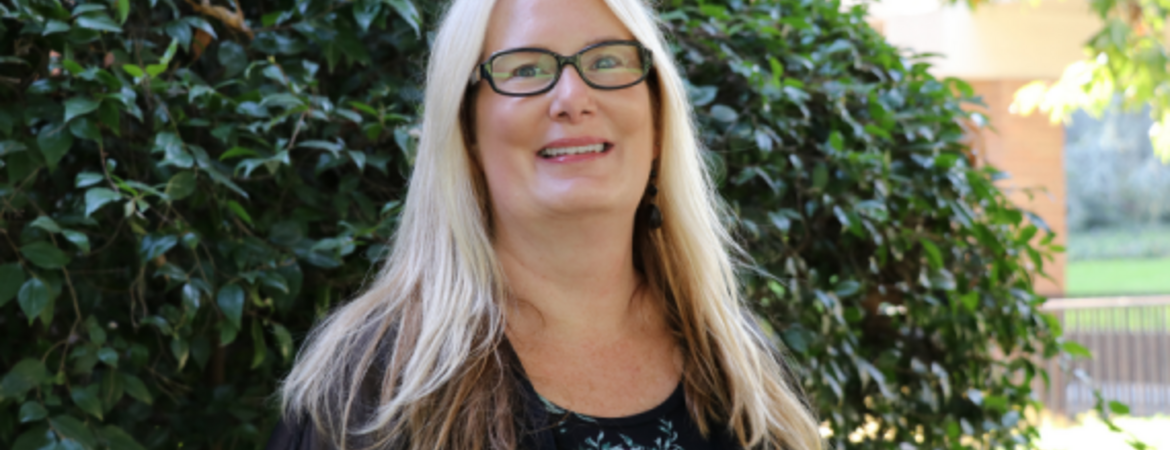
We are excited to announce Jennifer Rodriguez as our new HR/Academic Personnel Director, effective September 14.
Jennifer holds a Bachelor's degree in Health Policy & Administration from Penn State and a minor in Spanish. She has also earned several HR certifications, including Senior Professional in Human Resources (SPHR) and the Society for Human Resources Management - Senior Certified Professional (SHRM-SCP). Currently, she is on the path to completing her Certified Compensation Professional (CCP) certification.
Jennifer has been a member of the UCR community since 2007, initially joining the Vice Chancellor Administration unit and later joining Housing, Dining & Auxiliary Services. Since 2013, she has served as a Senior Human Resources Consultant with the School of Medicine.
Previously located at UCPath for the past 9 years, Jennifer is excited to return to the hustle and bustle of campus and is ready to use her HR expertise to support the UCR Library’s vision.
Fujimoto family diaries now available online
Riverside, Calif (library.ucr.edu) – The University of California, Riverside Library is delighted to announce that we have recently completed a six-month project to digitize the Fujimoto family diaries.
On March 11, 1942, the life of one Riverside family was shattered when US government officials took local farmer Toranosuke Fujimoto into federal custody. His son, George Fujimoto, age 21, wrote in his diary that day about his father’s arrest: “Went to school as usual….Came home about 5 p.m. and was shocked to learn that Pop was taken into custody by federal officials today. 28 Riverside Japanese aliens were rounded up in today’s raid; Mr. Sanematsu & Pop included.”
Insight into the lives of this family will now be readily available since the UCR Library has completed digitizing 45 Fujimoto family diaries with more than 24,000 pages. Many of these pages are already available online through Calisphere, a UC-wide digital collections archive system. Complete access is expected within a couple of weeks.
Highlighting the voices of these two men from an immigrant family, this collection documents the daily experiences of the Fujimoto family’s life from 1913-1968, including the events surrounding the family’s forced removal from their farm and home in Riverside to their relocation to and incarceration at a camp in Poston, Arizona.
“The Fujimoto diaries are among the treasures of the UCR Special Collections and University Archives. They provide an unforgettable insight into a turbulent chapter of life in California and beyond,” said Cherry Williams, UCR Library’s Director of Distinctive Collections.
Digitizing the dairies, which were donated to the UCR Library more than 20 years ago, is a major step forward in preserving this piece of history for future generations, said Eric Milenkiewicz, Digital Initiatives Program Manager.
“Complete digital versions of the diaries are now available online, providing a worldwide audience with a glimpse into the Japanese-American experience in the US during the early to mid-twentieth century, from the personal perspectives of a father and his son,” Milenkiewicz said.
Toranosuke Fujimoto’s diaries are written in Japanese while George Fujimoto’s are in English. Milenkiewicz explained that by making the diaries available online, “We hope to further enhance this digital resource by unlocking the text contained within each diary entry through translation/transcription, which will lead to even better access and discovery.”
“We the family are happy at the work and care that UCR has given toward these diaries,” said Shanti Taka, Toranosuke Fujimoto’s granddaughter and George’s niece. “I look forward to reading them online myself.”
Library staff in Special Collections and University Archives frequently use the Fujimoto diaries in their teaching activities. UCR Library’s Primary Source Literacy Librarian Robin M. Katz believes that the ties to Riverside make the Fujimoto diaries especially poignant for members of the UCR community: “Here is a Japanese-American family that had established their life in Riverside and thought, ‘This is the American dream’ and then their lives are turned upside-down, and their property seized.”
The diaries themselves are available for use by the UCR community and the community at large, in the UCR Department of Special Collections & University Archives Reading Room.
To request additional information, please contact specialcollections@ucr.edu.
Tackling UCR students’ top 5 challenges
During winter quarter 2019, the UCR Library collaborated on a survey with ASUCR and their Student Voice Committee to learn how we can improve students’ academic experience.
463 undergraduate and graduate students participated in the survey and identified these top five obstacles to student success at UC Riverside:
1) Difficult classes (32%)
2) Time management (25%)
3) Cost of textbooks (15%)
4) Lack of study spaces (8%)
5) Not owning a laptop (4%)
The UCR Library and its partners directly address three of these challenges:
Cost of textbooks: Library course reserves and the Affordable Course Materials Initiative (ACMI) can help offset the high cost of textbooks.
Lack of study spaces: Both Rivera and Orbach Libraries provide a variety of study rooms that students can reserve online, including the recently updated and soundproof David W. Musso Quiet Study Rooms.
Not owning a laptop: Students can borrow a laptop from one of the new ITS-managed Laptops Anytime self-service kiosks in the Rivera and Orbach libraries, or check out a laptop from the Circulation / Reserves Desks.
The library also offers some support to address students’ two most pressing challenges – difficult classes and time management.
Difficult classes:
- Make an appointment with a librarian to request individual research assistance.
- In-class presentations to find and use research resources, and gain expertise on digital tools and technologies. Students can suggest that their instructors contact the library directly to request this service.
Time management:
- The library offers workshops every quarter on a variety of time-saving topics, including citation management and other research tools and techniques.
- Individual how-to consultations on digital tools or other technology: use the ‘Ask Us’ button on the library’s homepage to find a library consultant, or visit one of the Info Desks for general questions and guidance.
If students feel stressed by their academic challenges, the library offers stress-relieving resources, too:
- Visit the Creat’R Lab in Orbach Library to make something fun and creative.
- Open up a Rivera Library maker box to color, play with Legos, or make other crafts.
The library’s staff are its greatest resource to assist students with their most pressing concerns. “Librarians and their individual expertise can be extremely helpful,” said Dani Cook, UCR Library’s Director of Teaching & Learning.
Those who are interested in offering philanthropic support for student success at UC Riverside are encouraged to speak with Jernine McBride, Associate Director of Development, to learn more about the UCR Library's Student Success Fund.
Eaton Collection of Science Fiction and Fantasy
The Eaton Collection of Science Fiction & Fantasy is one of the world's largest, richest, and deepest collections of science fiction, fantasy, horror, utopian literature and related genres. The collection originated with the personal library of Dr. J. Lloyd Eaton, consisting of about 7,500 hardback editions of science fiction, fantasy and horror from the Nineteenth to the mid-Twentieth centuries, which was acquired by the UCR Library in 1969.
How the UCR Library transformed the life of alumnus Carlos Rodriguez '90
As the first person in his entire family to attend college, Carlos Rodriguez ’90 was a true pioneer when he arrived at UC Riverside for orientation in 1985.
“Since then everyone has followed me,” Rodriguez said. After he blazed the trail, both of his sisters went to college and graduate school. “All my cousins have gone on to college, as well, all the younger ones.”
As his career clearly demonstrates, there’s no wonder that forging new paths in uncharted territory comes so naturally to Rodriguez. From pioneering work with early internet databases and ejournals in the mid-1990s at UCR, to reimagining library learning environments for an enhanced student experience at Grand Valley State University in Michigan, to his current role as the Dean of the University Library at California State University, Los Angeles (Cal State LA), Rodriguez continues to chase the horizon.
Originally a pre-engineering major, Rodriguez came to UCR planning to transfer after two years to either UCLA or UC Santa Barbara.
He began working in the library as a student employee shelving books. “Back in the 80s, people checked out books,” he laughed.
Having developed a strong peer network and relationships with faculty and staff, Rodriguez ended up changing his major and staying at UCR instead of transferring. It wasn’t until an internship with a credit union that he realized he preferred a culture of learning and service-based organization over a traditional corporate environment, and so his career in higher education and libraries was born. “I wasn’t in it for the money. I was in it to help other people,” he said.
As he approached graduation, Rodriguez realized he might enjoy a permanent career in the library. During his senior year, he transitioned from a student employee position into a part-time staff role, which is when he met two influential mentors, librarians Nancy Huling and the late John Tanno.
In Rodriguez’s first year as a science librarian, Tanno nominated him for a leadership and career development program for underrepresented racial and ethnic minority librarians with the Association of Research Libraries (ARL). “John was really supportive of diversity. There wasn’t a lot of diversity back then,” Rodriguez said. “He saw leadership potential in me early on.”
Rodriguez credits the small, tight-knit community at UCR for advancement opportunities like this. “If I had been a student assistant at UCLA, I probably wouldn’t have had the same opportunities that I had at UCR,” he said.
Ultimately, Rodriguez went on to get his Masters in Library and Information Science from UCLA. He came back to UCR as a Science Librarian before advancing through a variety of library positions, including the Associate Dean of Technology and Information Services at Grand Valley State.
Rodriguez helped the library at Grand Valley State shift from being library-centric and collection-centric to learner-centric. “Every decision we made, we asked ourselves, ‘Does this benefit the learner?’ The reason we’re here is for our students. We need to meet their needs.”
From Grand Valley State, Rodriguez returned to California to serve as the Dean of the University Library at Cal State LA. One of his goals at CSULA has been to transform the library’s physical space to make it less intimidating for their diverse, predominantly first-generation student population. “We’re changing the perception from ‘you’re visiting the library’ to ‘this is your library, and you own this space,’” Rodriguez explained.
In Rodriguez’s opinion, the library plays an active role in student success, research, faculty partnerships, and community engagement. “Libraries can provide opportunities for people to learn, grow, discover, create, and really transform how they see the world,” he said. “Libraries are probably one of the most important institutions at universities to do that.”
Another vision turned reality is the creation of an Academic Success Center, which is the cornerstone of Rodriguez’s capital improvement strategy for the Cal State LA Library. He plans to design a physical space around a suite of student services with a central student-led concierge to direct users toward the best solution for their needs.
What’s next for this innovative thinker? “I’m happy where I’m at now, but UCR is the only other place that I’d want to work at because of the students and what they’re doing. It’s a place I’d like to return to one day.”
The UCR Library is committed to enhancing the student learning experience, which includes supporting the professional development and advancement of our student employees. This article is the first in a series of stories following the success of former UCR Library student employees. We are incredibly proud of the alumni talent that was cultivated here, at the UCR Library.