Search
Search
Human Resources Generalist
The UCR Library is pleased to welcome Lydia Negrette as a Human Resources Generalist affiliate, effective April 30, 2019.
Lydia has over seven years of prior experience in human resources. She has worked for two major local distribution centers as the HR support. Her key responsibilities included benefits administration, leave management, performance management, HRIS, legal compliance, and recruiting.
Lydia earned her Bachelors of Arts degree in Economics from UC Riverside.
Please join us in welcoming Lydia to the library!
Sompratana Creighton
Sompratana’s key responsibility is cataloging monographs, such as e-books, comic books, and Thai materials from Thai collections. She joined the library in 2010.
Metadata Cataloger
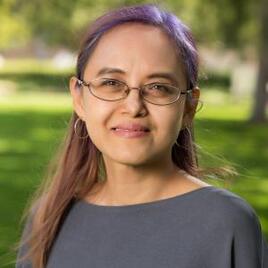
Library Human Resources Welcomes New HR Analyst
UCR Library is pleased to announce that Danielle Sanders has joined the Library Human Resources (LHR) team as the HR Analyst.
Danielle holds her Bachelor of Science degree in business administration – management and human resources.
She most recently served as a Human Resources Manager at Cal Poly Pomona before joining the University Library as an affiliate HR Analyst in September 2016.
As a member of the LHR team, Danielle will support key initiatives through the administration and assessment of HR services and procedures including compensation/classification, training and development, and employee engagement and relations.
Getting credit: the benefits of using ORCID
Academy Award winning English actor and director Sir Lawrence Olivier once said, “You’re only as good as your last job.”
The same could be said of the competitive world of higher education, in which faculty and researchers spend years building their professional reputation so that they have better opportunities, including awards, tenure and promotion.
But what happens if your name is the same as someone else’s, and they haven’t accomplished as much as you have? Or worse, what if someone else gets credit for your work?
Louis Santiago, professor of physiological ecology, shared a story about two graduate students named Padria and Patrick.* “Padria applied for a job and didn’t get it because the person evaluating the applications got her confused with Patrick, who didn’t have a very good publication record,” he explained. “Without reading her CV carefully, the reviewer thought she was this other person. So Padria was very concerned and decided to register with ORCID to document her own publication record, so there would be no confusion.”
The next paper that Padria turned in to Santiago included her ORCID ID (Open Researcher & Contributor ID). “I was like, ‘Oh, what’s this?’” Santiago said. “So, I got my own profile and linked it to my Web of Science profile, which was really great. Now my Web of Science profile has all my papers, and other L.S. Santiagos aren’t included.”
ORCID is an open, non-profit, community-based registry of unique researcher identifiers. All who participate in research, scholarship, and innovation are uniquely identified and connected to their contributions across disciplines, borders, and time through ORCID ID. An ORCID ID consistently identifies you throughout your career.
By creating a permanent, clear and unambiguous digital record of a researcher, ORCID helps to distinguish a researcher from other individuals with similar names. Additionally, ORCID ID is not affected by name changes, cultural differences in name order, inconsistent first-name abbreviations, or the use of different alphabets.
ORCID ID creates links between a researcher’s profile and a large array of scholarly outputs, prestige, and honors, including journal articles, data sets, patents, grants received, awards, and membership, to name a few. Thus, many kinds of professional contributions are recognized.
With ORCID, you maintain all key information in one place and control privacy settings, including what information is displayed publicly and what is shared with trusted partners.
Professional benefits to registering for an ORCID ID include:
- Funders, institutions, and societies can easily identify you and your research
- You don’t waste time entering repetitive data when reporting on your past activities
- Your professional activities are clearly linked back to you
- You can easily comply with funder mandates
The ability to quickly and confidently identify you and your work is critical to your reputation and career. Funders, publishers, scholarly societies and associations, fellow researchers and potential collaborators need to be able to identify your work. The University of California Riverside also needs to be able to identify your work, for many reasons from institutional benchmarking to research recordkeeping.
The UCR Library Research Services Department is committed to supporting the scholarly identity management needs of UCR researchers. If you have any questions about creating an ORCID or other researcher identifiers, please contact Swati Bhattacharryya, Scholarly Communication Librarian at the UCR Library.
Register your ORCID ID today and stand out in the sea of researchers, so you always get credit for your work.
*Students names have been changed to protect their privacy.
Former Chancellor Orbach visits his namesake library
Chancellor Emeritus Raymond L. Orbach visited his namesake library on the morning of Friday, April 7.
Escorted by University Librarian Steve Mandeville-Gamble, Deputy University Librarian Ann Frenkel, and Associate University Librarian Alison Scott, Chancellor Emeritus Orbach was treated to a pre-launch tour of the Creat'R Lab.
While there, he met with Medical Library Programs Coordinator Tiffany Moxham and Engineering Librarian Kat Koziar to learn about exciting developments in their respective divisions of the UCR Library.
Orbach was inspired to learn that the library has grown into an interdisciplinary hub and matchmaker, where various departments and their leadership are working together to advance the university, students, faculty, and the Inland Empire.
He was equally pleased to learn of the role the library played in the development of UCR’s School of Medicine (SoM). Medical Librarian Tiffany Moxham described how she has been a key partner in shaping practitioner development and providing research support to clinicians, residents, and others in the SOM community.
Perhaps most exciting for Orbach was when he heard about the collaborations being built with campus and community partners, thereby reducing the silo effect common at many large institutions. Orbach shared that this was his ultimate dream for UCR, and was thrilled to see the growing entrepreneurial ecosystem on campus, including the Creat’R Lab and EPIC (Entrepreneurial Proof of Concept and Innovation Center,) – a collaboration between UCR and Riverside city and county.
Orbach also commented that when he was Chancellor, he wanted to reverse the flow of traffic in the region (i.e. make Riverside the center of economic growth). If recent campus collaborations are any indicator of progress, he might see his wish come true as industry begins to call Riverside home, and UCR a partner, all of which is thanks in part to the UCR Library and a rich legacy of campus leadership.
First UC Love Data Week a success
From Feb. 8 - 11, 2021, the inaugural UC Love Data Week offered training on data access, management, security, sharing, and preservation to approximately 700 members of the University of California community.
Kat Koziar, Data Librarian, represented UC Riverside in a collaborative effort across the ten UC campuses and the California Digital Library (CDL) to coordinate UC Love Data Week. “I am thankful to have worked with my UC colleagues to offer this event,” she said. “By combining our resources and talents, we were able to offer 29 sessions on a wide variety of data related topics -- far more than we can offer on our own.”
Attendee feedback was positive, with 92.5% of responses rating UC Love Data Week as “above expectations,” and 58% rating it as “excellent.” Most of the survey comments were encouraging, Koziar added. “Attendees enjoyed the workshops they attended and were very grateful for the event.”
Since it launched in January, the UC Love Data Week website has had around 3,500 unique visitors. The event committee plans to link the UC Love Data Week presentation recordings and workshop materials to the website by early March.
Will UC Love Data Week become an annual UC-wide event? “Many of us, while commenting on the success, agreed that we should continue this format in the future, but we haven't made solid plans yet,” Koziar said. Anyone interested in participating in a future UC Love Data Week can ask to receive updates from their local campus library or Research Data Lab.
Joanne Austin
In her role at the UCR Library, Joanne establishes resource records, initiates orders for all formats, and supports the e-resources lifecycle in the Library’s ILS and discovery system. She holds a B.A. in social science from the University of La Verne and a M.L.I.S. from San Jose State University. Joanne joined the library in 2014.
Acquisitions, Description, and Discovery
Acquisitions & E-Resource Processing Library Assistant
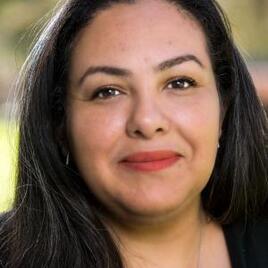
Library Welcomes New Director of Teaching and Learning
Dani Brecher Cook is our new Director of Teaching and Learning at the UCR Library.
Dani's key responsibility is to lead the development, implementation, and ongoing program for library teaching and learning services and initiatives to support the curricular and research activities of UCR faculty, researchers and students.
The opportunity to establish a new teaching and learning department with a focus on curricular collaboration and learner-centered approaches in a uniquely diverse environment is what excites Dani most about coming to UCR Library. She hopes to build sustainable, ongoing relationships with partners across campus.
“By situating librarians as expert co-educators and sharing our expertise in information resources and pedagogy, UCR Library can materially contribute to the University’s mission to graduate critical thinkers and information-literate citizens,” Dani said. “These skills are especially important in navigating the 21st-century world, where the abundance of information can make it challenging to determine authority, accuracy, and value.”
This newly re-imagined department will also assist faculty and instructors in developing research assignments for students that focus on discovery, exploration, and process.
Previously, Dani served as the Information Literacy and Research Services Coordinator at the Claremont Colleges Library.
Dani has presented nationally at the Association of College and Research Libraries (ACRL), LITA Forum (Library Information Technology Association), LOEX (Library Orientation Exchange), and other instruction- and library technology-focused conferences. Her team at Claremont received the 2015 Library Instruction Round Table (LIRT) Innovation in Instruction Award for their work in curriculum mapping. Dani and Kevin Michael Klipfel’s article, How Do Our Students Learn? An Outline of a Cognitive Psychological Model for Information Literacy Instruction, was recently selected as one of LIRT’s top 20 articles for 2015.
Dani received her MSLS from the University of North Carolina at Chapel Hill, and holds an A.B. in English Literature from the University of Chicago, and a Diversity Advocacy Certificate also from UNC Chapel Hill.
Science Fiction Librarian Contributes to New Book
Our Jay Kay and Doris Klein Librarian for Science Fiction, JJ Jacobson recently contributed a chapter to a book titled, Teaching and Learning in Virtual Environments: Archives, Museums, and Libraries.
JJ’s chapter, Crowdsourcing the Fictive Experience: Virtual-World Emergent Narrative from a Collections Perspective, is about the practice of Immersive Interactive Improvisatory Narrative, or IIIN.
“It’s a very common feature of virtual worlds of all kinds,” JJ explained. “IIIN is a modality of storytelling. There’s role-play, sometimes recreational, sometimes tied to history, as well as re-enactment and historical interpretation. It’s connected to speculative literature because many of these narrative interactions exist in a context that is speculative – alternate history, for instance – or occasions for this kind of narrative are in a context that is related to or is directly the speculative or fantastical imagination.”
IIIN can be traced to modern improvisatory theater forms, JJ explained, such as the Renaissance Faire; and it is often found in Civil War and similar reenactments, which exist to explore history and educate participants as well as audiences. “It’s an interesting question to compare those to the evolution of community theater, too” she continued. “All of these things exist in the real world, but with some specific entertainment or educational mission. One of the questions we barely touched on was: ‘When did IIIN start to become pure recreation?’”
JJ’s chapter is the result of three distinct discussions on the topic of IIIN. JJ spoke with an expert on living history in museums and places like Plimoth Plantation, a special collections librarian from a well-respected institution, and a professional historical interpreter who plays Mildred Cecil, Lady Burleigh, wife of Lord Burleigh, chief advisor to Queen Elizabeth I.
“These conversations opened up some questions worth thinking about, questions that nobody else seems to be writing about, but that people within the reenactment and historical recreation and virtual worlds talk about all the time,” JJ said. “We talked about the phenomenon and why someone might study it, what a research collection might look like.”
To date, JJ has not seen much scholarly writing on this topic, especially not with the same emphasis.
According to JJ, some questions that could inspire scholarly research on the subject of IIIN might include:
- What kind of activity is it, exactly?
- If we trace it back to various kinds of plays or theater, is that sufficient?
- What are we doing in an historical enactment, with its factual constraints?
- If a library were to collect examples of it, what kinds of research might that support?
- What kind of researchers might use them?
- What would a collection surround them with as secondary source material?
“The Eaton Collection is largely a collection of texts and other narrative forms, but stories that are already done and finished are not the only occasion for the fantastical imagination to work,” JJ explained. “So here is a very interesting way of creating something that could easily be subject matter in the Eaton Collection. If people have made up their own country and they act the story together and build it up as they go, that’s still the kind of thing we collect. Those kinds of worlds, those kinds of subjects are intensely interesting to me. Even though you won’t find those exact worlds in the Eaton Collection, you’ll find many like them in motivation, structure, and so on.”
The book was published by Libraries Unlimited in 2016 and is now available on Amazon, Barnes and Noble, and other retailers.
Reserves Coordinator
UCR Library is pleased to share that Joanne Austin accepted the Reserves Coordinator position.
Joanne holds her Bachelor of Arts degree in Social Science from the University of La Verne and a MLS in Library and Information Science from San Jose State University.
Joanne spent four years as a Supervising Library Clerk before joining the University Library as a Library Assistant 3 in October 2014, and has served as the temporary Reserves Coordinator. Joanne’s strengths include her many years of experience assisting the public in a service-oriented environment. She brings with her a thorough knowledge of library operations, procedures and policies.
Please join us in congratulating Joanne, who transitioned to her Reserves Coordinator role on Monday, July 17, 2017.