Search
Search
Newly Processed Collections - Spring 2019
Special Collections & University Archives employees are constantly working to process recently acquired collections and make those materials ready for use by students, faculty, and researchers.
Each quarter, we will provide a list of the UCR Library's newly processed archival and primary source collections. Check out this list to see if there are any items that fit your research area, or share with a friend!
Below you'll find brief descriptions and links to the finding aids or collection guides for each new collection. To use any of these materials, simply click the "Request Items" button at the top to submit a request, and log in with our Special Collections Request System. For more on conducting research in Special Collections, see this page.
SCUA is open to the public on weekdays from 11:00 am – 4:00 pm. Check here for closures or other changes to our regular hours.
For questions, email specialcollections@ucr.edu.
Newly Processed Collections - Spring 2019
Catherine Clark papers (MS 384)
The Catherine Clark papers are a collection of materials pertaining to Clark’s pen pal relationship with Igor A. Toloconnicov, a citizen of the USSR. They began corresponding shortly after the fall of the Berlin Wall in 1989 until 1993. Igor’s correspondence primarily touches on topics of science fiction in Russia as well as the political and economic life during the transition of power from the Soviet system to the Russian Federation. This collection contains correspondence, publications, and other material related to the world of Russian Science Fiction and Fantasy.
https://oac.cdlib.org/findaid/ark:/13030/c8zw1s8n/
John Franceschina papers addition (MS 411)
More materials were recently added to the collection of author and theater history scholar John Franceschina. These new materials are primarily musical and theatrical compositions by Franceschina or similar materials used in productions he participated in. The collection consists of materials from author and theater history scholar John Franceschina relating to two of his publications, Incidental and Dance Music in the American Theatre from 1786 to 1923, and Hermes Pan: The Man Who Danced with Fred Astaire. His personal musical compositions and plays as well as those of other composers and musicians are also included. Items in the collection include research files, musical scores, programs, photographs, news clippings, edited and unedited play scripts, publications, and videos.
https://oac.cdlib.org/findaid/ark:/13030/c89z9b83/
Harry Lawton papers (MS 122)
The Harry W. Lawton papers document the life and career of American writer, journalist, editor, and historian Harry Lawton. Lawton’s life and career were centered in the Riverside area where he worked as a journalist with The Press Enterprise and was a faculty member with CNAS at UC Riverside. He also founded the UCR Writers Week in 1977. Lawton’s works relate to the citrus industry, Native American groups indigenous to southern California, and the Riverside Chinatown, among other interests.
https://oac.cdlib.org/findaid/ark:/13030/kt900041k7/
Corridos of the Mexican Revolution, and other songs (MS 042)
This is a small collection of corridos, folk songs and popular ballads recounting the events of the Mexican Revolution, printed on broadsides. They primarily document various events that occurred during the revolution as well as the subsequent decade. Printed on low quality newsprint, these ephemeral documents are a grassroots snapshot of the 1910s and 1920s in Mexico.
https://oac.cdlib.org/findaid/ark:/13030/c8gh9qp3
About
Special Collections & University Archives houses archives and manuscript collections, photographs, maps, books, and other rare or unique research material that document a wide range of subject areas. Our reading room is located on the 4th floor of the Tomás Rivera Library.
Library Student Employees Who Are "Living the Promise": Sean Matharoo awarded Fulbright Fellowship
Fourth-year Comparative Literature PhD candidate and library student employee Sean Matharoo has a unique array of talents, experiences, and academic interests that should yield results during his Fulbright fellowship in Belgium later this year.
“The funding to pursue something like this is invaluable to me. It enables me to do something I wouldn’t be able to do otherwise. I’m really honored and I’m excited,” Matharoo said. “I’ve been given the opportunity to work with Dr. Stef Craps in the Department of Literary Studies at Ghent University. His research is focused on the same things that I want to study: memory studies, the Anthropocene, postcolonial literature, and climate change fiction.”
Matharoo added, “The Anthropocene has been theorized by scientists as a geological time period characterized by humankind’s adverse impact on the planet due to the exploitation of land, water, animals, and fossil fuels. I want to problematize the cosmopolitanism of the discourse, which tends to sideline the question of vulnerability.”
Matharoo has been passionate about engaging with environmental issues such as climate change since before he came to UCR. He devoted nearly a year to his Eagle Scout project of building a drought-tolerant garden in his hometown of Inverness, Florida.
After completing his Bachelor’s in English at University of Florida, Matharoo was drawn to UC Riverside for three reasons: the university’s science-fiction program, cultural diversity, and geographic location. “I have always wanted to move out west for social and political reasons, and to be near the Joshua Tree desert and the film cultures of LA.”
Matharoo’s advisor Dr. Sherryl Vint recommended that he apply for the Fulbright grant to study in Belgium, knowing that he feels passionate about bridging cultural and linguistic borders while striving toward solidarity across those gaps.
“What’s really important to me is bringing into the classroom an emphasis on communicating across differences while upholding those differences at the same time,” Matharoo stated. “A lot of students – especially students who don’t come from families that are intimately familiar with the education system in this country – children of immigrants, first generation college students, and so on – they don’t always know that they don’t have to assimilate into one way of doing research.”
Sean credits his collaborative approach to research to his time spent working in Special Collections at Rivera Library with JJ Jacobson, UCR Library’s Jay Kay and Doris Klein Librarian for Science Fiction. “Working in the library taught me that starting with a hypothesis, an idea, a problem or a question, and then thinking about it in a much more improvisational and flexible way, it ends up opening interesting new tangents that are actually really productive for engaging the question,” he explained. “It encouraged me to think of research not in terms of solo-authored projects but instead as collaborative projects.”
When working at Rivera Library, Matharoo cataloged the Jay Kay Klein photograph collection. “There are thousands and thousands of photos and slides in this collection,” he stated. “From the 1940s through the 1990s (Klein) was really active in going to science-fiction conventions and award ceremonies, taking photographs and meticulously documenting where he was, who was in the photograph. I worked on his collection, moving the analog negatives and slides over to digital metadata so that scholars, artists, or anybody who is interested could say, ‘I need a photo of Octavia Butler at this convention in this year,’ for instance, and they could easily find it.”
During his Fulbright fellowship, Sean plans to take classes at Ghent University, conduct research, and write the first few chapters of his PhD dissertation. “There are other PhD students at Ghent working on projects similar to my own. There’s a really incredible, thriving community there that I’ll be able to network with and learn from.”
He hopes to connect his Fulbright research with the Afro-Belgian community in Ghent through interviews and collaborative artistic projects. “I intend to superimpose interviews, field recordings, noise music, text, photography, and video into audiovisual sculptures,” he explained.
After completing his PhD, Matharoo plans to teach at a university. “I don’t want to treat my students as empty vessels to be filled with knowledge,” he said, “but, rather, to create a space where we can do the work of education together, always experimenting to create alternative ways of thinking and being.”
Finding yourself in the archives
Christopher Queen and Brandy Lewis were the first two SCUA graduate student interns and both of their experiences provide excellent examples of how these internships can benefit students and enhance their academic and professional goals.
The UCR Library’s Special Collections & University Archives (SCUA) is known for its vast collections of books, manuscripts, photographs, and other rare research material. UCR students pursuing graduate studies were provided a unique opportunity to explore these treasures up close and gain valuable experience through SCUA’s first graduate student internship program.
Christopher is a Ph.D. candidate in the Department of English whose research focuses on 14th and 15th-century Middle English literature.
“When your work involves rare materials or delicate materials, it's not easy to gain access to those items,” Christopher explained. “It's not something that you necessarily see or get to interact with every day.”
The beginning of Christopher’s internship was exploratory. He spent time learning how archives work, how items are documented and stored, and spent time walking around the stacks discovering what was in the collection.
Christopher appreciated the time familiarizing himself with the space and the collection and was happy to have the opportunity to fine-tune the proposal he submitted for the internship based on his discoveries in the archive.
Once settled into the space, Christopher was able to find items he never expected.
“SCUA has really wonderful, idiosyncratic examples of The Canterbury Tales," Christopher said. “One of them is a collection of prints by an artist named Ron King. That wasn’t what I was looking for originally, but that was the wonderful thing about the internship, finding things I wouldn’t have necessarily found otherwise.”
One of the biggest things Christopher took away from the internship was a bigger sense of confidence.
“I went to England this past summer to work with some materials in libraries there. Having this experience made me more confident about interacting with other libraries' materials, interacting with librarians and staff, and not being afraid to ask questions.”
Christopher has some advice for graduate students who may be interested in applying the next time applications are open but aren’t sure if SCUA has the right material for them.
“Even if you don't think that what you're doing is related to what special collections has, you should still apply,” Christopher said. “At first, I was actually hesitant to apply myself, because we don't have a large collection of Middle English literature, but once I was able to start actually looking through what we did have, I knew there was value for me there.”
Brandy Lewis is also a Ph.D. candidate in the Department of English, but her research focuses on fandom and fanzines.
Brandy was familiar with SCUA and the Eaton Collection of Science Fiction and Fantasy before the internship. She went to UCR as an undergraduate student and had the opportunity to do a book review for the late Fred Patten’s Furry Fandom Conventions and spent time with the Eaton Collection which houses the Fred Patten Papers.
“As an undergrad, I thought this is great, but a little overwhelming,” Brandy said. “But coming back as a graduate student, it gave me a lot more time to sit with the materials and have a little bit more fun.”
Brandy enjoyed the freedom and flexibility that came with the internship and found herself thinking in ways she never had before.
“Originally, I had not been a print and manuscript scholar, I was very much into studying literature and looking at the words on the page,” Brandy said. “Yet handling the materials and getting a chance to sit with the bends of the page, the smudge marks — it’s a completely different experience.”
Brandy continued, “I was able to sit in the space and ask myself, what does the page offer? The experience entirely changed my dissertation because it opened a new frame of thought I never touched on before.”
The internship experience ended up being more emotional than Brandy could have ever imagined.
“As a first-generation student and as a disabled student, years ago I would have never thought that I would get a chance to sit with material considered science fiction history,” Brandy said. “The experience really allowed me to say It's okay to feel geeky, it's okay to feel, what I feel. That's what makes me me. Even though the experience is academic and a learning experience, for me it was also a personal growth experience.”
Q&A with UCR Archivists Andrea and Andrew
Every October, the Society of American Archivists initiates a month-long celebration highlighting archives and archivists.
American Archives Month gives archivists all over the United States an opportunity to talk to people in their communities about what they do and remind them that archivists are preserving important items and making them accessible. The UCR Library has two full-time permanent archivists on staff, University Archivist Andrea Hoff and Special Collections Processing Archivist Andrew Lippert. Learn about their roles at the UCR Library and more in our Archivist Q&A!
What inspired you to become an archivist?
Andrea Hoff (AH): I’ve always been fascinated by the past. Archives provide a window to history that can shape the way we view the world. This field offers unlimited opportunities for learning. It also allows you to develop expertise in many different areas, since each archive usually has a particular focus. The archives I’ve worked in have all had a unique collecting focus – from architecture to LGBTQ history, higher education to the Presidio of San Francisco. It’s been a thrill to get to learn about so many subjects.
Andrew Lippert (AL): My educational background is in history and I really wanted to find a way to make use of my degree in a career. I learned about archives while looking through the course catalog of my Master’s program and signed up for the classes more out of curiosity than anything else. I really enjoyed the mix of hands-on and intellectual work and decided to pursue a job in the field. It is a real treat, for a history buff, to get to engage with archival collections on a daily basis.
As an archivist at UCR, what does your job entail?
AH: As the University Archivist, I’m responsible for the curation and management of material related to the history of UCR. I collaborate with faculty, academic departments and campus organizations to ensure that their historical materials become part of University Archives. There is a lot of communication and relationship-building that goes into this. Advocacy and outreach is also important in order to increase the visibility of the archives. Making the collections accessible through processing and creating access points is another significant aspect of my job. I also teach and do research and assist people with their research… the list goes on!
AL: As the Special Collections Processing Archivist here at UCR, my primary role is working with our manuscript and archival collections to make them accessible to students, faculty, and other researchers. This is mainly focused on arranging and describing the contents of collections and creating guides to the collections, which we call finding aids. All of us in Special Collections & University Archives tend to have multifaceted responsibilities and my duties have grown over the years to include, at different times, instruction, outreach, presentations, curated exhibits, donor relations, collection development, and much more.
What is the most interesting special collections project you have worked on?
AL: There may be some recency bias weighing in on this one, but I would have to say the First Contact exhibit for this fall quarter was one of my favorite projects. I had a ton of fun diving into the history of first contact stories in science fiction and putting together the exhibit. It was a good excuse to read more science fiction at work, it was a fun puzzle trying to figure out what to include in the displays, and it was very interesting looking at a specific theme within the genre from an historiographic perspective. Aside from that, I would say that any time I get to work with a class has been a very engaging and rewarding experience. Each class asks new questions about the archives and the primary source materials that lead us to learning something new about the collections.
What challenges do you face as an archivist and how are you approaching them?
AH: Competing priorities are a challenge. There are so many things we are trying to accomplish and all of them are important. Different formats present a challenge as well. Preserving electronic records is quite different than preserving 35 mm film, for example. Deciding which collections should be processed and digitized is a challenge because every organization has limited time and resources to devote to those activities. My approach to this is to prioritize the stories that haven’t been told yet. Collecting materials that document the diverse voices that have shaped the history of UCR is my top priority.
Given that space is limited, how do you determine if materials have historical or lasting value?
AL: The million-dollar question! Space is a challenge that pretty much all libraries and archives have to deal with. I tend to approach this from a few perspectives. First, it is imperative that we look at who and what is represented in our collections and then identify those communities and voices that have not been well represented in the archival records in the past in order to work towards filling those gaps and silences to ensure that our archival materials are more diverse, inclusive, and representative of our broader community going forward. A second aspect is to look for materials that compliment specific topics that our repository has a strength in, to create a richness and depth of resources on a given subject in a single location. Third, as a part of the academic community, we have the opportunity to tap into current scholarly trends and research, which allows us to focus our collecting efforts in support of the students and faculty more directly. It is by no means a science and it is incredibly hard to predict what will be hot areas of research 10, 50, or 100 years from now.
What advice would you give to people who want to become archivists?
AH: Talk to archivists! I’m a big advocate of informational interviews. Reach out to archivists and librarians and ask to set up an informational interview. This is an opportunity for you to ask questions about the profession, potential career paths, etc. Archivists are the best resource for advice about how to get into this field and we are more than happy to share that. Most archivists consider this type of advocacy to be an essential part of our work. It’s a great way to find out about internships and other opportunities that can help you get your foot in the door.
AL: The field is quite varied in terms of the types of archives and roles that are available. It is definitely worthwhile to experiment and try a few different options before settling into a specific career path within the profession. Also, the early career stage can be challenging with regard to long-term or permanent employment. Most of us have gone through numerous temporary, grant-funded, or project positions before getting established in a career position.
New archival collections available for fall quarter 2017
Special Collections & University Archives staff are constantly working to process recently acquired collections and make those materials ready for use by students, faculty, and researchers.
Each quarter, we will provide a list of UCR Library's newly processed archival and primary source collections. Check out the list below to see if there are any items that fit your research area, or share with a friend!
Below you'll find brief descriptions and links to the finding aids or collection guides for each new collection. To use any of these materials, simply click the "Request Items" button at the top to submit a request, and log in with our Special Collections Request System. For more on conducting research in Special Collections, see this page.
SCUA is open to the public on weekdays from 11:00 am – 4:00 pm. Check here for closures or other changes to our regular hours.
For questions, email specialcollections@ucr.edu.
Newly Processed Collections – Fall 2017
1.92 linear ft. (2 boxes)
The collection contains photographs, notes, articles, and other materials from explorer Edna R. Webster and her daughter Marjorie Webster. The majority of materials in the collection relate to Edna's exploration and study of Mayan ruins on the Yucatán Peninsula in Mexico, and Marjorie's interest in Atlantis and its possible connection to Mexico.
2.54 linear ft. (5 boxes)
This collection consists of the papers of author Jean Paiva, including manuscript drafts, notes, research, and short stories. Materials in the collection also include literary contracts, earnings statements, and correspondence between Paiva and other authors, editors and literary figures.
0.83 linear ft. (2 boxes)
The collection consists of materials relating to the political career of John Phillips, who served as a California state legislator from 1932-1942, then as a member of the House of Representatives from 1943-1947. Items in the collection include correspondence, reports, pamphlets, and other documents related to Phillips work and research on topics like government food subsidies, universal military training, and the Republican Party platform.
1.42 linear ft. (2 boxes)
The Sunkist Growers Inc. records consists mostly of agreements between various growers and the Fruit Growers Supply Company and the Exchange By-Products Company, which were parts of the organization that provided wholesale supplies and developed markets for citrus by-products like oil and citric acid. The collection also includes brochures, photographs, and a photo album including research information from the University of California Citrus Experiment Station.
1.46 linear ft. (2 boxes)
This collection consists of the personal and professional papers of Betty Clark Moore, a biologist and former research associate at UC Riverside. Materials in the collection include correspondence, photographs, research notes, and scientific publications written by Moore and others.
11.5 linear ft. (20 boxes)
This collection contains correspondence, notes, and other material from J. Lloyd Eaton, a physician and book collector whose collection of science fiction, fantasy, and horror publications formed the foundation of the Eaton Science Fiction & Fantasy Collection at UC Riverside. Included in his papers are the index card catalogs Eaton kept documenting his collection, which include his notes on many of the works.
0.42 linear ft. (1 box)
This collection consists of photographs and postcards from John W. Dady, depicting various Native American tribes and ranches in the Midwest and California during the early 20th century.
0.23 linear ft. (1 box, 1 flat folder)
This collection contains photographs, slides, and programs from races held at the Riverside International Raceway, a race track in Riverside, California that was in operation from 1957-1989.
1.25 linear ft. (2 boxes)
The collection contains two scrapbooks of news clippings, correspondence, political mailers, and other materials related to efforts to pass two ballot propositions related to state bonds in the June 2, 1970 election in California.
7.19 linear ft. (6 boxes, 1 flat folder)
This collection contains records and research on the date palm industry and date palm farming throughout the 20th century, including photographs of date palm farms, brochures, and newspaper clippings. Additionally, the collection contains photographs, programs, correspondence, and pamphlets pertaining to the United States Department of Agriculture Date Station, and items from date palm researchers Walter T. Swingle, and Roy W. Nixon.
2.17 linear ft. (4 boxes)
This collection includes materials from Alfred M. Boyce, an entomologist and first dean of the University of California, Riverside's College of Agriculture. Items in the collection include agricultural research, photographs, information on the Citrus Experiment Station, and materials related to the publication of Boyce's memoir, Odyssey of an Entomologist: Adventures on the Farm, at Sea, and in the University.
0.42 linear ft. (1 box)
The collection contains working papers, articles, proposals, and other documents on solar sails created by Carl A. Wiley, an engineer and mathematician that authored one of the first accounts of how solar sails could be assembled in orbit and used as spacecraft propulsion devices.
0.21 linear ft. (1 box)
This collection contains correspondence from numerous British artists during the 19th and early 20th century received and collected by British painter Edith Hipkins. The majority of the correspondence consists of personal letters sent to Hipkins and her father, musician Alfred J. Hipkins.
Che’s Village – Virtual Reality to Stimulate Critical Thinking
UC Riverside’s Associate Professor of History Juliette Levy likes to teach from the edge of the e-learning revolution.
Her latest experiment involved a virtual reality (VR) platform intended to stimulate intellectual learning on an emotional level for the students in her History 20 / World History course. Dr. Levy co-created a VR application called “Che’s Village” and invited students and faculty to test and review the platform in Orbach Science Library on February 15 and 16.
"Juliette felt that the library is precisely where this type of exploration should take place, as our mission is to expand critical thinking skills in studnets," explained JJ Jacobson, UCR Library's Jay Kay and Doris Klein Librarian for Science Fiction. Jacobson and Dr. Levy collaborated for several months on the concept and development in order to bring "Che's Village" to life.
“We serve a population of students who are digitally savvy,” Dr. Levy explained. “We have an amazing student body and an amazing faculty, and we need to teach them to think critically using the tools in their environment.”
Gesturing toward the wall, where a large monitor displayed what the student in the virtual reality goggles was seeing at that moment, Dr. Levy added, “This is the future of public education in here. Technology is a means to activate and render moments of the learning experience more intense.”
The platform was built to amplify students' experience of studying Che Guevara's speech, "Social Ideals of the Rebel Army," which he delivered on January 27, 1959. Guevara along with Raul Castro and others had recently won the rebellion against the existing Batista regime in Cuba, Levy explained. In his speech, Guevara had to balance the nationalistic, pro-Cuba intent of Castro with Guevara's own intent to lead a communist revolution.
The application’s co-creator and head of a VR prototype studio named Shovels and Whiskey, Tawny Schlieski stated, “We built this VR environment for students who have read Che’s speech. It’s meant to provoke them into compelling questions, to connect pieces of text with other pieces of research.”
Once inside the virtual world, exactly as Schlieski had explained, the user could see the text of Che Guevara’s 1959 speech in the setting of a Cuban jungle, with links to other content directly connected to highlighted passages in the speech. Using a pointer, the user could open and view the additional resources – whether text, images, or video – to elaborate on the themes of that particular passage. “It’s like footnotes, but in a virtual reality environment,” one user commented.

Users who tested the VR application saw potential in it. Professor Robert W. Patch from the UCR Department of History commented, “Technology will make certain things easier, certain things better.”
In some ways, the reflection indicated that UCR professors who leverage technology are already doing something right. One of the student testers observed that his best friend, who commutes over 50 miles to attend a different college, does not go to office hours because of the additional time it would require. He added, “He could have a more intimate learning experience if there were online office hours.”
“Good teaching is good teaching, whether that’s 100 years ago or 100 years from now,” Dr. Levy commented. “We owe our students to help them learn better and faster, especially with the amount of debt students are taking on to get an education. We are making it deeper and better with technology.”
“We’re looking to build applications of new technology in humanities that provoke critical thinking for students,” Schlieski stated. Reflecting on her previous work with Intel, she added, “From an industry perspective, problem-solving skills are sorely lacking in recent college graduates. Technology becomes obsolete so fast, but critical thinking skills are always valuable.”
Jacobson added, "After more than 10 years of library and education experience in virtual environments, I think that working with information, ideas, and learning in 3D is something educators and librarians would do well to keep on their radar. VR is in an incunabular age, and we don’t know yet what it will look like as it takes useful forms. However, the possibilities are so compelling that I’m confident VR (or other VE) will develop into important tools for teaching, learning, and information."
No stranger to using digital platforms, Dr. Levy currently employs a variety of digital resources including Podcasting, Zoom, online office hours, and a private virtual discussion forum to maintain a sense of connection with her students throughout the week. As a result, she has received overwhelmingly positive student feedback. For Dr. Levy, this latest endeavor with “Che’s Village” is intended to find new ways to engage her students. “Technology allows us to give students who live off campus and part-time students the same quality of attention and education that a small liberal arts college could,” Levy explained.
“I can teach 300 students and make it feel like a class of 30 students because the entire medium is devised for contact,” Levy added. “The students are all on a screen, and online, everyone is in the front row – so it feels more connected. Students who would usually not raise their hands and participate in a live classroom are more inclined to speak up in an online platform. It’s convenient and an environment in which they feel like they exist, their voice matters.”
“Che’s Village” was a first-step in the iterative design process, and both Dr. Levy and Schlieski are now incorporating the feedback they received from testers to improve the VR platform.
Loda Mae Davis, UCR’s pioneering woman
Starting with her appointment in Oct. 1953, UC Riverside’s first Dean of Women Loda Mae Davis helped to shape the future not just for Highlander women but for all UCR students.
In addition to serving as an Assistant Professor of Psychology, Davis was later appointed as the Associate Dean of Students. She firmly believed in sexual equality and drafted policies to support that ideal, making Riverside the first campus in the UC system to allow women students the same dormitory privileges that men had always enjoyed. Davis also advocated for the female faculty to have the same membership rights as the male faculty.
Many male students opined that Davis was "too liberal." Colleagues claimed that she frequently said that UCR was "the most sexist place she had ever worked," although Davis did not call herself a feminist.
The Loda Mae Davis papers (UA 082) include correspondence, publications, fiction and non-fiction manuscripts, speech transcripts, photographs, videos, audio cassettes, and other material that documents Davis’ work and the contributions of female faculty members who contributed to the UCR academic community. Received in 2015, the collection was first made available for research in Special Collections and University Archives at the Tomás Rivera Library starting in fall quarter 2018.
Born in 1898 to pioneer homesteaders in Washington state, Davis and her sister worked to support their own education. She graduated from UC Berkeley in 1923 with honors in commerce, followed by a masters of science in business in 1932. Graduate work in psychology at UC Berkeley preceded Davis’ 1953 appointment at UCR.
An economic analyst, consumer rights advocate, and world traveler, Davis worked for the Works Project Administration in 1936 and other Federal entities during the Roosevelt administration. In 1940, she became a consultant to the Consumer Division of the National Council of Defense, a job which led to her becoming the head of the first field staff of the Office of Price Administration. Following World War II, she worked for the UN Relief and Rehabilitation Administration.
Davis traveled throughout the United States to educate the public on the federal rationing and price control program. Additionally, she traveled extensively as a single woman, including trips to Panama and Mexico in 1934; Sweden, Norway, Finland, Russia, Ukraine, Czechoslovakia, Hungary, Austria, Switzerland, France, England, Canada and the Arctic Circle in 1935; and China and Japan in 1937. The onset of World War II provided other travel opportunities, as did a 1960 sabbatical which she spent in Samoa.
Davis stayed active within the UCR community after her 1964 retirement, helping to found the Loda Mae Davis Archive and to serve as a mentor to women in academia. She lived in Riverside until her death in 1989.
Davis’ legacy continues to impact the lives of today’s Highlander women through the Dean Emerita Loda Mae Davis Women's Archives fund (which supports the acquisition of materials documenting aspects of women's leadership, accomplishments, and attainments as scholars, writers, creative artists, activists, citizens, etc., and women's changing roles in society), the Dean Loda Mae Davis Endowed Award (est. 1964 by The Prytanean Society, a women's honor society), the Dean Loda Mae Davis Endowed Scholarship Fund (est. 1982), and the Dean Loda Mae Davis Commencement Award (est. 1964).
The Power of Language: From Manuscript to Print
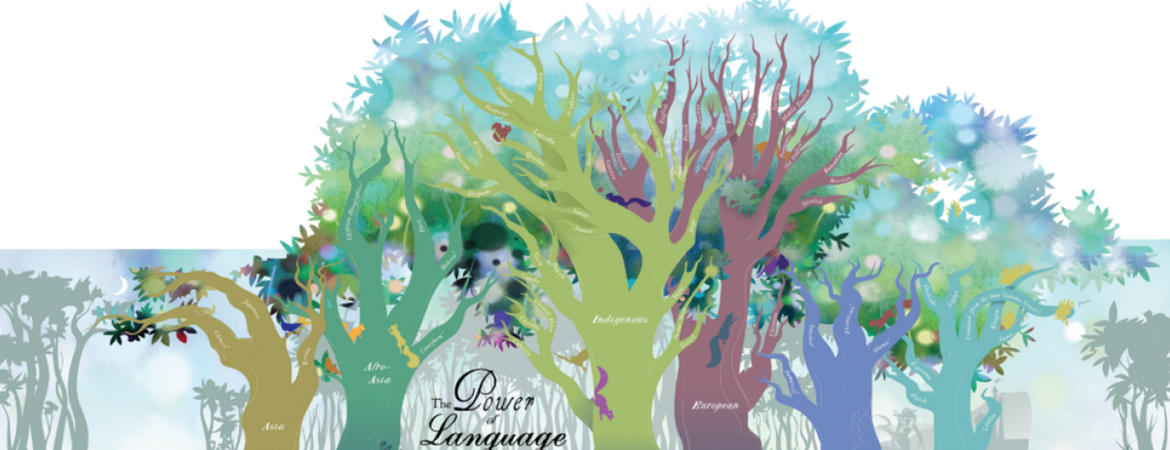
We invite you to view SCUA’s latest exhibition, The Power of Language: From Manuscript to Print, from 10 a.m. – 4 p.m., Monday through Friday on the 4th floor of the Rivera Library in Special Collections & University Archives until March 24, 2023.
This exhibition is the first of a yearlong cycle of four exhibitions, and features texts written in the classical languages of Latin and Greek and highlights some of our oldest materials.
The spring exhibition will showcase our Indigenous languages, while our summer exhibit will delight you with contemporary languages created by authors of imaginative works of fiction. The fourth, and final exhibition in fall of 2023, presents highlights from our collection of Asian and Western and European languages.
| Event | The Power of Language: From Manuscript to Print |
| Location | Tomás Rivera Library, 4th floor, Special Collections & University Archives |
| Dates | February 23, 2023 - Mar. 24, 2023 |
| Parking | Free Visitor Parking is available on Fridays, starting at 12:00 PM through 6:00 AM Monday morning in the unreserved spaces of the following parking lots/structures:
|