Search
Search
Camaraderie, Pizza, and 21,000 Comic Books
Many hands make for light work – and when the job is sorting more than 21,000 comic books, you need a lot of hands.
Jim Clark, Head of the Database Management and Authority Control Unit, and Erika Quintana, Acquisitions Unit Supervisor were tagged as team leaders and charged with tackling the project of sorting 142 boxes, each containing approximately 150 comic books.
Jim explained, “We took all the boxes, looked at what we had, and tried to come up with how best to attack it.” He and Erika knew right away that they needed help, and all it took was the lure of free pizza to entice the rest of the team to join. Perhaps library employees are not so different from the students they serve, after all.
“It was a lot of fun,” Jim added. “Erika Quintana and I just organized all the boxes, gathered everybody, and we just went to town.” There were three big sorting ‘parties,’ during which Metadata Cataloger Sompratana Creighton and Asian Languages Cataloger Min Yu came on board as permanent team mates. Other floating team members included Acquisitions Assistants Sean Andress, Christy Brown Anderson, and Deborah Snow, Serials Assistant Andi Newman, Engineering Librarian Michele Potter, Head of Metadata & Technical Services Manuel Urrizola, Digital Assets Metadata Librarian Noah Geraci, Metadata Cataloger Julia Ree, as well as Associate University Librarians Diane Bisom and Alison Scott.
During the first phase of sorting, the team got through about one-third of the boxes when a surprise delivery arrived. “Special collections discovered a bunch more comics that they didn’t know we had, so those got merged into the project,” Manuel explained.
“If Erika and I had been the only ones doing it, we’d still be working on it,” Jim said. “But having that many people work on it, it saved us so much time. It really was a big help.” In whole, the sorting project lasted more than six months, even with several members of the team working on it daily.
“Not only could we work faster and more effectively, but we could also get to know each other more,” Sompratana commented. “When we worked together as a group, I got to know them really well and I liked that.”
Min agreed, “We worked mostly as a team and we had a happy time working together. We had fun and learned a lot.”
Most of the 21,000-plus comic books that the team organized will become part of the Eaton Collection of Science Fiction and Fantasy, adding a wide variety of new and different assets to the UCR Library’s extensive array of materials devoted to this field of scholarly research.
Some of the comics were given to the library by donors who asked for special attribution, so those were kept separate from the rest.
In addition, the team also had to sort out duplicates and process them separately from the comics that the library planned to retain in our collections. According to Min, there were approximately 40 boxes of duplicate issues culled from the collection.
“My favorite part was seeing everyone work together,” Jim stated. “They really got into it! It was really great teamwork.”
Now, the project is moving into its next phase: cataloging, which could take a year or more to complete. “We could use as many people as we can get,” Jim said. “If anyone is interested, if they would enjoy doing that, they should reach out to me or Erika to see how to get involved.”
New archival collections available for spring quarter 2017
Special Collections & University Archives staff are constantly working to process recently acquired collections and make those materials ready for use by students, faculty, and researchers.
Each quarter, we will provide a list of UCR Library's newly processed archival and primary source collections. Check out the list below to see if there are any items that fit your research area, or share with a friend!
Below you'll find brief descriptions and links to the finding aids or collection guides for each new collection. To use any of these materials, simply click the "Request Items" button at the top to submit a request, and log in with our Special Collections Request System. For more on conducting research in Special Collections, see this page.
SCUA is open to the public on weekdays from 11:00 am – 4:00 pm. Check here for closures or other changes to our regular hours.
For questions, email specialcollections@ucr.edu.
Newly Processed Collections – Spring 2017
0.42 linear ft. (1 box)
The Victoriano Huerta papers is a collection of three documents, which mainly relate to Victoriano Huerta's military history before he became the President of Mexico in 1913. The collection includes a ledger documenting donations to Huerta's forces during the Mexican Revolution in 1912, an account of his command of the 3rd Infantry Battalion from 1894-1901, and a brief overview of his military history and accomplishments until 1914.
0.42 linear ft. (1 box)
This collection consists mainly of photographs, and negatives taken by R. W. Madison, a Los Angeles Record reporter, documenting the efforts of law enforcement and a local posse to capture Willie Boy, a Paiute Indian wanted for murder and kidnapping in San Bernardino County in 1909. The collection also includes Madison's account of finding Willie Boy's body, and a Newspaper Enterprise Association booklet.
1.00 linear ft. (1 box)
The Tuskegee Airmen Biographical Information collection contains biographical material related to individuals who served at Tuskegee Army Air Field and its predecessors, as well as material pertaining to Tuskegee Airmen, Inc., a non-profit organization. This collection contains biographical information, mainly in the form of completed biographical questionnaires distributed by the University of California, Riverside Library to Tuskegee Airmen regarding their personal and military history.
1.25 linear ft. (3 boxes)
This collection includes galley proofs, typescripts, and materials related to some works of science fiction author G.C. Edmondson, including Chapayeca, T.H.E.M., and The Ship That Sailed the Time Stream. The collection also includes typescripts and galley proofs for two western novels written under Edmondson's pen names Kelly P. Gast and J.B. Masterson.
0.42 linear ft. (1 box)
The John Shirley papers consist of material related to Shirley's 1989 collection of short stories, Heatseeker, and includes galley proofs and annotated typescripts. Also included is the original introduction to the work written and printed out by author William Gibson.
1.04 linear ft. (3 boxes)
This collection contains prints of photographs from the National Anthropological Archives of the Smithsonian Institution of various Native American tribes from California. Photographs in the collection depict members of various tribes, tribal housing and artifacts, and the local environment.
0.42 linear ft. (1 box)
The collection consists of personal and professional correspondence written by François Guizot, a French historian and statesman who served in multiples roles in the French government in the early 19th century.
0.42 linear ft. (1 box)
This collection contains stories, articles, newspaper clippings, scholarly journals, booklets, and other material collected by D. Russell Parks on U.S. Native Americans and Quanah Parker, the last chief of the Comanche tribe. Parks was part of the same Comanche tribe as Quanah Parker and was interested in writing an accurate history of Parker and his contributions to Oklahoma and the Comanche people. The collection consists of information gathered by Parks for his research, as well as biographical information about Parks and his childhood stories from Indiahoma, Oklahoma.
0.42 linear ft. (1 box)
The Dr. Robert V. Hine collection on the Kingdom contains documents, correspondence, photographs, audio reels, and press clippings collected by Dr. Hine from Mary Thomas and Arnold L. White, who were members of the religious commune The Kingdom. The Kingdom, informally known as Shiloh, was an evangelical Christian sect founded in Maine in 1897 by Frank Sandford. The majority of the collection documents Thomas' and White's recollections of the living experience within Shiloh, as well as their interactions with Dr. Robert V. Hine as part of his research on The Kingdom.
0.42 linear ft. (1 box)
The Elmer W. Holmes papers is a collection of documents about Elmer Wallace Holmes, a Civil War veteran and leading figure in the history of Riverside, California. The papers consist of correspondence between Holmes and his family (notably his mother and his second wife), a scrapbook, and documents related to Riverside County history. All items contained in this collection are reproductions of originals.
0.21 linear ft. (1 box)
The Maud H. Miller papers is a collection of personal documents and correspondence from Maud H. Miller, a Riverside resident and former employee of the United States Bureau of War Risk Assurance. Materials in the collection include Miller's correspondence with multiple politicians on issues important to her, editorials and autobiographical stories written by Miller, family photographs, and some personal correspondence.
Library staff contribute to campus-wide leadership training for student supervisors
In 2015, the Student Managers Initiative Committee, comprised of student managers from various departments at UC Riverside, identified a need on campus for more training, support, and use of best practices for student supervisors.
The committee’s findings inspired Vice Chancellor for Business and Administrative Services Ron Coley to approve and fund the committee’s desire to create a Student Supervisors Conference. The conference, titled Operational Excellence: Supervising Students Successfully, took place at UCR on January 4, 2018.
Several members of the UCR Library staff team have served on this committee over the past few years, including Public Services Assistant Zayda Delgado, Acquisitions Assistant Christy Brown-Anderson, Access Services Desk Coordinators Elisha Hankins and Leslie Settle, and Interim Director of Organizational Design and Human Resources Wendy Williams-Clark.
“The existence of this committee demonstrates the campus commitment to the experience of our students, not only in academics, but their overall experience,” Delgado said. “There are dedicated managers on this campus committed to making sure that our student employees are getting the very best out of their years here in Riverside.”
At the conference Settle and Hankins led an interactive workshop, Be the Difference: Building Emerging Leaders through Mentorship, which highlighted how to engage and cultivate leadership qualities in student employees through what's known as servant leadership, and the importance of mentoring relationships with student employees.
As part of their workshop, former library student employee Lacey Grawe gave personal testimony. Grawe is now in a career staff position as the Orbach Library Assistant Night Supervisor.
“People were so interested in our presentation the room was filled more than 15 minutes prior to start time,” said Settle. “Our presentation was so packed that people had to leave. Some sat on floor and stood along the walls.” Out of 150 total conference attendees, 65 people attended Settle’s and Hankins’ session.
According to Settle, the committee's scope of work evolved beyond simply discussing how managers supervise, to writing a 400-page proposal about how to make student employment on campus consistent and developing a new campus Student Employee Center. The proposal is currently under review by the UCR Cabinet. “The conference is a very minute portion of the bigger picture we are working on,” she explained. “Student employees are the future of UCR and will carry the brand. I want to ensure that the brand they carry is representative of the great campus I belong to.”
“Leslie and I are passionate about finding the best in individuals and calling them to live a life of excellence and purpose, whether they are our staff or student employees,” Hankins commented. “Our UCR students are emerging leaders and agents of change in various fields. We are today’s leaders investing in and nurturing tomorrow’s leaders.”
Call for Submissions: R’Voices in the Library Exhibition
R’Voices in the Library Exhibition
Call for Submissions — Call closes on April 5, 2024
Library Contact: Carrie Cruce, Student Success and Engagement Librarian, carrie.cruce@ucr.edu.
The UCR Library is excited to extend an invitation to all students to participate in our inaugural exhibition dedicated to showcasing the experiences of first-generation students. Our goal is to center students as knowledge creators by highlighting their diverse creative expressions. We welcome submissions in various formats, including but not limited to painting, photography, short stories, poetry, sculpture, textiles, jewelry, and other forms of arts and crafts.
While this year's exhibition does not have a specific theme, we request that submissions are representative of the distinctive journey of first-generation students. We invite you to join us in co-creating a welcoming, engaging, and thought-provoking exhibition space within the library. Submit your creative work today and help us celebrate the unique skills, strengths, and experiences of first-generation students.
Submission Guidelines
To Apply
- Read the submission guidelines.
- Fill out and submit the online Submission Form.
- Drop off your submission.
- Submissions may be dropped off at the InfoDesk located at the Library Support/IT Support Desk in the Rivera Library between 9 a.m. and 5 p.m., Monday through Friday.
- All submissions require an Intake Form. You may print out a form here or forms are available at the drop off point in Rivera Library.
- !!! Submissions will not be accepted without an Intake Form!!!
Please feel free to contact Carrie Cruce, Student Success and Engagement Librarian at carrie.cruce@ucr.edu with any questions prior to submission.
Schedule
- Call for Submissions opens: February 5, 2024
- Call for Submissions closes: April 5, 2024
- Notification of acceptance: April 8, 2024
- Exhibition Dates: April 26, 2024 through June 7, 2024
- Materials return/Pick up: June 10, 2024 through June 14, 2024
Exhibition Requirements
- All submissions are subject to review. Submission does not guarantee acceptance.
- Submission content or theme should represent First-Generation student experience.
- Submissions must adhere to the UCR Principles of Community.
- Submissions may include a wide range of media including painting, photography, short stories, poetry, sculpture, textiles, jewelry, and other forms of arts and crafts.
- Music cannot be accepted at this time. Although songs or music in written format may be accepted.
- Submissions should not exceed 4’ x 4’ dimensions.
- All submissions are due by March 8, 2024 at 5 p.m.
- All submissions must be submitted with a completed Intake Form.
- By submitting to the exhibition, if accepted, you commit to participating for the entire exhibition from April 26, 2024 through June 7, 2024.
- If accepted, you may opt in or opt out of the digital exhibition component.
- All submissions must be picked up by June 14, 2024.
Additional Information
- The physical exhibition will take place on the first floor of Rivera Library from April 26, 2024 through June 7, 2024.
- An exhibition reception will be held at Rivera Library on April 30, 2024 from 5 to 7 p.m. Information about the reception will be provided to all students with accepted submissions.
- Qualifying submissions may be chosen to be included in the Special Collections and University Archives (SCUA). Students with qualifying submissions may choose to donate or not to donate their submission to SCUA for preservation and future study. (Donation is completely voluntary and not required).
- UCR Library and staff are not responsible for potential damage incurred or theft during the exhibition. UCR Library and staff will take all reasonable precautionary measures to prevent damage and theft.
- Accepted submissions may be photographed as part of the exhibition and these images may be shared on UCR Library's social media platforms for promotional purposes related to the exhibition or for future initiatives.
Memories... Library 2018 Retirees
The end of each academic year brings many goodbyes, both farewells to graduating students and to members of our career staff who will retire in 2018.
We would like to recognize and celebrate the following UCR Library colleagues, who shared snippets of their UCR history with us:
Diane David
Music Cataloger Diane David started as a student assistant in UCR’s Music department in 1971 and later transitioned to working in the Music Library’s listening room. After finishing her B.A. in 1973, she was hired as a music cataloger, one of three in UCR Library’s history.
With 45 years of service, David might hold the record for the longest-running career at UCR Library. “It has been interesting to see the industry change and to see the impact technology has had on our work,” she said, recalling her earliest days with hand-typed cards for the public catalog and all the various changes in technology she has witnessed since then.
Those years have also contained many great memories, including having Maya Angelou as the commencement speaker when David earned her M.A., Scot’s Week, and a very distinct campus prank in the early 1980s. “One year, we arrived early in the morning to find that the Bell Tower had a giant arrow through the top of it,” David explained. “Remember Steve Martin, the comedian who would come on stage with a headband that looked like an arrow through his head? This was a giant version of that.”
After retirement, David will miss seeing friends and colleagues on a daily basis, but looks forward to continuing her career in theater, which is booked well into the next year.
Kit Rembert
Preservation Assistant Cynthia “Kit” Rembert started her career at UCR Library in September 1977 as a typist clerk, and will retire this year from her role as a supervisor of special projects and processing. “Coming to work at UC Riverside in the libraries has been a blessing,” Rembert said.
Her favorite memories include special moments with colleagues at celebrations to acknowledge retiring staff. “I also have a lot of good memories from working on special projects with different people in all areas of the libraries,” she said.
Rembert recalls one day when she and a few colleagues got locked down in the sub-basement at Rivera Library for about 30 minutes. “The elevator broke down and we had to wait for someone to come around to open the side entrance,” she explained. “The only thing we could do was look at some old books and tell some family stories.”
Another vivid memory, Rembert said, was when the library’s namesake Dr. Tomás Rivera passed away on May 16, 1984. “He was held in the highest regard on this campus,” she added. “He was gone too soon.”
Julia Ree
Metadata Cataloger Julia Ree has held many roles at the UCR Library since 1978, when she was hired as a student assistant in the Reserve Book Room on the first floor of Rivera Library. She has also worked in stacks maintenance, public services, acquisitions, cataloging, and for 12 years as the subject specialist for the Eaton Collection of Science Fiction and Fantasy.
She met her husband of almost 36 years, Bob, at the public services counter in December 1980 when he was looking for weekend box office statistics for the Star Trek motion picture. “You could say that Star Trek brought us together! You could also say that having the same last name at birth was a contributing factor, but it’s the UCR Library space that made it all happen,” Ree said.
Ree’s favorite memories include organizing the 2013 Eaton Conference, at which they presented the Eaton Lifetime Achievement Award to Stan Lee. Another fond memory was in 2014, when Ree received the “Staff Who Make a Difference” award from Campus Staff Assembly. “I have worked many decades to create a quality to my work,” she said. “This, above all else, recognized my commitment to those we serve and I will be forever grateful to be singled out in this meaningful way.”
Josie Arreola
Josie Arreola was first hired at UCR as a receptionist in the Physical Plant / Grounds department; she joined the library in 1980. This year, she will retire from her position as a Collection Maintenance Assistant in Rivera Library.
In her 38 years at UCR Library, Arreola said she has been most fond of gatherings with student employees and staff colleagues, particularly the Thanksgiving Feast, as well as other on-campus events including University Club and holiday parties. Of the most unusual thing that happened to her on the job, Arreola said, “One week, I took like three security reports due to people trying to steal books, or damaging them.” What she will miss most about working at UCR Library is her co-workers and friends.
Maria Mendoza
Assistant Unit Supervisor of the Interlibrary Loan Unit, Maria Mendoza has been part of the UCR Library team since 1992. During that time, Mendoza said that she has collected too many fond memories to choose any favorites among them.
“But what I will miss the most is superior staff, our splendid students and phenomenal faculty,” she said.
In addition to her work at the library, Mendoza also taught Hawaiian dance classes to a group of UCR staff, faculty and students as part of the Mobile Fit program. A dedicated group of her dance students would sometimes perform as part of the Mission Inn’s Festival of Lights and at other community events.
After retirement, Mendoza plans to visit her native state of Hawaii and also to travel to the Philippines for the first time.
Rhonda Neugebauer
Collection Strategist for the Arts and Humanities Rhonda Neugebauer joined the UCR Library in 2001 as the Bibliographer for Latin American and Iberian Studies.
Her favorite memories include National Library Week postcards, “Edible Book” celebrations, the 2-millionth volume panel and reception, and celebrations with colleagues such as the library’s Student Employee Picnic and Thanksgiving Feast and Staff Association events. “I enjoyed seeing us as a group, united in our efforts to wholeheartedly support the library and library colleagues and enthusiastically serve our students, faculty and staff,” Neugebauer said.
When asked what she will miss most about working at UCR Library, she replied, “Co-workers who helped me, supported me, nurtured me, mentored me, stood with me during the rough times, and empathized with me when the news was sad, bitter and unthinkable.”
Her funniest memory was when an earthquake hit during a job candidate’s presentation in the Rivera Library. “When the speaker momentarily suspended his remarks ad asked, ‘Was that an earthquake?’ All the library colleagues who had already logged on to the shake map were able to report immediately to the candidate, ‘It wasn’t too bad, it was just a 3.4,’” she said. “Then we all laughed at how quickly everyone felt, reported and critiqued the shaking!”
***
The UCR Library would like to thank each of our retiring staff members, both those who are named here and those who wish to remain anonymous. We are grateful to have had you as our colleagues and friends, we appreciate your many years of excellent service, and we wish you all the best in your future!
Appreciation for library automation had roots in Vietnam War: Ann Kelsey's $489,000 gift to the UCR Library will fund a technology advancement endowment
AUTHOR: SARAH NIGHTINGALE
On hot and steamy days in Saigon, Vietnam, there was only one place for an enlisted man to cool off for a while. “That place was the library,” said UC Riverside alumna Ann Kelsey, who served as a civilian librarian for the U.S. Army from 1969-70. “The libraries were air conditioned because of the books, not the people, though. If they weren’t, the books would mold in two days.”
Kelsey’s service during the Vietnam War was the beginning of a career in library science and automation that would span more than four decades. Her recent pledge to UC Riverside, a $489,000 planned gift to the UCR Library, will continue Kelsey’s legacy in helping people learn through technology.
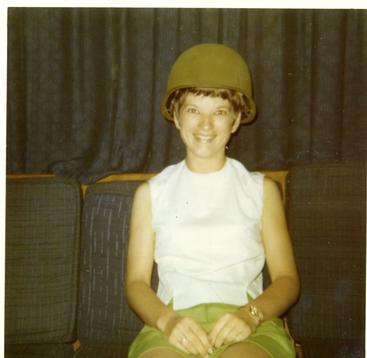 |
| After meeting as a UCLA student with a U.S. Army Special Services recruiter, Ann Kelsey went overseas after graduation, overseeing four libraries during the Vietnam War. |
Born in Indiana in 1946, Kelsey moved with her family to Riverside at the age of five, attending Riverside schools and graduating from Polytechnic High School. Her parents supported her dream of attending university and becoming a librarian, but money was tight. UCR—affordable, close to home, and offering the feel of a small liberal arts college—was the perfect fit.
“I was the first person in my family to go to college and I lived at home, so I spent a lot of time at The Barn, which was the gathering point for students who didn’t live in the dorms,” Kelsey said. “I had so much fun going to dances and parties. I also loved the classes and the teachers, and I learned so much.”
Anthropology classes, in which Kelsey developed an interest in Southeast Asia and Vietnamese history and culture, changed her world view.
“My whole experience at UCR was wonderful. It really was a life-changing experience,” she said.
After graduating from UCR with a double major in English and anthropology in 1968, Kelsey earned a master’s in library science at UCLA. During her time on that larger, more politically active campus, Kelsey felt suffocated by anti-war protests.
“The anti-war movement was very active at UCLA. It was constant hostility and strife,” Kelsey said. “Bruin Walk, which is right outside Powell Library, was a focal gathering point. All my classes were there of course, so I had to walk through that every day. That was in 1968 and there were Vietnam veterans attempting to go to school. I was just appalled.”
When U.S. Army Special Services recruiters came to campus looking for librarians, Kelsey knew she had an opportunity to show her support for Americans serving in Vietnam.
“I filled in the application form, sent it off and, two months after I graduated, I was my way to Vietnam. There were 300 soldiers and me on the plane and that kind of set the tone for the whole year.”
During her time in Vietnam, Kelsey oversaw four libraries, helping soldiers with everything from homework for correspondence courses to recreational reading.
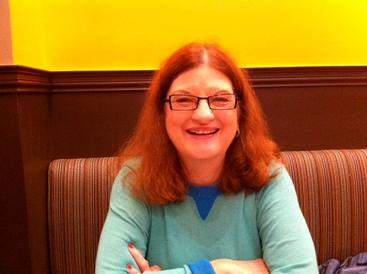 |
| Ann Kelsey's gift will help strengthen and sustain the UCR Library's programs and services in emerging technology. |
Ann Kelsey's gift will help strengthen and sustain the UCR Library's programs and services in emerging technology.
“The libraries functioned very much like a small town public library,” Kelsey said. “That was the purpose of the Army Morale and Recreation program, whether it was library, the entertainment shows, or the rec center—it was to bring a touch of home to the combat zone.”
Returning to the United States, Kelsey settled on the East Coast, working at public libraries and community colleges while supplementing her income with freelance and contract work. In the late 1970s, while working at the Morris County Free Library in Whippany, N.J., Kelsey found herself at the forefront of library automation.
“I could tell this was where the future of libraries was going to be,” Kelsey said. "At that time I was in charge of the children’s book department, so I volunteered to work extra, retrospectively converting the manual shelf list to a digitized record.”
UCR Alumni Association events in the New York tri-state area rekindled Kelsey’s connection with the university in the 1990s. At that time she became a member of the Alumni Association and began making a monthly pledge to the association’s scholarship fund.
In-line with her life and career, Kelsey’s latest gift—a $489,000 planned gift to the UCR Library—will help strengthen and sustain the library’s programs and services in emerging technology.
“The UCR Library is honored by the generosity and confidence shown by Ann Kelsey in her establishment of this bequest, said Steven Mandeville-Gamble, University Librarian. “Ms. Kelsey’s career has spanned the advent of library automation to the evolution of digital scholarship and emerging digital literacies. This gift will allow the UCR Library to continue to evolve to meet the increasingly sophisticated technology needs of our faculty and students for many decades to come.”
More about Kelsey’s service in Vietnam is available as oral history interviews in the Virtual Vietnam Archive at Texas Tech University and Rutgers University Oral History Archives. “In Their Footsteps,” a play based on the oral histories of Kelsey and four other women documents the often untold experiences of the thousands of women who served in Vietnam during the war. It has been performed in New York, New Jersey, Texas, Ohio, Italy, the Edinburgh Fringe Festival, and Australia.
UCR Library Takes Step into Digital Age with Los Angeles Aqueduct History Project
Grant from Metabolic Studio helps to make 100-year-old photos and documents available online.
By Ross French
The above photo of the Soledad Siphon was taken in 1913 by Walter L. Huber and is a part of the Los Angeles Aqueduct Digital Collection. The image shows a section of pipeline that is approximately 8500 feet long. For scale, a car can be seen in the center of the photo. PHOTO COURTESY UCR LIBRARIES DIGITAL COLLECTIONS
RIVERSIDE, Calif. — The Los Angeles Aqueduct celebrated its 100th anniversary this year, and the University of California, Riverside Libraries have joined the celebration by digitizing and publishing online a collection of hundreds of photos and documents and other materials that detail the history of one of the most ambitious public works projects of all time.
While the library has made content available through their Digital Collections in the past, the “LA Aqueduct Digitization Project” marks the first time that UC Riverside has systematically digitized a collection of this size. The project was made possible through a grant from Metabolic Studio, which also supported the efforts of other Southern California institutions to select, digitize, and make available unique materials available online, including historical photos of and documents about the construction of the aqueduct.
“This support from the Metabolic Studio allowed the UCR Libraries to test and implement best practices for digitization, workflows, and metadata creation, and to reveal and make available previously hidden, unique historic resources about the construction of the LA Aqueduct,” said Diane Bisom, project director and associate university librarian for information technology and systems. “The variety of materials – documents, photographs, published materials, maps, etc. – allowed us to push the envelope on our digitization, workflow, and metadata creation activities, and to involve staff from many areas of the libraries.”
“The aqueduct project forced us into some hard thinking on how to make the digital content available in an easy to use way,” agreed UCR Librarian Steven Mandeville-Gamble, who added that all the content meets the guidelines of the system wide UC Libraries Digital Collection (UCLDC) Implementation Project, which upon its completion in 2015, will create a shared, comprehensive platform for the management and display of content. “We did it that way so that no effort was wasted.”

This invitation to the opening of the Los Angeles Aqueduct and Exposition Park from 1913 is
one of the featured items of the collection and a favorite of both Bisom and Milenkiewicz.
PHOTO COURTESY OF UCR LIBRARIES DIGITAL COLLECTIONS
The content that was digitized is part of the UCR’s Water Resources Collections and Archives (WRCA), a world-renown collection of unique, contemporary and historic materials on all aspects of water resources and issues in California and the western United States. The collections included in the project are:
-
Mono Lake Committee Collection
-
Joseph Barlow Lippincott Papers
-
Charles H. Lee Papers
-
Charles H. Lee Photograph Collection
-
Walter L. Huber Papers
-
Walter L. Huber Photograph Collection
-
John Debo Galloway Papers
“We’ll continue to expand the LA Aqueduct digital presence by adding mapping and timeline features, and selected published material. We’ll begin digitization of other unique collections from the Libraries’ Archives, and we’ll continue to make our digitized collections widely available,” Bisom said.
The collection utilizes a free, open-source web publishing platform called Omeka that is used by libraries, archives and museums around the world to display and discover library and archival collections.
“Omeka allowed us to easily batch upload metadata records into the system and then attach each of the associated digital objects for online display,” said Eric Milenkiewicz, archivist in Special Collections and Archives and project manager of the aqueduct project. “Without Omeka, it would have taken considerable IT staff time to design a database and user interface for digital collections. It provided us with a lightweight solution to managing and providing access to our digital content.”
Several steps went in to the addition of each piece of content. The physical item is digitized according to standards outlined in the Technical Guidelines for Digitizing Cultural Heritage Materials by the Federal Agencies Digitization Guidelines Initiative (FADGI). The document is then saved using a pre-established naming convention. Descriptive and administrative metadata is created for the item and entered into a spreadsheet before being put into the Omeka database. All of the original materials are maintained as part of the Water Resources Collections and Archives physical holdings.
“There are also several quality control checkpoints along the way to make sure that individual items are properly digitized/saved and that the metadata is accurate,” Milenkiewicz said. “Multiple staff members are involved in this process that takes approximately 10 minutes per item, start to finish.”
Milenkiewicz and Bisom said that several other digitization projects are on tap, including sections of the Tomás Rivera Archive, selected materials from the Eaton Collection of Science Fiction and Fantasy, and bound volumes of the Highlander Student Newspaper dating back to the campus’ founding.
New archival collections available for winter quarter 2018
Special Collections & University Archives staff are constantly working to process recently acquired collections and make those materials ready for use by students, faculty, and researchers.
Each quarter, we will provide a list of UCR Library's newly processed archival and primary source collections. Check out the list below to see if there are any items that fit your research area, or share with a friend!
Below you'll find brief descriptions and links to the finding aids or collection guides for each new collection. To use any of these materials, simply click the "Request Items" button at the top to submit a request, and log in with our Special Collections Request System. For more on conducting research in Special Collections, see this page.
SCUA is open to the public on weekdays from 11:00 am – 4:00 pm. Check here for closures or other changes to our regular hours.
For questions, email specialcollections@ucr.edu.
Newly Processed Collections – Winter 2018
1.83 linear ft. (3 boxes)
This collection contains role-playing games including Advanced Dungeons & Dragons, Marvel Super Heroes, and DC Heroes. Items in the collection include player and master manuals, as well as maps and character pieces.
1.75 linear ft. (7 boxes)
This collection consists of around 1500 photographs and photographic postcards featuring the people, places, and events significant to the Mexican Revolution (1910-1920) from the studio of Luis Ramirez Pimentel, including many images from the Chihuahua Campaigns (circa 1910-1913).
0.21 linear ft. (1 box)
This collection contains transcripts, MP3 audio files, and digital images related to the Inlandia Institute's oral history project, "'Making Waves: Women's Environmental Movement," which documented the stories of seven Inland Empire area environmentalists. Women interviewed for the project included Jane Block, Liz Cunnison, Melba Dunlap, Beverly Wingate Maloof, Sue Nash, Penny Newman, and Ruth Anderson Wilson.
Seminario International Escenarios Politicos de la Transición a la Democracia records, 1989 (MS 017)
0.42 linear ft. (1 box)
This collection contains newspaper clippings and conference papers related to the "Seminario Internacional Escenarios Politicos de la Transición a la Democracia," a seminar held in July of 1989 that discussed the various political transitions from socialism to democracy occurring in Latin America.
3.33 linear ft. (8 boxes)
This collection consists of photographs and documents related to the Mission Inn, a national historic landmark located in Riverside, California, generally considered to be the largest Mission Revival Style building in the United States. The collection also includes images of Frank Miller, the first owner of the Mission Inn, Riverside's Mount Rubidoux, and other historic buildings in Riverside.
1.67 linear ft. (4 boxes)
The collection consists of items collected by Laura Klure related to the Young Women's Christian Association (YWCA) of Riverside, a women's organization dedicated to empowering women and advocating for civil rights. Materials in the collection mostly consist of interviews, research, notes, and other documents related to the Riverside YWCA History Project, which was an effort by Klure and others undertaken in the early 1990s to document the history of the local branch and create an archive of Riverside YWCA records.
0.42 linear ft. (1 box)
This collection contains schedules and proceedings from the "Seminario Partidos Políticos en los Procesos de Democratización," a seminar on the democratization of political parties in Paraguay held in 1989 and organized by the Grupo de Trabajo de Partidos Politicos (CLACSO) and the Centro Paraguayo de Estudios Sociologicos (CPES).
1.25 linear ft. (1 box)
This collection contains correspondence, documents and other material from Eloise Emerson, an accomplished public health nurse who worked for the Riverside County Department of Health. The majority of materials in the collection focus on her nursing career, and her lobbying effort against the California State mandatory retirement age.
1.5 linear ft. (6 photograph albums)
The collection consists of photographs from the Mexican Revolution (1910-1920) taken by Agustín Victor Casasola, a Mexican photographer and co-founder of the Mexican Association of Press Photographers. Photographs in the collection include depictions of daily life in Mexico, and Mexican presidents in the early 20th century. In addition to photographs taken by Casasola, there are additional photographs on Mexico and its politics taken by Casasola's sons after his death in 1938.
0.83 linear ft. (1 box)
This collection consists of an album of photographs depicting various scenery, people, agriculture, and ruins in Paraguay in the early 1900s. Photographs in the album include views of a fleet from the 1912 Revolution, the Encarnación cyclone disaster of 1926, the Jesuit ruins at Jesus y Trinidad, and of the inauguration of the Salesian Agricultural School at Ypacaraí.
0.5 linear ft. (2 photograph albums)
This collection contains photographs of various people and landscapes of Mexico taken by Hugo Brehme, a German-born photographer that moved to Mexico in 1905.
0.71 linear ft. (2 boxes)
This collection consists of 60 cartes de visite, owned by José Antonio Ulloa of Zacatecas, Mexico. Items in the collection include photographs and portraits of European, South American, and Central American royalty and military members from the 19th century. Many of the cartes de visite depict members of European royalty related to Napoleon I, as well as cartes de visite of figures surrounding the trial and execution of Mexican Emperor Maximilian I in 1867.
1.67 linear ft. (5 boxes)
This collection contains a variety of lantern slides depicting geographical areas, buildings and ruins, famous individuals, and people of various countries.
2.33 linear ft. (3 boxes)
The collection contains black and white photographs taken during the Mexican Revolution in the early 20th century. Photographs in the collection cover various locations, battles, soldiers, and important figures such as Álvaro Obregón, Francisco Madero, Pancho Villa and Pascual Orozco.
2.0 linear ft. (1 photograph album, 1 box)
The collection consists of photographs of Mexican revolutionary and President Venustiano Carranza, including depictions of Carranza on national tours and in areas being attacked by Revolutionaries during his time as Mexico’s president (1917-20). Photographs in the collection also include portraits of Carranza and other prominent Mexican figures, including Isidro Fabela and Álvaro Obregón.
0.54 linear ft. (1 photograph album, 1 box)
The collection consists mainly of photographs of Francisco “Pancho” Villa, a Mexican Revolutionary general and prominent figure during the Mexican Revolution in the early 20th century. Photographs in the collection include portraits of Villa, Villa with his troops and other military figures, Villa's murder in 1923, and photographs of Villa’s family.
0.42 linear ft. (1 box)
This collection contains newspaper clippings, articles, and other material on the history of the Gage Canal, the system built in 1898 to supply water to the city of Riverside, California. Materials in the collection cover the sale of the Gage Canal company, various lawsuits and legal issues, and correspondence and photographs belonging to John M. Mylne, the superintendent and engineer of the Gage Canal System.
0.42 linear ft. (1 box)
The collection consists of 27 stereoscopic photographs depicting various locations in Jerusalem published by Underwood & Underwood at the turn of the 20th century. The majority of the photographs come from the "Jerusalem Tour" set published in 1904.
Special Collections & Manuscripts
Special Collections at the UCR Library consists of archival collections and related books documenting a wide range of subject areas that reflect the research needs and interests of the UCR community. This includes over 275 manuscript collections of both personal and family papers and organizational records, along with over 50,000 books, journals, and other print materials related to those collections.