Search
Search
Chinese & Asian Studies
Located in: Tomás Rivera Library
We hold extensive collections on the Greater China region, Japan, and Korea, focusing on classic and modern literature and history.
Vietnam & Southeast Asian Studies
Located in: Tomás Rivera Library
The UCR Library’s collections include extensive resources about Vietnam, Thailand, Laos, Malaysia, Singapore, Indonesia and the Philippines.
Notable New Resources
Publications Based on Research Conducted in SCUA
This list highlights publications that have used or cited materials held by Special Collections & University Archives.
We hope you find this list to be a valuable resource for your own research. We regularly add new publications to this list, so please check back often.
Subject Guides
The library offers many subject guides prepared by library staff. The guides are updated periodically with resources for specific subject areas. Use these guides to get started with finding library resources in your discipline:
Class of 2017 Alumna featured in The Best American Science Fiction and Fantasy 2018
Class of 2017 alumna and author Jaymee Goh has achieved a feat that many writers hope to accomplish at the pinnacle of their careers – and she’s done it within one year of receiving her PhD from UC Riverside.
The Best American Science Fiction and Fantasy 2018 (The Best American Series) featured her short story, “The Last Cheng Beng Gift,” in its anthology.
The tale begins on tomb-sweeping day, a traditional Chinese festival that occurs each spring, and focuses on a strained relationship between an Asian mother and daughter. While the traditions and nuances of Goh’s story might hold greater cultural significance for Asian readers, the relatable theme of being the disappointing child to a persnickety “tiger mom” transcends ethnicity.
Goh came to UC Riverside to pursue her doctoral research thanks in part to the enthusiasm of UCR’s Comparative Literature and Languages department faculty. To gauge their interest, she emailed the recruitment director about her proposed research topic -- post-colonialism in steampunk (a genre of science fiction characterized by design and/or fashion that blends historical elements with anachronistic technology). “I got back emails from four different professors saying, ‘Yes, we would be totally interested in this research! Come apply!’” Goh explained.
A Malaysian citizen who lived in Canada while working toward her master’s degree, when Goh first visited the campus, she was not impressed by Riverside’s public transit system. She was, however, wowed by UCR’s resources for mental health and wellness.
“I have depression, and I wanted to see what the department culture was,” Goh said. “The chair was like, ‘Oh yeah, we’ve got a great counseling center! I can walk you over there at the break if you want.’”
The Eaton Collection of Science Fiction and Fantasy also influenced Goh’s decision to attend UCR. While disappointed that she couldn’t browse through the closed Special Collections stacks, she accessed and relied on many of the collection’s resources while working on her dissertation on steampunk and whiteness. Her research is what she calls “a critical examination of whiteness and white supremacy’s effects on racial relations,” and her dissertation, Shades of Sepia: Examining Eurocentrism and Whiteness in Relation to Multiculturalism in Steampunk Iconography, Fandom, and Culture Industry, is available to the UCR community on ProQuest.
Other factors that attracted Goh to UC Riverside included professors Sherryl Vint in the English department, and Nalo Hopkinson in the Creative Writing program, both founders of the Speculative Fiction Cultures / Science Fiction & Technology Studies program.
“When I first started writing my own fiction, I kind of used Nalo Hopkinson as a model for creating narratives that centered experiences and worldviews that are usually marginalized in science fiction,” Goh said. “She was one of the first people that I talked to when I got here, and I was really excited to meet her.”
Goh’s first forays into writing science fiction and participating in the steampunk subculture started her thinking about multiculturalism in the steampunk genre. “I don’t see many people of color in steampunk, and that’s a problem,” she said. This led to her academic research on racial representation in science fiction.
To address this on the creative front, in 2015 she co-edited an anthology, The Sea is Ours: Tales from Steampunk Southeast Asia, the first of its kind. “I wanted to talk about a steampunk that was very deeply rooted in Southeast Asian cultures, to try to reimagine worlds that either had not been colonized, or were technologically developed enough to push back against colonialism,” Goh explained. The anthology was co-edited by Singaporean writer Joyce Chng and published by Rosarium Publishing.
“Jaymee’s anthology was a revelation to me. Seeing how she had staked new ground for steampunk inspired me to ask such an early-career author to make the Eaton Collection the home for her papers,” said JJ Jacobson, the Jay Kay and Doris Klein Librarian for Science Fiction. “I knew that here was someone who was going to have a fascinating and multifaceted career in the speculative fiction world, and that we wanted to document it.”
Goh hopes that her writing might inspire more people of color, both established authors and aspiring writers, to use steampunk to explore different visions of their own identities. She added, “Because of assimilationist politics, a lot of us don’t feel safe expressing our own identities, particularly in costume play – because our cultures are not a costume and they’re already being treated as such. Part of why we fear that is because we have seen the ways that our cultures have been commodified. So I would like to see more people being comfortable rewriting their own history, the way that so many white authors feel comfortable rewriting British history, and inserting their own characters into it and not being too worried about it.”
Jaymee Goh is currently living in Berkeley, California, where she works as an editor for Tachyon Publications.
Collection Strategists
Arts and Humanities
Digital Collections Celebrate Mental Health Awareness Month and AAPI Heritage Month
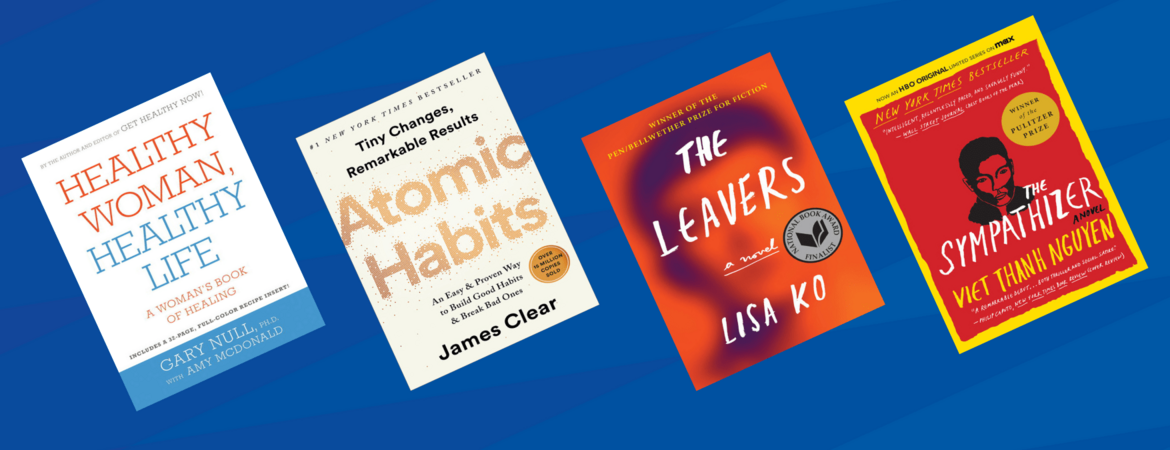
This month, we’re excited to highlight two digital collections—whether you're seeking personal growth, cultural enrichment, or both, these digital collections are for you!
Mental Health, Wellness, and Self-Improvement Collection
May is Mental Health Awareness Month! Find books in this collection to help you with your wellness, goals, and aspirations. Access the collection here.
Asian American and Pacific Islander Heritage Month Collection
Celebrate AAPI Heritage Month with us! From compelling biographies to insightful fiction, explore narratives that enrich your understanding of the AAPI experience.
Check out these collections and more at ucr.overdrive.com or download the Libby app and add the UCR Library as a “library”. Students, faculty, and staff can use their UCR credentials to access these books for free from their computer, phone, laptop, or tablet!
Collections
African American Life & Culture
Print and electronic resources highlighting the pivotal sociological, literary, and artistic achievements of people of African descent in America.
Chicano/Latino Studies
Resources on Chicano/Latino ethnicity, gender and sexuality, demographics, migration and diaspora communities.
Japanese Hip-Hop Collection used in Music Course
On Tuesday, November 29, 2016, students of the Music Department’s debut course “Genealogy of Hip-Hop” became the first to use UCR Library’s new Dexter Thomas Japanese Hip-Hop Collection.
Dani Brecher Cook, Director of Teaching & Learning at UCR Library, collaborated with Dr. Liz Przybylski, Assistant Professor of Ethnomusicology to make this new archive available for student research.
“It was a new and exciting class that was offered by the Music Department to music majors and non-majors,” Dr. Przybylski said. The course examined hip-hop’s global spread and specific case-studies in the global hip-hop scene.
Dr. Przybylski felt that her collaboration with Dani and the library was productive. “Dani helped the students to interact with some of the materials, which helped them to understand what an archive is and how they can use it,” Dr. Przybylski explained. “The students enjoyed themselves, and it’s great to see what can happen when we have someone like Dani, who has the skill and experience to translate collections into student learning.”
Dani agreed that the collaboration was a terrific experience, stating, “Liz was a librarian’s dream to work with. She had a clear sense of what she wanted the students to walk away with, regarding how distinctive collections can deepen their understanding, beyond or in addition to what a YouTube video or streaming music might.”
Student groups participated in an open-ended listening activity, with each group assigned to one artist, based on what the library had available in the collection. Dani felt that this experience demonstrated the importance of physical collections and how material objects can enhance our understanding of topics in unexpected ways. “The students closely examined each part of the CD, ranging from the artwork on the liner notes and how that correlated (or didn’t!) with the music that they heard on the tracks, picking out the range of influences that informed the music, and tracking how artists evolved over time.”
“Students who don’t have a history of working with a physical product just don’t understand what kind of information it’s possible to encounter when you’re looking at an actual album or all the ways you can interact with an album, other than just hearing the songs that are on it,” Dr. Przybylski explained. “The physical CDs helped to tune the students in to the artist’s trajectory. They were reading CD liner notes to see more than just the lyrics of the songs. One group put all the CDs in order by year and looked at how the images changed over time, what label are the artists on now versus the label they used to be on. It was so much more immediate and accessible with the music in their hands.”
Dr. Przybylski sees great potential for future collaborations between the Music Department and UCR Library, using this archive. She hopes to see the “Genealogy of Hip-Hop” class run each year, and integrate the Dexter Thomas Japanese Hip-Hop Collection more robustly into the course curriculum. She would also like to incorporate it into her graduate seminar in hip-hop so that students could research the collection in-depth.
“It’s exciting to see students discover new things and create new knowledge for themselves using our distinctive collections,” Dani explained. “I’m looking forward to having the whole collection available next time, and seeing how that will help to build new connections and facilitate different thought processes and discoveries.”
“Some students seemed surprised that they really enjoyed the music even if they didn’t understand the lyrics,” Dr. Przybylski mused. She found only one drawback to the experience: “Having someone fluent in Japanese to translate the materials would enable us to extract even more information from them.” Perhaps this need could inspire a future collaboration between the library and the Asian Studies department.
Students also expressed interest in who the collector was and how he put this material together, Dr. Przybylski explained, because they resonated with and were inspired by the success that he had achieved post-UCR. Dexter Thomas graduated from UC Riverside in 2006 with a major in English and is now a PhD candidate in East Asian Studies at Cornell University. While at UCR, Thomas served as the Student Director of Programming at KUCR-FM, and after graduation he became a correspondent for the HBO show Vice News Tonight. Thomas won a Pulitzer Prize for his work at the Los Angeles Times on the 2015 San Bernardino shooting. He is currently writing a book about Japanese hip-hop.