Search
Search
SCUA Unprocessed Collections Policy
Unprocessed Manuscript and Water Resources collections are generally open for research use, provided they are not restricted. However, the Special Collections and Archives staff may need to delay access for a reasonable period of time to survey the records for confidential information and/or personally identifiable information. Therefore all requests for unprocessed materials must be made at least 72 hours in advance of visiting the archives.
Barbara Martinez Neda
Reporting to the Director of Research Services, Barbara is the driving force of the library's data science initiative to support campus research through interdisciplinary collaboration on cutting-edge projects in STEM, Liberal Arts, and Social Sciences.
Research Data Scientist

Afrofuturist Comics: Sankofa and the Black Speculative Re-Imagination with Dr. Nalo Hopkinson and Prof. John Jennings
On Thurs., June 25, bestselling authors and UC Riverside professors Dr. Nalo Hopkinson and Prof. John Jennings will be the featured guests at an online event titled, Afrofuturist Comics: Sankofa and the Black Speculative Re-Imagination.
Hopkinson and Jennings will discuss their most recent publications, House of Whispers Vol. 1: The Power Divided (The Sandman Universe) and Parable of the Sower: A Graphic Novel Adaptation.
Both authors will discuss their work in the science fiction and Afrofuturism genres, writing graphic novels, and why they chose to donate their scholarship to the UCR Library.
They will also answer questions from viewers; attendees who RSVP will receive a link they can use to submit questions at least 48 hours in advance.
This event will be the first in a series called Faculty Profiles in Research, Art and Innovation, hosted by the UCR Library, and is open to all members of the UC Riverside community and surrounding areas.
Please RSVP in order to receive the link to join the livestream broadcast from 4:30 - 5:30 p.m. Pacific Time on June 25.
Coming up next in the Faculty Profiles in Research, Art & Innovation series:
- Summer quarter: Susan Straight, Distinguished Professor of Creative Writing
- Fall quarter: Dr. Clifford E. Trafzer, Distinguished Professor of History and Rupert Costo Chair in American Indian Affairs
Dates for summer and fall quarter will be announced soon.
Books the Size of Your Fingernail
Bring your best pair of reading glasses – you’ll need them.
The University of California, Riverside Library will host “The Magic of Miniature Books” exhibit Jan. 18 through March 30.
“Miniature books have a long and interesting history, with the earliest miniatures created approximately 4,000 years ago in Mesopotamia,” said Cherry Williams, the director of Distinctive Collections at UCR Libraries. “The books have been popular throughout history, being recognized early on as a format that can be effortlessly carried about, hung from a belt or even easily concealed.”
By the 19th and 20th centuries, Williams said, books from nearly every genre were available as miniatures. These genres included classic fiction, artists’ books, dictionaries, almanacs, Bibles and prayer books, children’s books and non-fiction works such as fishing guides.
The exhibit has two components. The first features about 30 miniature books from the Special Collections and University Archives (SCUA) section of the Tomas Rivera Library. Books featured vary from tiny volumes of novels such as, “The Cat Who Loved Christmas,” to a copy of "The Lord's Prayer" that is smaller than your pinky fingernail, to a miniature version of Thomas More’s “Utopia” that measures about 2 by 3 inches.
Some of the other books on display include “Jack be Nimble and Other Rhymes,” printed in 1987, and “El Libro de la Misa Para uso de la Incancia,” a Catholic service book printed in Spanish from 1861.
“As a result of putting these items on display, we hope that our viewers will return often to visit Special Collections at a future date, and discover additional interesting materials available for their use in the SCUA reading room,” Williams said.
The second component is a traveling exhibit UCR is hosting on behalf of the Miniature Book Society (MBS). MBS is an international organization that works to sustain an interest in miniature books.
Williams said the traveling exhibit highlights winners of the annual MBS competition, and showcases modern masterpieces and historic examples of miniature books. Williams hopes the traveling component promotes MBS grant opportunities, which enable students to pursue study in miniature books.
“The Magic of Miniature Books” traveling exhibit will be on display on the first floor of the Rivera Library, while the display of selected items from SCUA will be available on the 4th floor of the Rivera Library in the Special Collections reading room. For more information, contact Cherry Williams.
New tool teaches students how to effectively use primary sources
The UCR Library’s Robin Katz contributed to Adam Matthew’s latest platform, Research Methods Primary Sources.
Primary sources are history in the raw, data that hasn’t been interpreted yet. Primary sources present themselves in formats like oral histories, letters, diaries, and other first-hand documentation.
As a new researcher or college student, interpreting and analyzing primary sources can be an exciting yet overwhelming task. Many may still regard history as a collection of agreed-upon facts attractively packaged together in a textbook.
A new tool from academic publisher Adam Matthew aims to teach students what primary sources are, where to find them, and how to conduct the critical analysis necessary to wield primary sources effectively.
Research Methods Primary Sources (RMPS) is an online learning tool for primary source literacy designed to support students of the humanities and social sciences by introducing key methods and approaches to working with historical material.
“What is exciting about RMPS is that it doesn’t just contain digitized primary sources — it is designed to teach students how to engage with primary sources, and it can be used by faculty to design learning activities and assignments,” said Robin Katz, the UCR Library’s Arts and Humanities Teaching Librarian.
Adam Matthew approached Katz to provide input on the tool due to her expertise in primary source pedagogy.
“I gave feedback on how the then-proposed tool would be useful to librarians, faculty, and students and how it could best meet their goals,” Katz explained. “I also authored a case study on using oral histories.”
The platform's flexibility allows it to be easily incorporated into a classroom setting or used as part of a student’s independent study. Students will learn through videos, how-to guides, and peer-reviewed essays. Students will also be able to access over 140 case studies and put their new skills into practice, all within the platform.
Research Methods Primary Sources is sure to become an essential resource for students seeking to develop the skills necessary to conduct research and evaluate primary sources confidently.
This innovative teaching and learning tool is now available to all UCR students, faculty, and researchers. To connect to RMPS, navigate to the UCR Library's A-Z Database page, or head straight to the Research Methods Primary Sources website. If you’re connecting from off-campus, ensure you have your VPN installed and turned on to access the resource.
Dive Into Summer Reading on OverDrive

Enjoy your summer with e-books from our digital leisure reading collection! We’ve curated three collections perfect for summer.
Summer Reads
Relax with chill reads for a hot summer. This collection features a variety of stories from thought-provoking reads to light-hearted stories that are perfect for unwinding. Explore the collection.
Television and Movie Reads
Read the book before watching the show or movie! This collection includes bestselling novels and captivating stories that have been adapted into popular TV shows and films. Discover the collection and immerse yourself in the original stories behind your favorite screen adaptations.
LGBTQ+ Collection
Dive into popular fiction, graphic novels, Lambda Award winners & nominees, nonfiction, and magazines featuring LGBTQ+ characters, authors, and topics. This collection celebrates diverse voices and stories within the LGBTQ+ community, offering a rich array of reading material. Check out the collection.
Happy reading!
Check out these collections and more at ucr.overdrive.com or download the Libby app and add the UCR Library as a “library”.
Students, faculty, and staff can use their UCR credentials to access these books for FREE from their computer, phone, laptop, or tablet!
3D-printed earthquake fault model “shakes” up Congressional meeting
Christodoulos Kyriakopoulos had a wild idea in July 2017, but he didn’t know whether UCR had the resources he needed to bring his vision to life – until he found out about the Creat’R Lab.
It had opened its doors in Orbach Library only three months prior.
As a Researcher in UC Riverside’s Department of Earth Sciences, Kyriakopoulos typically works with numerical models on computer screens, but he wanted to make a 3D-model of California’s major earthquake faults to use as an outreach tool.
He believed that a tactile model would make his work more engaging, interactive and accessible to different types of audiences – from academic peers to elementary schoolchildren, government officials, and the visually impaired.
“It can be challenging for geophysicists to talk to everyday people about what we do,” Kyriakopoulos explained. “In order to do that better, it helps to be able to put our computer-based work into physical form.”
When he brought his idea to Michele Potter, Creat’R Lab’s 3D printing specialist, she was enthusiastic. “It involved a number of techniques and considerations we had never delved into before, and the educational application was so obvious,” she said. “This technology can teach people new concepts, partially by inspiring them to ask questions that they had never thought of before.”
“Michele was so helpful,” Kyriakopoulos said. “The Creat’R Lab is a great example of a well-organized space with an open doors policy, so easy to approach and so supportive.”

Kyriakopoulos and his 3D-printed model have had quite a busy year. “In nine months, we have brought the model to the general public, the American Geophysical Union (AGU) Fall Meeting – the biggest geophysical conference in the world, the [Riverside] Long Night of Arts and Innovation, several outreach activities inside and outside UCR, and even a house committee meeting with legislators!” he said.
The model was featured at a congressional meeting on May 31, 2018 in Huntington Beach, where the House Committee on Science, Space and Technology (including Congress members Mark Takano, Dana Rohrabacher and Jerry McNerney) met to decide the fate of the National Earthquake Hazards Reduction Program (NEHRP).
“This may have helped significantly in giving arguments to Congress for increasing research funding for earth sciences,” said Michalis Faloutsos, UCR Director of Entrepreneurship.
“Christos’ model seems to have done for the Representatives what it has done for countless UCR and visiting students: showed them in a tangible way why we need to talk about earthquakes,” Potter added.
According to Kyriakopoulos, NEHRP is something that UCR should care about because data from the U.S. Geological Survey indicates that the Southern California region has a 75% chance of seeing one or more major seismic events (an earthquake measuring 7.0 or higher) in the next 30 years – and Riverside is close to many of the most active and dangerous faults.
Kyriakopoulos’ office is now filled to the brim with 3D-printed models. His collection of fault displays has expanded to include a model of the subduction zone fault responsible for the M9 2011 Tohoku-oki event (Japan), the M7.2 2010 El Mayor-Cucapah (Baja California, Mexico) earthquake, the M7.8 2015 Gorkha (Nepal) earthquake. He also has small models of the Grand Canyon and Mount St. Helens, among others, which he plans to use for outreach.
“What Christos is doing is truly exciting, and the Creat’R lab has been crucial,” said David D. Oglesby, Chair of the Department of Earth Sciences and professor of geophysics.

Christodoulos Kyriakopoulos would like to recognize Kaitlin Chail (Director of Federal Relations at UCR) for organizing the participation at the Congressional Meeting in Huntington Beach.
Propel your research to the next level in the STAR Lab!
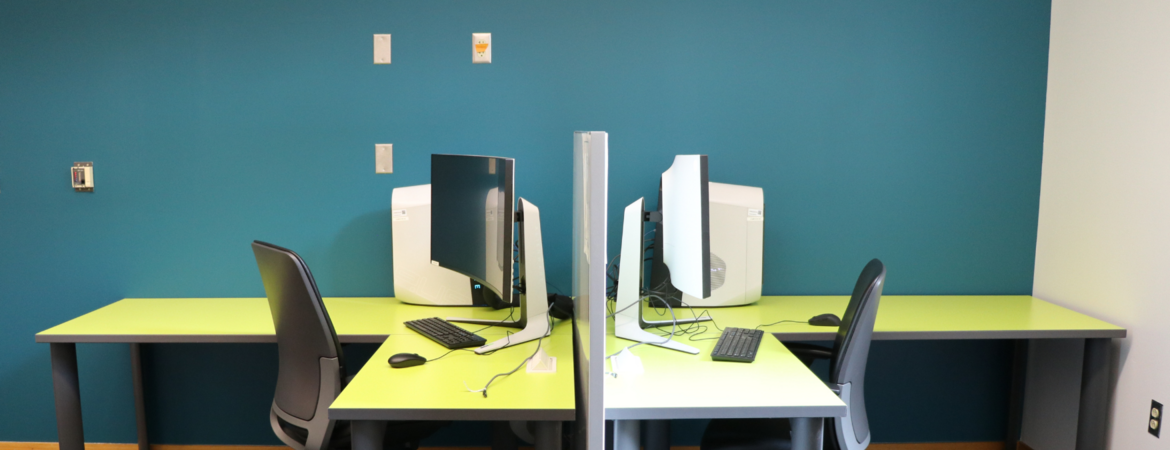
Ready to take your research to the next level? The Scholarly Technology and Research (STAR) Lab at the Orbach Science Library (Room 147) is the perfect place.
With the launch of the STAR Lab, the UCR Library has created a dedicated space where UCR students and researchers can access advanced digital tools and software like NVivo and Adobe Creative Suite.
The STAR Lab boasts four high-performance Windows workstations, each loaded with a wide array of software for a variety of research needs. There's also a top-quality flat-bed scanner and a mobile TV monitor available for use.
“The STAR Lab takes lots of fantastic technology and applications that are often out of reach for the average student or researcher and presents them in an accessible space for different types of exploration and research,” said UCR Library’s Research Services Assistant Andrew Morales who helps run the STAR Lab.
Wondering what you can do in the STAR Lab? It's not just about research – it's about bringing your creative and analytical ideas to life. Whether it’s:
- Mapping
- Photo editing
- Data visualization
- Video editing
- Audio editing
- Machine learning analysis
- Running OCR (Optical Character Recognition) on documents and more!
We’ve even integrated Git into our systems. This means you can easily manage your work, ensuring it’s safe and shareable.
The STAR Lab embodies UCR Library’s commitment to digital scholarship and research excellence. Our goal is to empower UCR students and researchers with the best resources to conduct cutting-edge research, explore creative digital possibilities, and collaborate on innovative projects.
The STAR Lab stays locked, but with a confirmed reservation, you can pick up a key from the Orbach Library Circulation Desk. Any UCR student, researcher, or staff member can reserve a workstation for almost two hours at a time, from 9 a.m. to 5 p.m., Monday to Friday.
Curious to see the full list of software offered or want to book some time in the STAR Lab? Check out guides.lib.ucr.edu/starlab.
Library blogs highlight our work
On occasion, UCR Library employees document their work through a blog.
Using blogs as a communication tool for the library allows insight into the behind-the-scenes processes that library patrons don't usually get to see. Blogs also make it possible to highlight new discoveries of important or interesting content in our collections as we identify it.
Collections Management Librarian Jessica Geiser kept a detailed record of her progress while working on the George Brown political papers, before that collection was made available to the public in 2016.
Similarly, the Jay Kay and Doris Klein Librarian for Science Fiction, JJ Jacobson and graduate student Miranda Butler, her co-curator for the "200 Years of Frankenstein" exhibit scheduled to debut in fall 2018, are currently documenting their exhibit-design journey on the Frankenblog.
Those interested in learning more can read other UCR Library blogs here.
Reflecting on our history for UC Riverside's 65th Anniversary
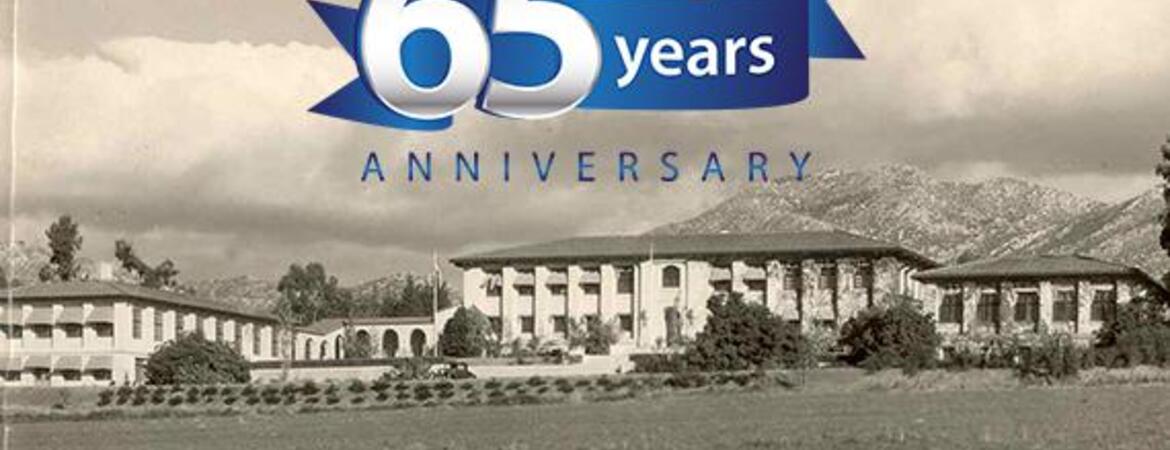
Here are a few highlights from University Archives that showcase some fun facts and figures, in honor of the 65th anniversary of UC Riverside.
Establishment
The Riverside Citrus Experiment Station opened for business on February 14, 1907, but UC Riverside did not become a university until February 15, 1954 – 47 years and one day later.
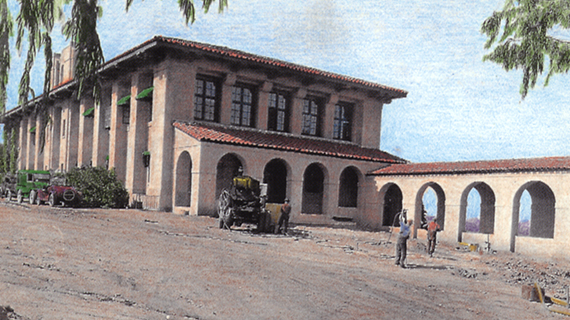
The groundbreaking ceremony took place on July 30, 1952, and construction began on Webber Hall, Geology, Physical Education, Watkins Hall and Life Sciences.
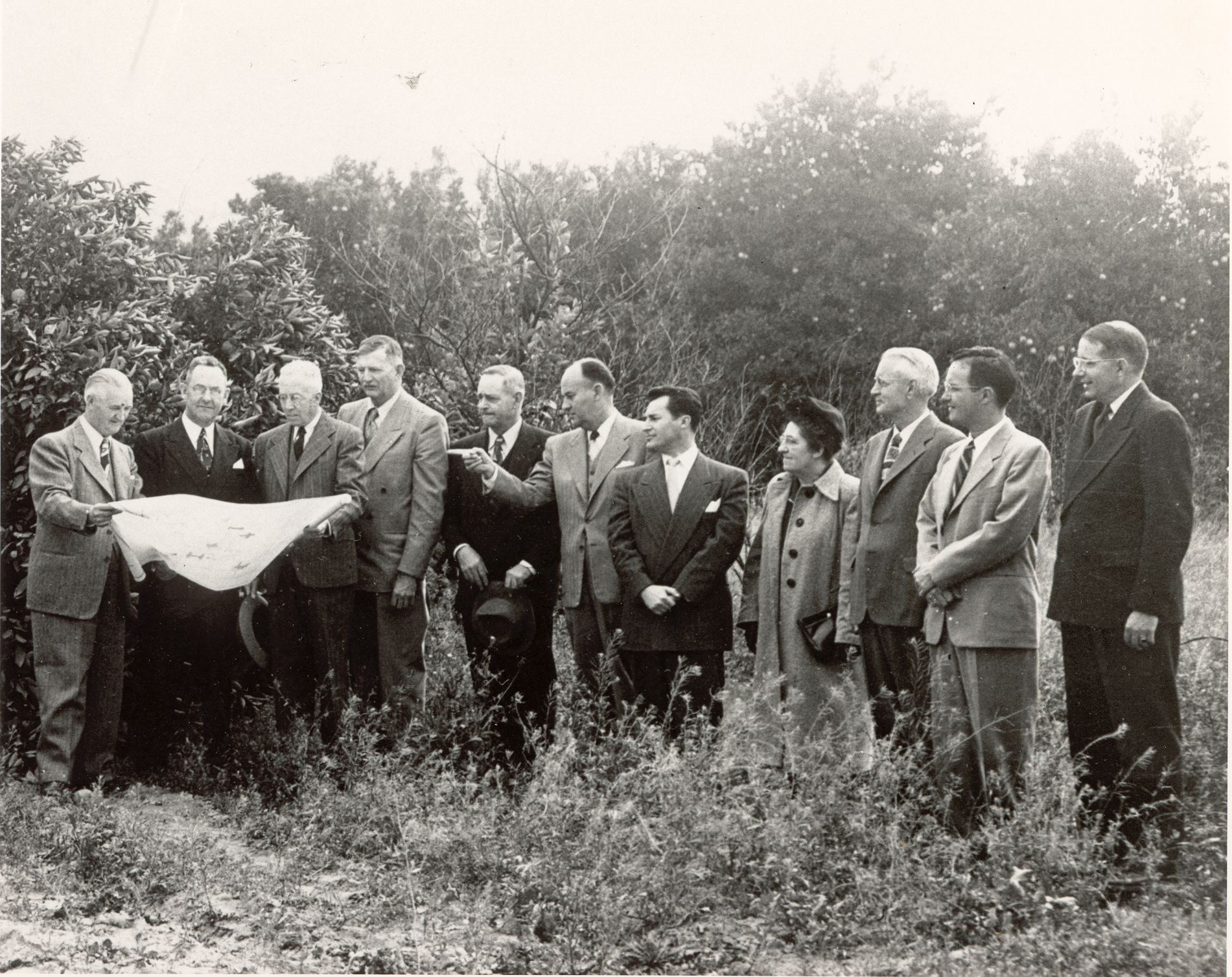
Feb. 15, 1954 is the first day of classes at UC Riverside, with 127 students and 65 faculty members. Campus covers 1,200 acres.
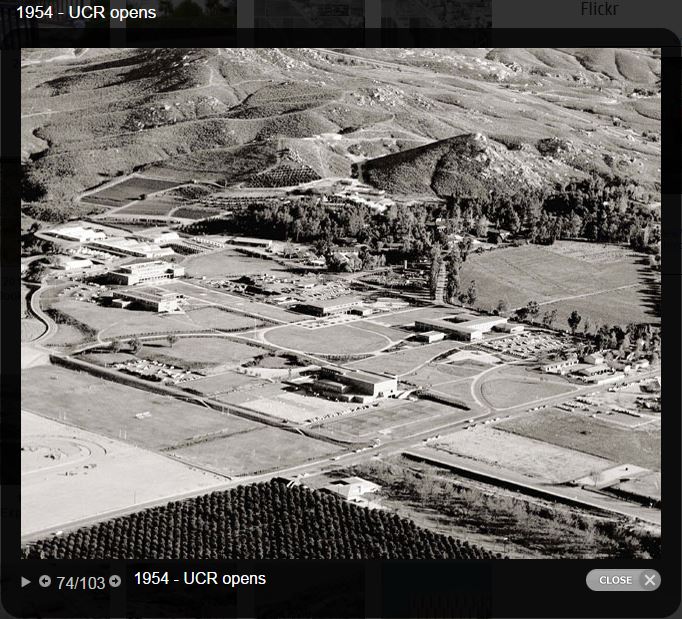
The official dedication of UC Riverside took place on October 19, 1954.
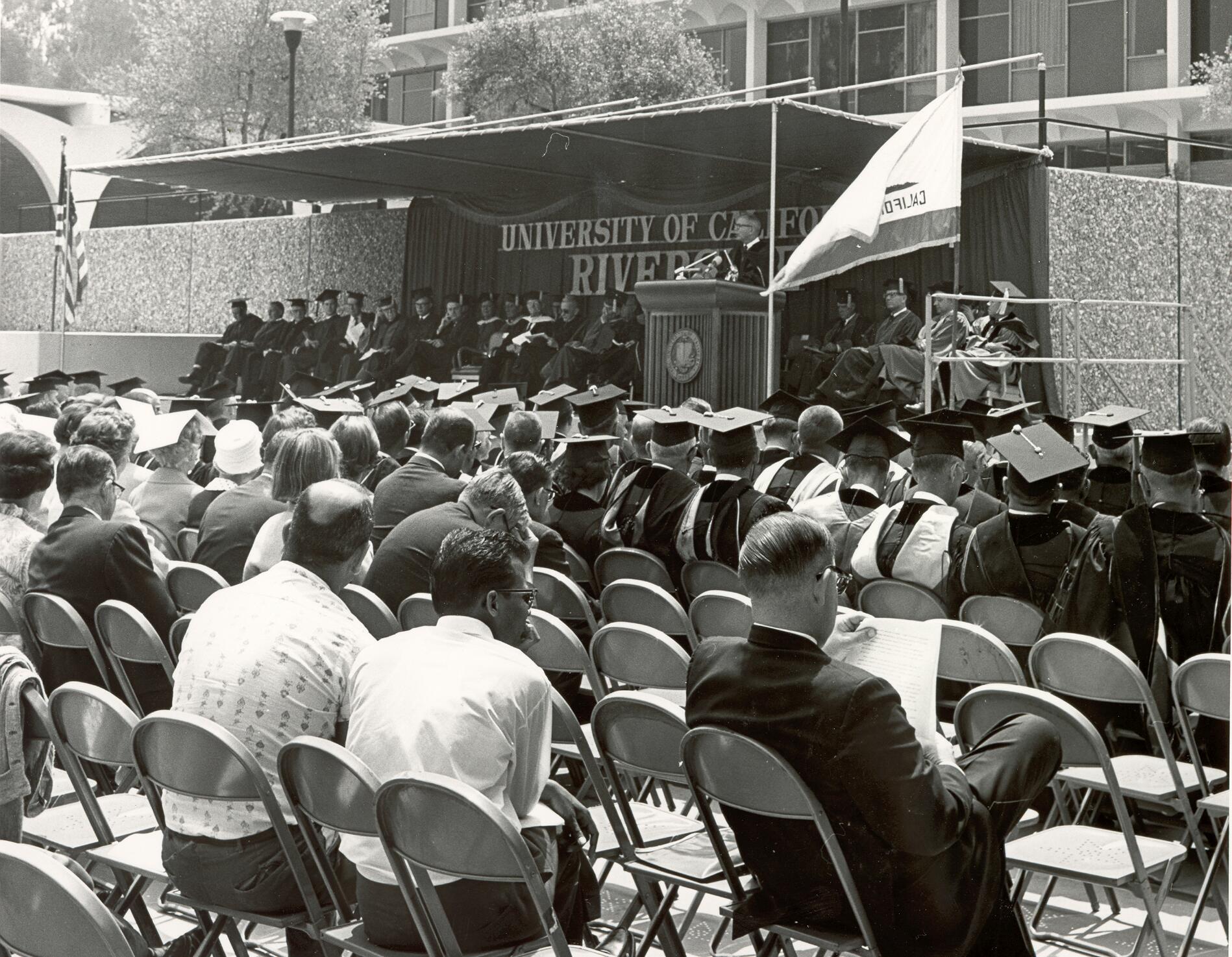
Watch a video from the UCR dedication, with an address from the President of the University of California, Robert Sproul:
Graduating class:
The first UC Riverside commencement on June 20, 1955 had 20 graduates. Early years' UCR graduates signed their names in concrete, and their signatures can still be found on campus today, on the walkway in between the Scotty the Bear statue and the Coffee Bean & Tea Leaf.
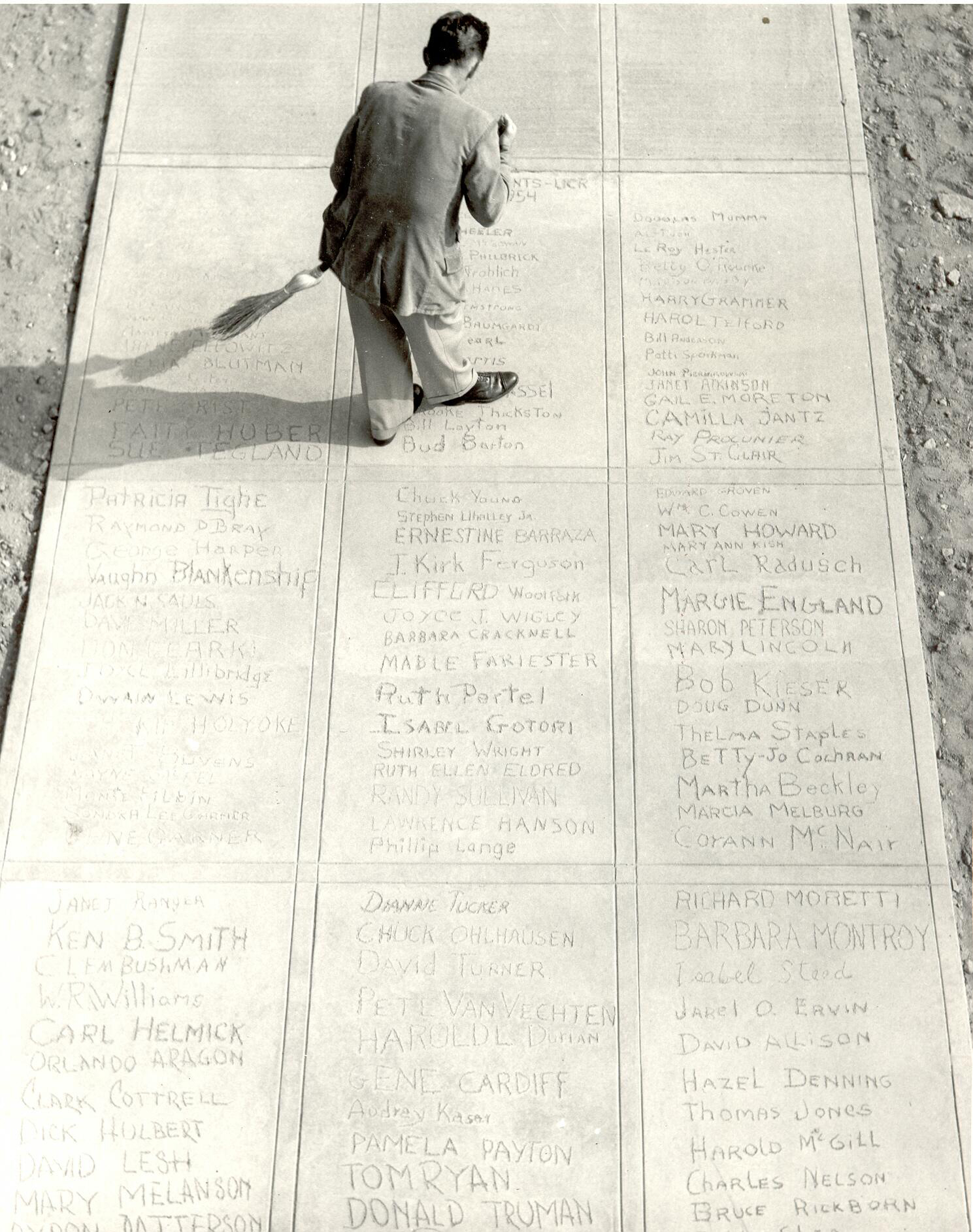
In contrast, our 2018 graduating class had 5,888 students (4,930 undergraduates, 578 graduates, 305 doctorates, 49 M.D. and 26 teaching credentials).
Student population:
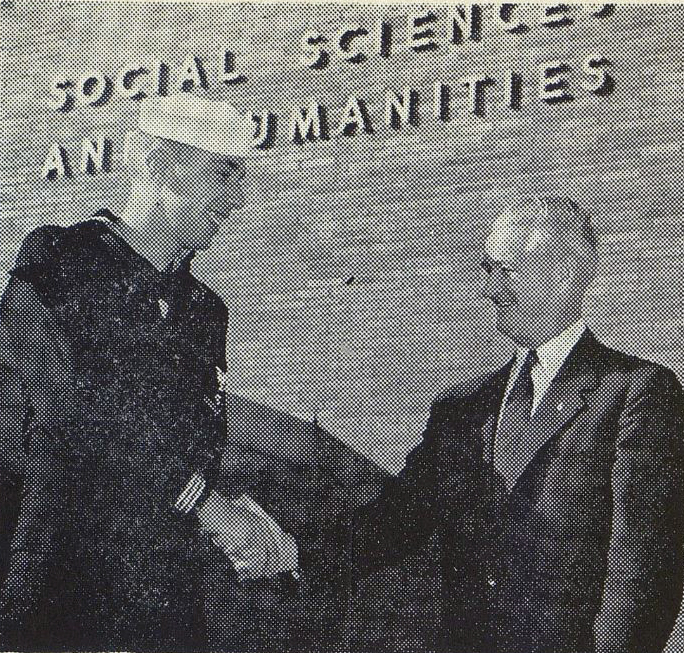
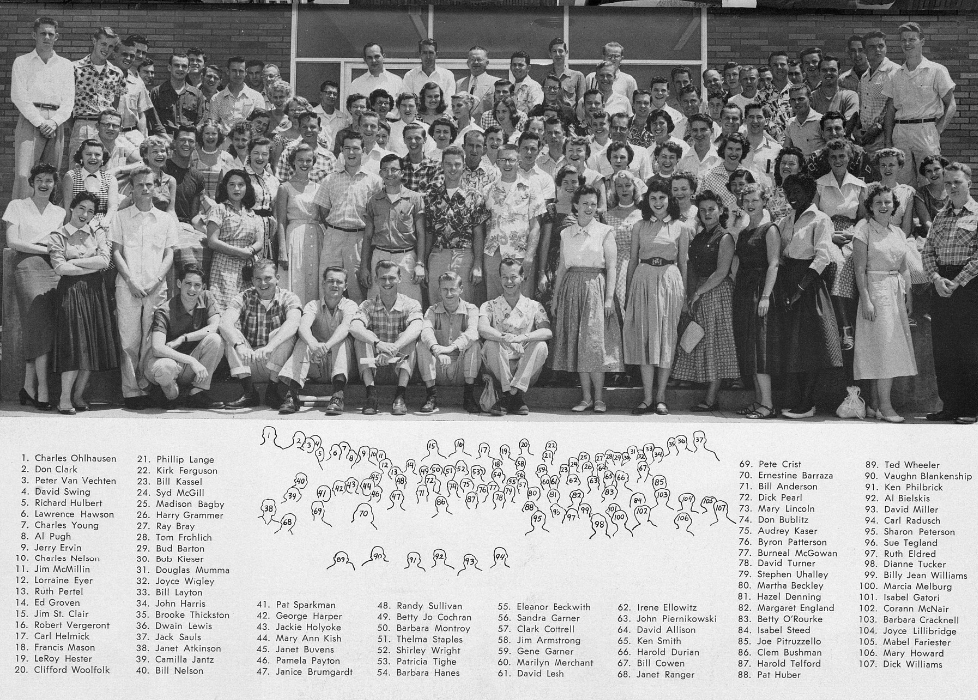
The first student admitted to UC Riverside was Navy veteran Jim McMillin, pictured below with Provost Gordon Watkins.
UCR’s student body in 1954 was comprised of one hundred and twenty-seven students. Compared to today’s enrollment of 23,278 students, that means our first crop of students was only 0.55% the size of today's student population. Of the original 127, only 107 are pictured below. (Full size image is available on Calisphere.)
Demographics:
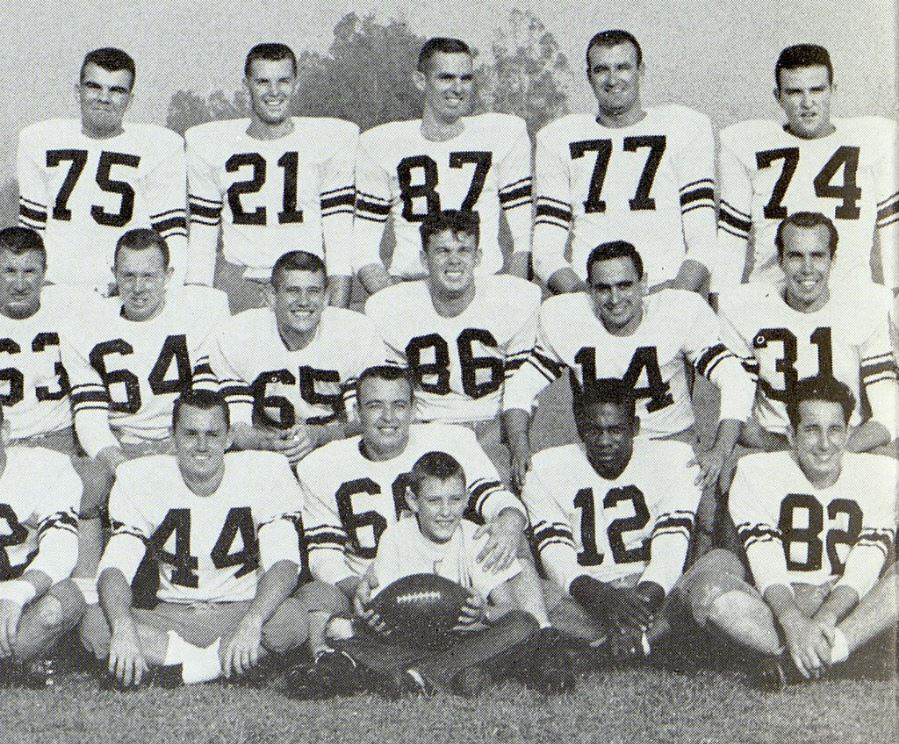
Enrollment in the early years was predominantly white, and the first African-American to graduate from UC Riverside was Roy Overstreet (pictured below, number 12) in 1958.
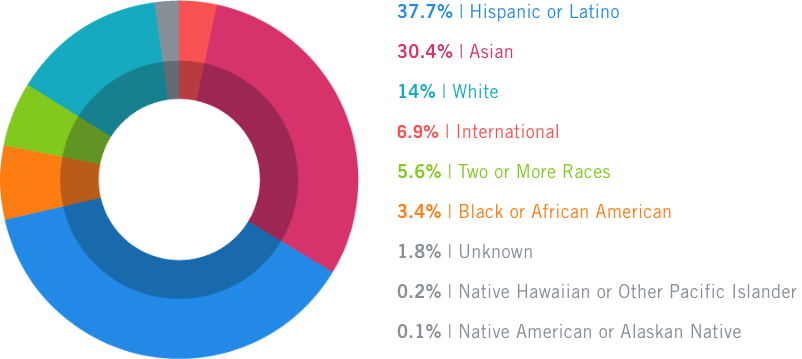
Now, 86% of UCR's students are non-white and 57% percent are first-generation college students, according to UCR Rankings and Quick Facts.
First Provost
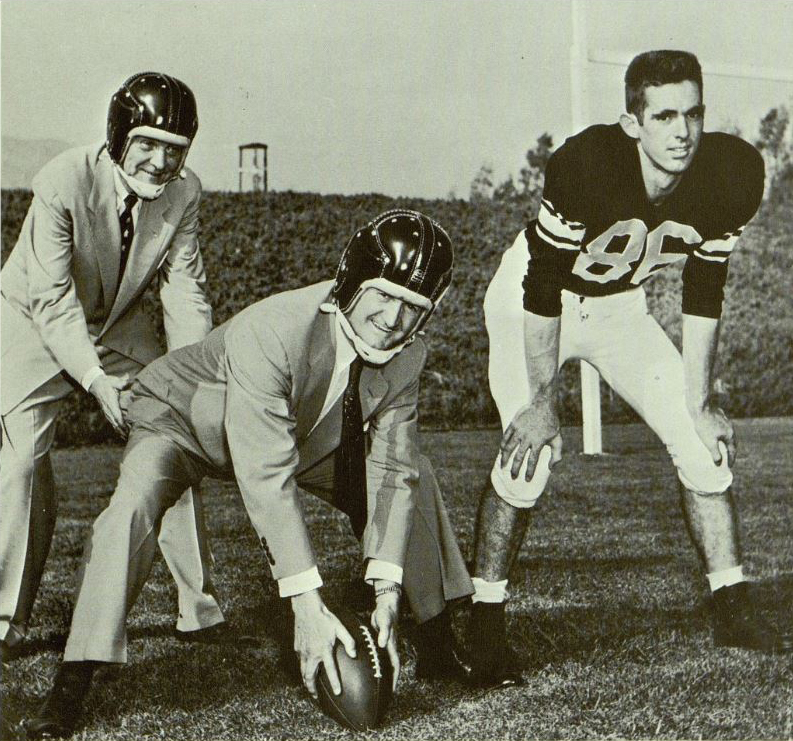
Gordon Watkins (below, center) served as UC Riverside's first Provost from 1949-1956. He is also the namesake for Watkins Hall.
The “C”
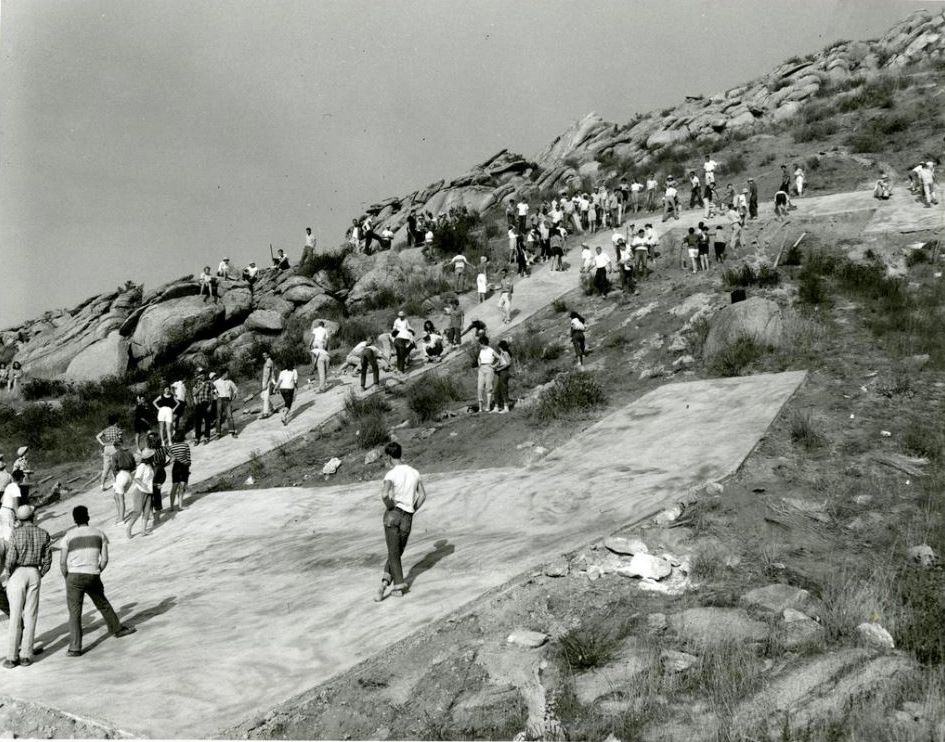
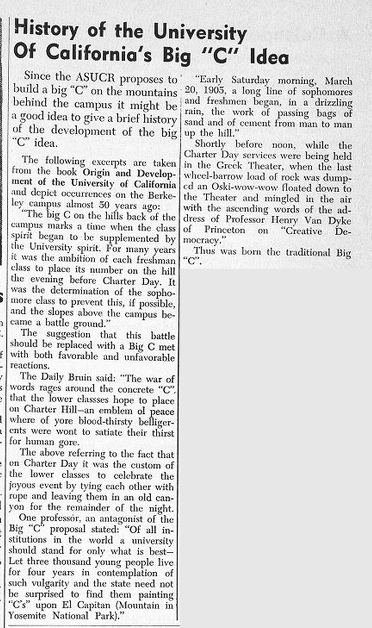
UC Riverside students built the big “C” on Box Springs Mountain in August 1955. At 132 feet long, it is the largest concrete block letter on record – larger than the “C” at any other UC campus.
Here is an article from UCR's 1954 yearbook with details about the history behind the big "C":
Campus
In 1907, the Citrus Experiment Station measured only 23 acres.
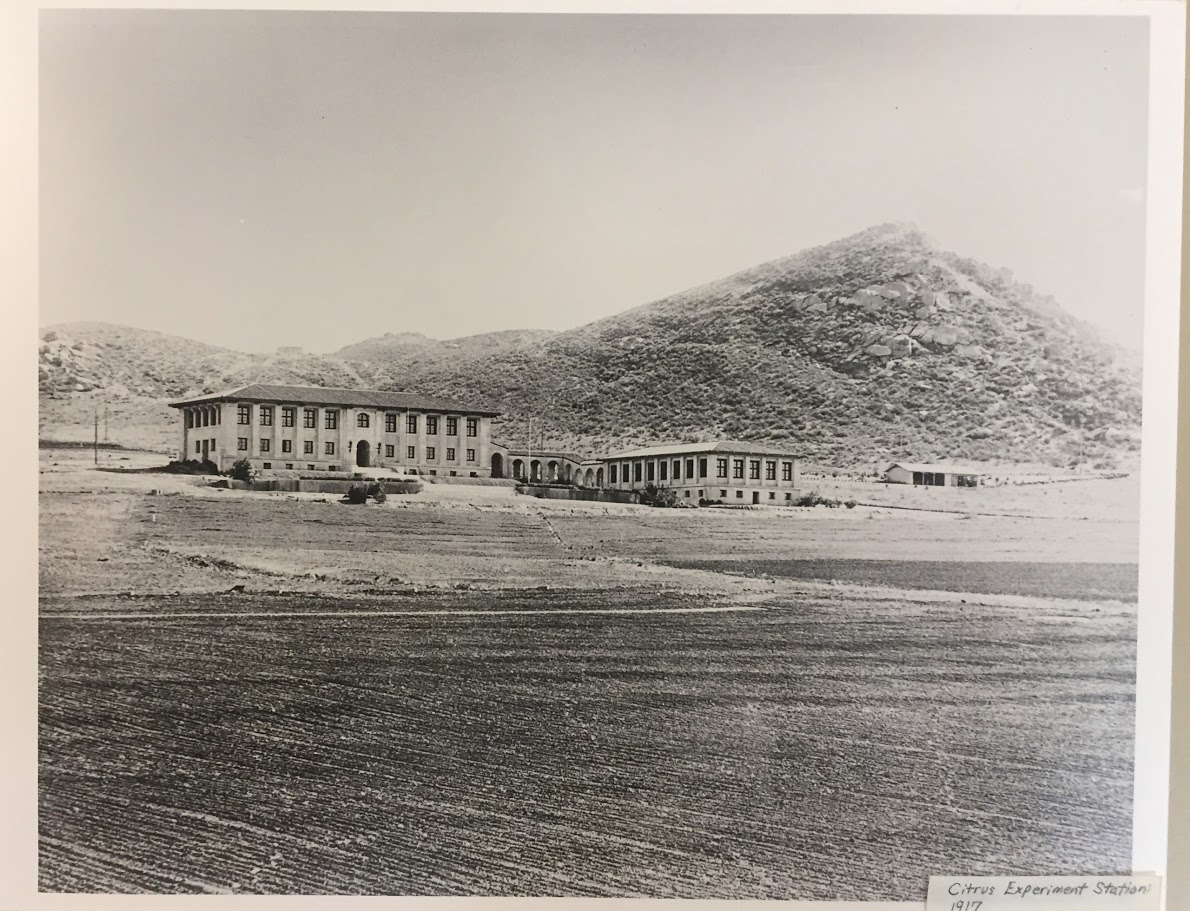
Now, UCR's main campus contains 1,900 acres, not including the satellite campus in Palm Desert.
Mascot
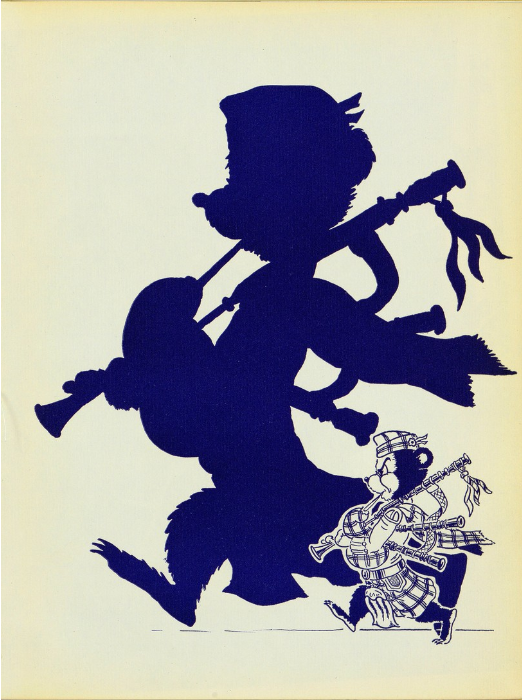
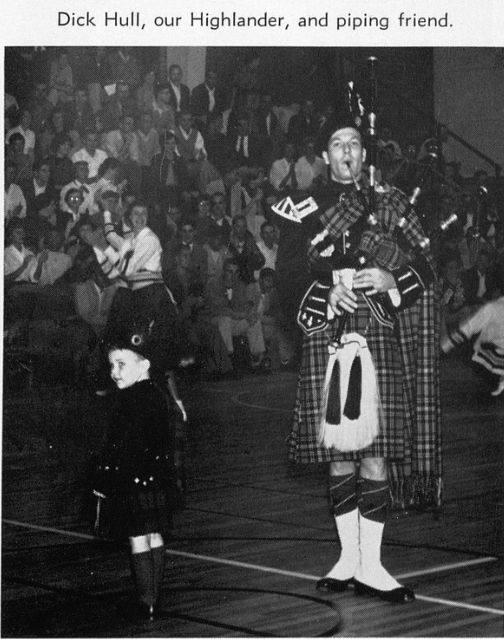
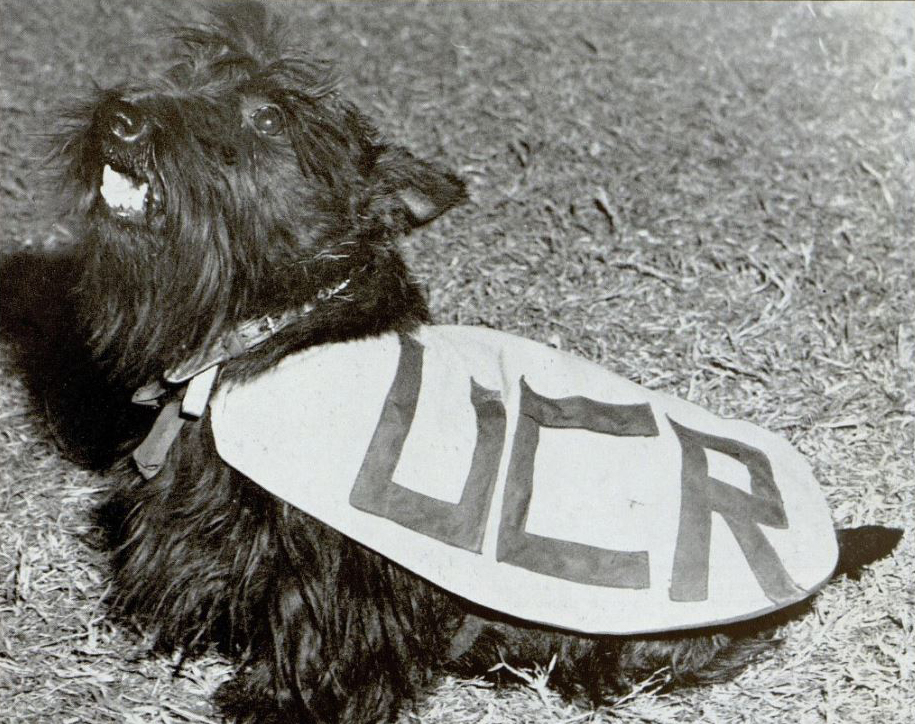
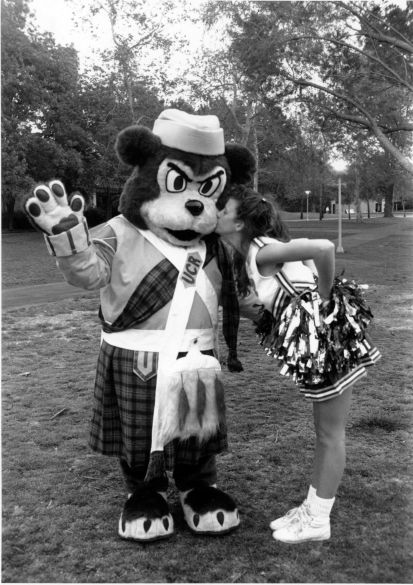
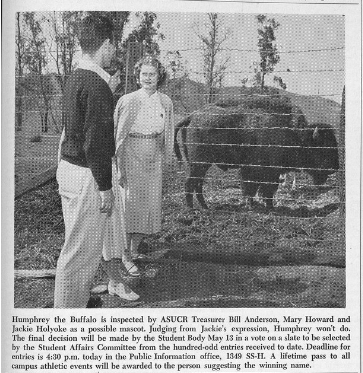
In 1955, the student body voted to adopt “Highlanders” as UC Riverside's campus mascot, inspired because UCR had the highest elevation of all the UC campuses. Various campus groups and buildings also embraced the Scottish theme.
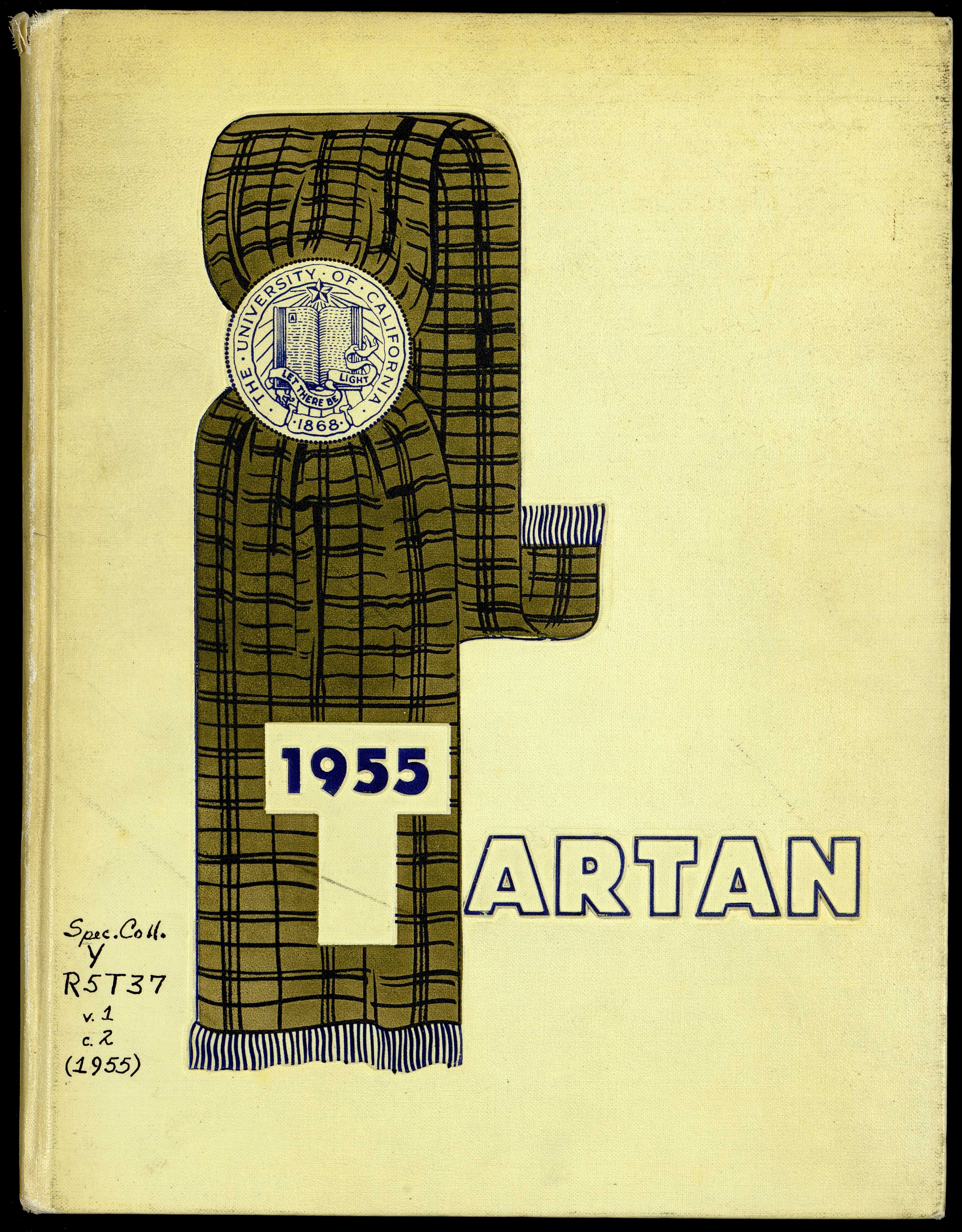
Early iterations of the UCR Highlander included this illustration of Scotty Highlander, first pictured in the 1955 yearbook, The Tartan:
A young boy named Dick Hull and a bagpiper, also in 1955:
A Scottie named Buttons, also in 1955:
Scotty Highlander in 1992.
And a near miss for UCR's mascot, Humphrey the Buffalo in 1955:
Tartan Soul:
UCR's 1955 Yearbook was called “The Tartan.” In Scottish culture, each family's tartan was unique in pattern and color. UC Riverside's tartan is comprised of four colors that represent the four core values of Tartan Soul.
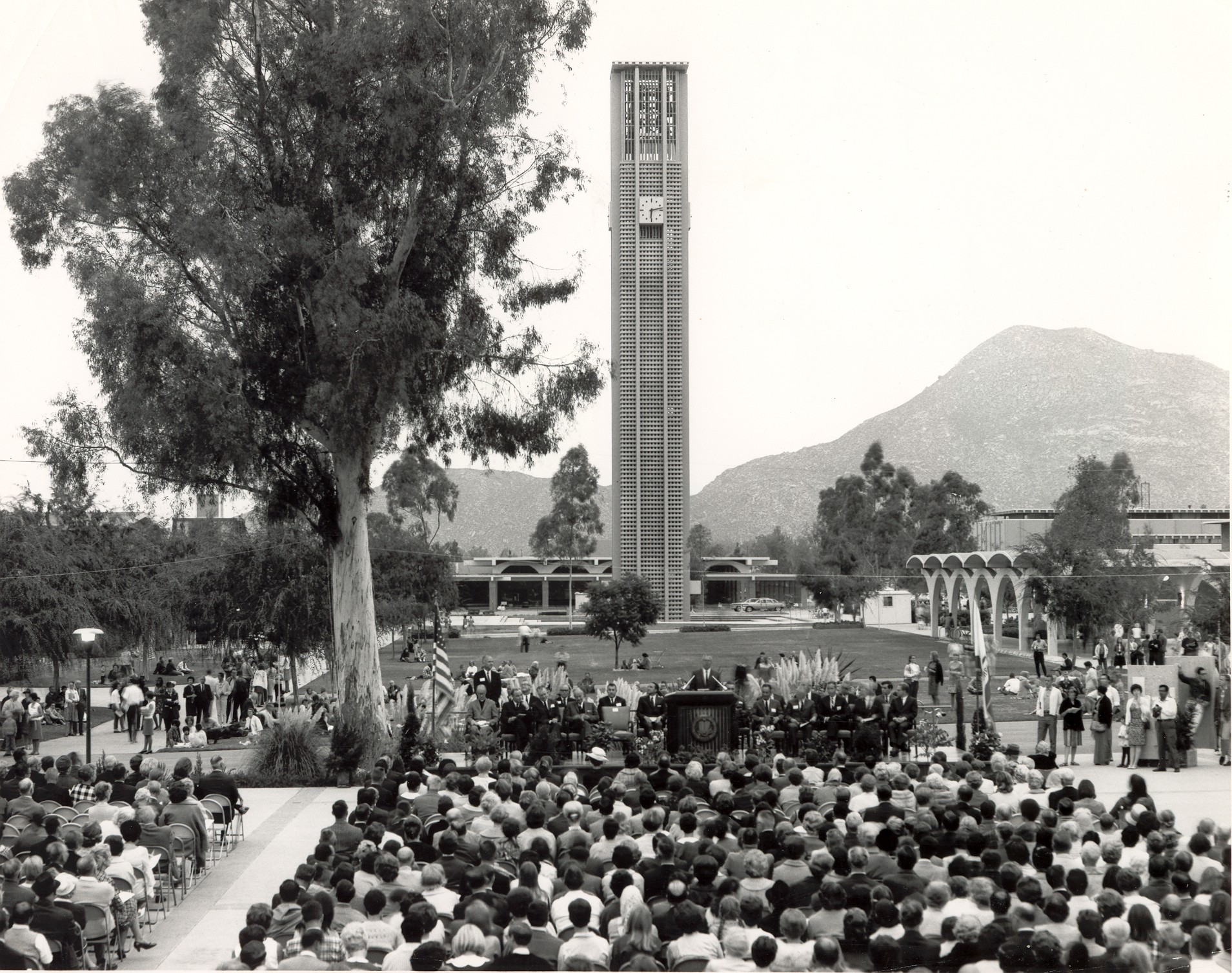
Bell Tower:
On Oct. 2, 1966, the dedication of UC Riverside's campus landmark Boyd Bell Tower took place. The carillon and tower at UCR were a gift from former UC regent Philip Boyd and his wife Dorothy. The bells range in weight from 5,091 pounds to 28 pounds and are housed in the bell chamber at the top of the 161 foot tall tower.
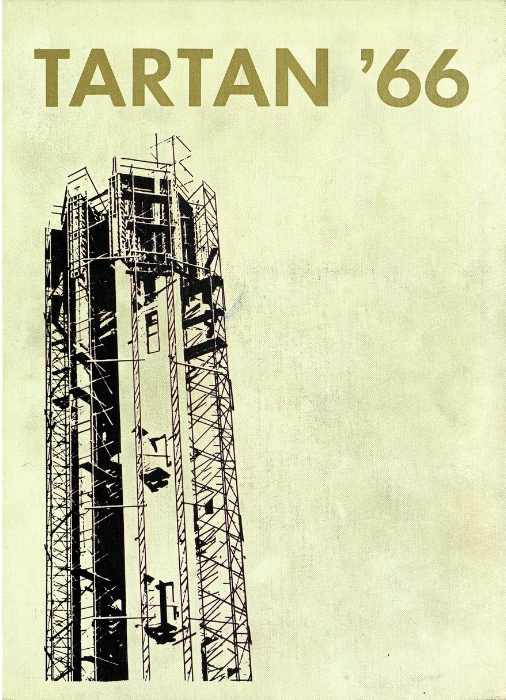
The Bell Tower was also pictured on the 1966 cover of The Tartan:
The Bell Tower's Carillonneur, David Christensen gives a live weekly concert on Mondays at 12 noon (with a few exceptions). He is the third Carillonneur at UCR since 1987, and has performed more than 500 concerts with music from a wide variety of genres.
Rivera Library:
In 1985, UC Riverside renamed the main campus library in honor of its recently deceased Chancellor, Tomás Rivera, who was the first Mexican-American Chancellor at a University of California campus.
We invite you to learn more about UC Riverside's history by viewing the UCR yearbooks online or by visiting University Archives on the fourth floor of Rivera Library to look through old photographs, campus flyers, archival copies of campus newspapers, and much more.