Search
Search
Discover the World of Data at UC Love Data Week 2024
Join members of the University of California community for UC Love Data Week (UCLDW), scheduled for February 12-16, 2024.
This exciting free event series, open to all members of the University of California community, focuses on a wide range of data-related topics including data access, management, security, sharing, and preservation.
UCR Library Data Librarian Kat Koziar, who has been involved with UCLDW since its inception in fall 2020, shared her enthusiasm for the upcoming event. "I’ve really enjoyed how we adapt and change our workshops to have relevant and current information for researchers," Kat said. She highlighted that including this year over 100 workshops will have been offered since the program began, with the UCLDW web team now working on ways to easily search across these for available recordings and materials.
This year, the UCR Library is sponsoring workshops that focus on 3D data and how to create 3D images. Kat, also a panelist in one of the sessions on open data resources, emphasized the variety of topics covered. "This year’s UCLDW workshops are truly across the disciplines," she stated, pointing out that there are sessions designed for both science and humanities participants.
Kat also spoke about the importance of data literacy in today’s academic and professional landscape. She believes that UC Love Data Week contributes significantly to this area. "Data literacy is not just integral to success in today’s academic and professional landscape, it’s important for everyday life," she remarked. “When attendees learn skills to understand data, those skills aren’t restricted to just research data, they can be applied to all types of data.”
UC Love Data Week promises to be a comprehensive platform for learning and discussion, catering to a wide range of interests, like open data sources, qualitative data, GIS and mapping, drone data, data science, and more.
We encourage the UCR community to explore this year's presentations and workshops on the UC Love Data Week website (make sure to register using your UCR email address).
Library student employees who are “Living the Promise”: Eli Labinger
Eli Labinger is a fourth-year psychology major who works as a Student Assistant in Special Collections and University Archives at the UCR Library.
Labinger grew up in West Hollywood, California as the younger of two sons. His mother is a first grade teacher and his father is a wholesale bookseller.
UC Riverside was an easy choice to make for Labinger because he wanted to stay close to home for college, but also wanted to attend a research university. “When I first visited, I really loved it. It has a very intimate feeling about it,” he said. “It was just a really good fit for me.”
Working at the library also turned out to be a great fit for Labinger. “There’s a lot to love about this job,” he said. “It’s really the anticipation of working with new things or in new areas every day keeps me interested and excited. There’s always something new to experience here.”
One of his favorite work-related memories comes from a 2016 event for the Chancellor’s Associates. “Donors who were visiting the library stopped by Special Collections,” Labinger explained. “We had seven or eight display tables set up around the reading room. Each table had things representing a specific area, and I got to present on The Lord of the Rings as representative of the fantasy literature collection. That was cool.”
His interest in fantasy literature helped to establish a friendship with Science Fiction Librarian Jacqueline “JJ” Jacobson. “I have talked a lot with JJ especially about The Lord of the Rings,” he said. “That’s sort of my outside interest.”
Aside from his work at the library, Labinger also works in a research laboratory in UCR's Department of Psychology. “I’m working on a project right now for the Chancellor’s Research Fellowship,” he said. “Psychology is a really new field and there’s a lot of research out there but there’s so much to be done. There are a lot of important discoveries yet to be made. I think that global change is going to stem from research.”
He feels most passionate about research that focuses on children and adolescents. “It’s such rapid growth period, and by the time we learn new things about these people, the people we’re studying grow up and grow out of our findings. A lot of things become out of date really quickly. There can’t be too much research with younger people.”
Between classes and working at both the library and the psychology lab, Labinger has little spare time for other hobbies. “I haven’t been able to do all the things I like to do, like read for pleasure.”
After graduation, Labinger will be moving to Portland, Oregon, to complete his PhD at Portland State University’s applied developmental psychology program. As a graduate student, he will be assisting Dr. Andrew Mashburn in his research, which includes assessing the effectiveness of early interventions for improving school readiness in preschoolers moving to kindergarten.
“I am especially interested in understanding the types of children and families for whom such interventions work best, and in using this information to find programs that work for all students and that have lasting positive effects,” Labinger said.
Newly Processed Collections - Winter 2018-2019
Special Collections & University Archives staff are constantly working to process recently acquired collections and make those materials ready for use by students, faculty, and researchers.
Each quarter, we will provide a list of the UCR Library's newly processed archival and primary source collections. Check out the list below to see if there are any items that fit your research area, or share with a friend!
Below you'll find brief descriptions and links to the finding aids or collection guides for each new collection. To use any of these materials, simply click the "Request Items" button at the top to submit a request, and log in with our Special Collections Request System. For more on conducting research in Special Collections, see this page.
SCUA is open to the public on weekdays from 11:00 am – 4:00 pm. Check here for closures or other changes to our regular hours.
For questions, email specialcollections@ucr.edu.
Newly Processed Collections - Winter 2018
Blake Gumprecht papers (WRCA 283)
The Blake Gumprecht papers are a collection of research materials from Gumprecht’s book on the Los Angeles River, published in 2001 while an assistant professor at the University of New Hampshire. The collection includes correspondence, photographs, maps, and audio visual materials pertaining to the 20th century history of the Los Angeles River and Aqueduct.
https://oac.cdlib.org/findaid/ark:/13030/c89k4hrr/
Jack Hirschman papers (MS 217)
This collection consists of notes, poems, manuscripts, correspondence, artwork and other materials pertaining to Jack Hirschman, an American poet and social activist. Topics of his work relate to politics, love, death, and sorrow with allusions to history.
https://oac.cdlib.org/findaid/ark:/13030/c89s1pg5/
Morrisson Wong papers (UA 099)
The Morrisson Wong papers are a collection of research materials compiled as part of Wong’s PhD dissertation in1977. The majority of the collection is related to the Japanese-American experience in Riverside, CA and the Inland Empire in the first half of the 20th century. These materials include interviews, family histories, newspaper clippings, and audio/visual materials. Also included in the collection are materials pertaining to the excavation of Chinatown in Riverside.
https://oac.cdlib.org/findaid/ark:/13030/c8wm1ktz/
City and County of Riverside, CA (MS 090)
The City and County of Riverside collection is an assortment of materials from the areas around the city and county of Riverside, CA. Contents include photographs, pamphlets, event programs and more dating back to the late 1800s.
https://oac.cdlib.org/findaid/ark:/13030/c83j3k21/
Celebrating our Class of 2019 library student employees
As the second-largest student employer on campus, each spring the UCR Library takes time to celebrate the students who comprise half of our staff team.
At the annual Student Employee and Staff Appreciation Luncheon held in the lower courtyard at Rivera Library, we also recognized these 25 library student employees who will graduate with UC Riverside’s Class of 2019: Alma Ramos, Andrea Mares, Anthony Valverde, Cameron Tuck, Chia Wu, Cindy Chau, Daniel Chen, Dulce Melo, Gursimran Singh, Hana Tran, Jacqueline Hernandez, Janice Liu, Jessica Leon, Jose Peralta, Kaitlyn Lara, Margaret Gardner, Matthew Diep, Matthew Garrido, Matthew Moreno, Noah Nguyen, Patrick Zydziak, Reajinae Jenkins, Roger Peralta Gomez, Serena Rodholm, and Sergio Banegas.
We asked our 2019 graduates to share their favorite memories from their time spent working at the UCR Library, and what they would miss most about working here. Here are some of their responses:
"I have worked at Rivera Library since my very first weeks of my first year of being at UC Riverside, so I have a lot of great memories from these past 4 years. It took me a while to pick my favorite one, so I would have to say my favorite memory from working at the library is being able to see our wonderful diversity at this school. I come from a place where there are predominately Asian and Hispanic people and not much diversity. The Rivera Library is one of the most visited places on campus, so I was able to see many different students, staff, and visitors. After my first month working here, it was nice to see how diverse our campus is and I wish the world was more like it. Four years later, I believe I have assisted and encountered almost all the ethnic groups around the world and it's a pretty great achievement. I myself come from Poland and I do not think I have met another individual from there at UCR, but that just shows the diversity of the campus. I wish I had the time to get to know these different ethnic groups better, but I cherish the short conversations I was able to have. I think what I will miss most about working here is being able to actually encounter and talk to a diverse community. Working at the library gave me an excuse to talk to and meet people. I cannot think of any other way to be able to talk to these people unless I go up to anyone on campus and introduce myself to anyone who walks by me but that is obviously out of the norm. The food industry also experiences many different people, however, it is a much faster paced environment and gives workers not much time to see around them. I'm not sure if my future career after graduation will have a diverse community like this, so that is something I will surely miss from working at the UCR Library. " - Patrick Zydziak
"My favorite memory from working at the library is actually a collection of memories. I loved running into my professors while working at the desk. I enjoyed having conversations with them about what books they were reading, any literature recommendations they had, etc. I also enjoyed being helpful to those who were helpful to me in the classroom. It's a wonderful feeling to be able to give back to professors who have given you so much. It was also crazy to see how much they read! I am going to miss my coworkers and supervisors the most. I have been working at the library since I started undergrad and because of this, my coworkers have become close friends. We always catch up with one another during our shifts. Even outside of the library we are texting one another, making each other laugh. We are a group of students from different backgrounds, different majors, different years -- but we are all connected by our love for the library. I will especially miss my boss Leslie Settle. She always emphasizes how we are a family and we look out for one another. She would continuously go out of her way to help her student employees, and she would give us cute treats for each holiday! Her laugh is contagious and her smile lights up the room. It is truly bittersweet to leave such a caring group of people." - Andrea Mares
"It is really difficult to pick a favorite memory from working at the library because there were so many fun moments from collection maintenance projects to staff potluck events. If I had to pick one, it would have to be getting to serve pie to fellow students on Pi Day. I got to smile at stressed students during week 10 and wish them good luck on their finals while handing them free food. Moments like those made my job at the library more special. I think I am going to miss all of the friendly people I have had the opportunity to work with. It has been really fun to interact with new faces every year." - Jessica Leon
"My favorite memories are the crazy finals week festivities. I loved helping set up events to lighten the mood, listening and motivating patrons to push through until school break, and seeing all the funny things patrons would resort to sleeping on. Finals week brings a bittersweet sense of community feeling to the library as it is stressful because we all have important deadlines and tests to take, but comforting because we're all going through similar struggles. The thing I'll miss most about about working here at the library is how much the career staff here supports and cares for the student workers. It is so easy to get adjusted to working here because the staff is so helpful and friendly. I have never seen another workplace that praises and supports their workers as much as they do here. Shoutout to everyone working in circulation, you guys are wonderful." - Anthony Valverde
"Even though it was a stressful time for myself, students and staff alike (as they had to organize and put on a variety of events), my favorite memories are usually associated during the Finals Week Stress Relief events. I enjoyed working finals week because of the various events we had to host. It felt really good to see how grateful students were when we handed out food, scantrons, UCR gear, etc. My favorite event was probably working Therapy Fluffies. The dogs were honestly the best and always brought a smile to my face. I will probably miss the staff the most. My supervisor, Elisha Hankins, gave me so many opportunities to be a leader, grow, and flourish both academically and professionally. She hired me for my first real job and I will be forever grateful she took a chance on me. I will also miss the other staff; they were also so welcoming, available, and ready to help me with whatever assignment or life decision I needed to make. The environment was always cheery and even on the not so good days, they were always there to make it a little better." - Alma Ramos-Gutierrez
"Working at Special Collections has been one of the most formative experiences of my collegiate experience. I have made some of the closest friends working at the UCR Library that have influenced my life for the better." - Kaitlyn Lara
"My favorite memory from working at the library is when I helped out with the Therapy Fluffies, and was able to hold them! Something that I will miss the most from working at the library will be the people. Everyone is so kind and makes you feel welcome every time you enter the circulation desk." - Jacqueline Hernandez
Special Collections acquires acclaimed novelist's papers
Rancho Mirage based novelist Michael Craft has generously donated his papers and professional archive to the UCR Library’s Special Collections department.
Craft has published 14 novels, including the highly acclaimed Mark Manning mystery series, three of which were honored as finalists for the Gay Men’s Mystery genre by the Lambda Literary Awards (Name Games in 2001, Boy Toy in 2002, and Hot Spot in 2003).
University Librarian Steven Mandeville-Gamble recently discovered Craft’s works, read every single book, enjoyed them immensely, and purchased a complete, partially autographed set for our Special Collections and University Archives.
Mandeville-Gamble and Director of Distinctive Collections Cherry Williams both felt that Craft’s papers would be an excellent addition to the library’s collections, expanding the list of notable authors’ papers that we currently hold while also diversifying the collection into a different and very interesting genre.
"Over the years, I'd been building a private archive of correspondence and such related to my writing, wondering what would become of it. So when UCR reached out, asking if I would consider donating my professional papers, it was an easy answer: an instant yes,” Craft said. “I’m truly honored to join the company of noted authors who are archived in the University of California’s library system.”
“The UCR Library is honored that Michael Craft has chosen UCR as the home for his literary papers,” Mandeville-Gamble added. “As a multiple award-nominated author of mystery fiction set in Chicago, Wisconsin, and the Coachella Valley, having his papers come to UCR helps ensure that the UCR Library is a key partner in preserving the cultural and literary history of the Inland Southern California region and in documenting the creative output of the people of this unique region.”
The unique beauty and history of libros cartoneros and artists’ books
A new pop-up exhibit showcasing libros cartoneros and artists’ books created by Latinx artists is on display in the Rivera Library.
The exhibit, titled Hecho a Mano, features a collection of unique and creative books made from recycled materials such as cardboard, paper, and found objects.
Libros cartoneros, which originated in Argentina during a time of economic crisis, are a form of grassroots publishing in which books are made from recycled cardboard and sold at a low cost.
“When you look at them, they're very DIY,” said Special Collections Public Services, Outreach and Community Engagement Librarian Sandy Enriquez who curated the exhibit. “Libros cartoneros helped make literature and art more accessible and affordable for people during a very difficult time, demonstrating the importance of the creative arts even during a crisis. I think that's a powerful statement.”
In addition to libros cartoneros, the exhibit also features artists’ books created by the artist collective Ediciones Vigía from Cuba. These books, which are often one-of-a-kind or limited-edition pieces, incorporate a wide range of mediums, including painting and collage.
“Libros cartoneros came from this place of resilience and resistance,” explained Sandy. “While artists’ books are similar, they also elevated the art form of using common materials by incorporating more labor-intensive elements like pop-ups, cut-outs, and non-traditional bindings. It’s really cool to see two different ways that handmade books have originated in Latin America.”
While the origins of these two art forms are different, both the libros cartoneros and the artists’ books on display are about the intersections of art, literature, and social justice.
Coinciding with this pop-up exhibit, Special Collections and University Archives (SCUA) will be restarting its 4 to Explore Program. The program hopes to make viewing items in SCUA more accessible.
“4 to Explore is great for folks that want to come and view something but don't know what they want to see or don't have time to search through our catalog. Similar to course reserves, a selection of items will be curated in advance and available for anyone to request. All you have to do is visit our front desk on the 4th floor and ask about the program; we’ll give you a list of the four items with descriptions, and you can choose which one you want to see, whether just one, two or all four.,” Sandy said.
This quarter’s 4 to Explore items are all artists’ books and libros cartoneros, complementing the pop-up exhibit.
“You'll be able to see these items, hold them, open them, take photos, and really get a chance to interact with what you're seeing in the case,” said Sandy.
You can view Hecho a Mano and check out 4 to Explore items on the fourth floor of the Rivera Library in Special Collections and University Archives 10 a.m. - 4 p.m., Monday through Friday, this winter quarter.
Event: Hecho a Mano
Location: Tomás Rivera Library, 4th floor, Special Collections & University Archives
Dates: Jan. 27, 2023 - Mar. 24, 2023
Hours: View from 10 a.m. - 4 p.m. (Monday through Friday)
UCR, CSUSB Sign Agreement to Co-house Water Resources Collections and Archives
Head librarians from both campuses articulate policies to jointly manage valuable collection of historical documents.
SAN BERNARDINO, Calif. — Cal State San Bernardino and the University of California, Riverside will co-house and share a valuable collection of water related-documents and materials.
The chief librarians from both universities, Cesar Caballero, dean of the CSUSB John M. Pfau Library, and Steven Mandeville-Gamble, University Librarian for UC Riverside, signed a memorandum of understanding on Sept. 24 that the two institutions will jointly house and manage the Water Resources Collections and Archives (WRCA).
The agreement, which was signed at the Pfau Library, lays out the policies and procedures on the collection and is an addendum to an MOU the universities signed in 2010, which enabled the collaboration, Caballero said.
The WRCA, which previously was housed at UC Berkeley, is a one-of-a-kind resource. It contains historical and contemporary water-related materials of great value to water agencies, governmental bodies, environmental groups, engineering firms, attorneys, historians and researchers.
The collection will be of great interest to students, faculty and researchers from both campuses and also researchers throughout both the University of California and the California State University systems, Caballero said.
“This is a world-class collection and will offer a lifetime of learning as a resource. It is extremely valuable,” Caballero said.
The WRCA collection will be divided between both libraries and jointly managed by Mandeville-Gamble and Caballero. The joint management of the archives will expand accessibility both in the state and nationwide, Caballero said.
“The agreement underlines the importance of the WRCA, which will complement and strengthen other collections at CSUSB and UCR along with the UC and CSU systems,” Caballero said.
Mandeville-Gamble said the agreement took on even more significance because of the state’s ongoing drought, which is unprecedented in the state’s written history.
He said the two universities are committed to studying issues affecting water in all aspects including environmental, public policy and social issues.
“It’s absolutely essential if we’re going to solve water issues. We’re in this together,” said Mandeville-Gamble, who added that the collection “will serve as a roadmap for greater collaboration between the two universities regarding water issues.”
The co-housing of the collection will work well with both universities as both institutions have strong backgrounds in water resources. UCR has a number of water policy experts in the School of Public Policy. CSUSB is home to the Water Resources Institute, which serves as a regional center for research and public policy analysis and houses the Joseph Andrew Rowe Water Resources Archives.
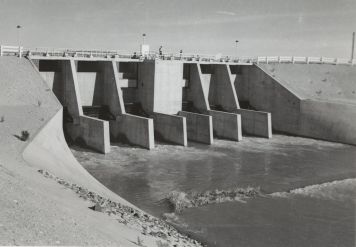
This photo of the junction of the All American Canal and the Coachella Canal was taken by Walter Leroy Huber and is part of a collection of the engineer’s correspondence, documents and photographs in the Water Resources Collections and Archives.
The WRCA collection is comprised of approximately 4,138 linear feet of published circulating materials, and more than 3,000 linear feet of special collections and archives. Approximately 5,545 linear feet of printed circulating materials are also housed in off-site storage facility near the UC Berkeley campus.
The original archive contained approximately 200 archival collections, 200,000 technical reports, 1,500 specialized newsletters, 5,000 maps and videos, 2,200 serials, 25,000 land photographs, 45,000 aerial photographs of coastlines, and digital resources in the form of CDs, DVDs, VHS tapes, and websites.
Since 2011, the archive has gained another 2,500 books, electronic documents, and thousands of hard-to-find publications such as conference proceedings, association publications, technical reports and bulletins, and meeting minutes that deal with water resources in California and the West.
More than 15,000 people visit the WRCA website every year, and another 80,000 visit the California Water Districts & Associations list. UCR librarians scan more than 6,000 pages of material from the collection for researchers and government employees across the state.
The collaboration of the two universities came about in 2010 when the statewide Water Resources Center was to be closed because of budget cuts. The University of California’s Agriculture and Natural Resources Center sought a new location to house the archives, which led CSUSB and UCR to develop an innovative and collaborative plan for joint management of the collection.
The acquisition of the new collection also coincided with the California State University system-wide Water Resources and Policy Initiative, which is centered at Cal State San Bernardino. The WRPI facilitates water-related research capabilities within the 23 CSU campuses.
Water policy experts in the UCR School of Public Policy conduct research on critical issues related to the interactions between water policy, water quality and water scarcity. They also contribute policy-relevant input to dialogues at the local, regional, national and international levels.
Founded in 1999, the Water Resources Institute of Cal State San Bernardino is an academic partnership with the Southern California communities that it serves. The institute is driven by the vision that sustaining water resources rests on sound research, analysis and public policy collaboration. The institute is active in the areas of science, public policy and history, and serves as a regional hub for providing information on water resources.
Elsevier update (June 2020)
UC’s negotiating team continues to communicate with Elsevier.
While progress remains slow, there are a number of recent developments that we hope may give fresh impetus to these discussions:
COVID-19
As a recent Los Angeles Times column laid out, the need for access to research has never been clearer. In fact, many publishers, including Elsevier, have temporarily made coronavirus-related articles freely available. Pandemic-related budget crunches may also pressure publishers to moderate financial demands.
Federal policy
The Office of Science and Technology Policy is considering a zero-embargo policy for the author’s final manuscript for all federally funded research — a change strongly supported by UC’s faculty Senate and that, if adopted, would further incentivize publishers to accelerate their shift towards open access.
Actions by other institutions
UNC-Chapel Hill, Iowa State University and the SUNY (State University of New York) system all recently ended their “big deal” subscription packages with Elsevier. As the head of UNC’s university library wrote: “UC helped to expose the runaway journal costs that are breaking university and library budgets everywhere [and] the need to increase open access to research, rather than locking it behind steep and rising paywalls.”
---
Meanwhile, the feedback we received from faculty, students and researchers earlier this year confirmed that, while researchers are feeling the impact of UC’s lack of an Elsevier contract — particularly in the health and life sciences — the majority both systemwide and here at UC Riverside remain supportive of UC’s position.
While we don’t yet know what form the final resolution with Elsevier will take, UC remains committed to getting closure and finding a path forward in the coming months.
Spring UCR Library Workshops & Events
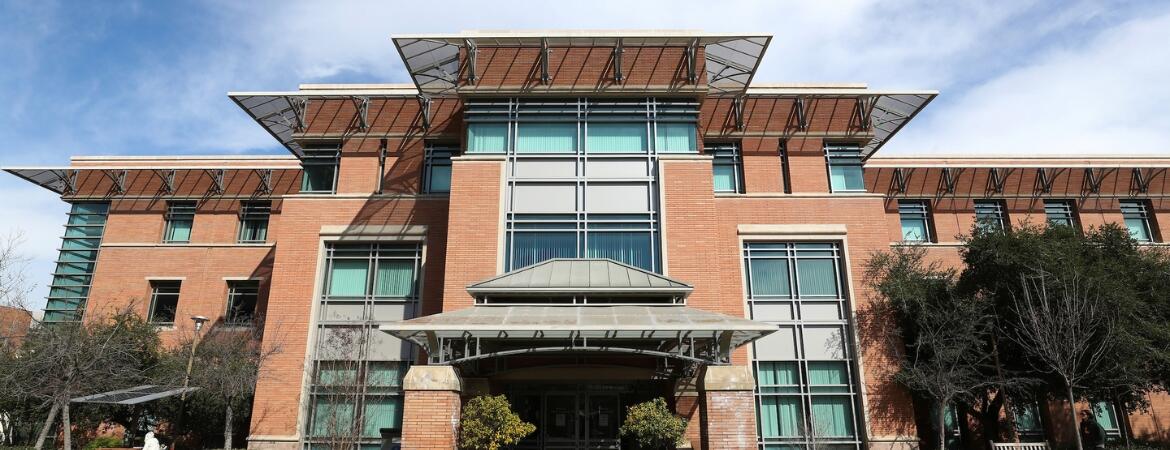
Join the UCR Library this spring for a variety of free workshops and events where you can learn new skills for free!
Attend our general workshops to build foundational research and data skills and learn how you can incorporate AI into your research and study. This quarter, we’re excited to feature our special Maker Week events featuring speakers Garner Holt and Reza Aslan plus workshops for hands-on creation. We're also hosting our regular GIS & Digital Scholarship Meetup events for ongoing casual learning.
Browse the full schedule below to find the right workshop/event for your goals and register for free.
Spring 2026 UCR Library Workshops |
||
|
Title |
Date(s) |
Description |
|
Research & Data Science Series |
Thursday, April 9, 2026 from 2p to 3p |
Join us to learn the basics of Python in a beginner-friendly environment. This workshop will guide you through the syntax, or "grammar", of coding. By the end, you’ll be able to write your first "Hello World" program, understand the logic behind the code, and have the resources needed to continue your learning journey at home. |
|
AI 101 for Research: From AI Chatbot to AI Agent AI Tools Series |
Thursday, April 9, 2026 from 3:30p to 4:30p |
This workshop explores current AI trends and the underlying mechanics of various AI tools for research. Participants will learn how to leverage these technologies for their research and discover the specific AI platforms currently offered by UCR to support diverse research tasks. |
|
AI Tools Series |
Thursday, April 16, 2026 from 2p to 3p |
This hands-on workshop explores the versatile features of NotebookLM to transform how you interact with academic readings. We will dive into core features including Audio Overviews, and learn how to leverage AI to generate structured content for slide decks, video scripts, mindmaps, quizzes, and infographics. |
|
Friday, April 17, 2026 from 2p to 3:30p |
Join us to learn the basics of research in a unique, gamified environment! This workshop applies game thinking to the research process, turning the development of search strategies and keywords into a series of interactive challenges, designed like your favorite RPG. |
|
|
Exploring Literature Mapping Tools AI Tools Series |
Tuesday, April 21, 2026 from 3p to 4p |
This workshop breaks down the literature review process into manageable steps, from understanding the core concept to identifying different types of reviews. We will dive into undergraduate-friendly mapping tools that help you visualize how papers connect, and introduce the new Google Scholar Lab to streamline your discovery process. |
|
Building Your Academic Profile Online Digital Scholarship Certificate Program |
Thursday, April 23, 2026 from 11a to 12p |
This workshop is part of the Digital Scholarship Certificate Program. The workshop offers practical advice on how to strengthen your online scholarly presence using platforms, including ORCID, Google Scholar, and institutional open access repositories. |
|
Using Zotero for Citation Management Citation Series |
Tuesday, April 28, 2026 from 2p to 3p |
Zotero is a free, easy-to-use tool that assists in gathering, organizing, and integrating sources into research papers. This workshop will introduce some of the key functions of Zotero, including creating libraries and importing and organizing citations from a variety of locations. |
|
Finding and Using Imagery in a GIS Geospatial Series |
Wednesday, April 29, 2026 from 2p to 3p |
Are you new to using imagery in a GIS? This workshop will cover imagery characteristics, where to search for historical and recent aerial imagery and how to bring imagery into a GIS. It will also provide a high-level review of methods for extracting information from imagery. |
|
Navigating OA Repositories & Publishing Digital Scholarship Certificate Program |
Thursday, April 30, 2026 from 11a to 12p |
This workshop is part of the Digital Scholarship Certificate. The workshop introduces the landscape of open access repositories and publishing with a special focus on eScholarship, the University of California's open access repository and publishing platform. You'll learn how to deposit your work in open access repositories, understand your rights as an author, and choose the right repository for different types of research outputs, from articles and preprints to datasets and code. |
|
Data Cleaning for Machine Learning w/Python AI Development Series |
Thursday, April 30, 2026 from 2p to 3p |
Join us to learn how to transform raw datasets into clean, machine-learning-ready data. This workshop will guide you through the essentials of key libraries for data manipulation. By the end, you’ll be able to load messy files, understand the structure of a DataFrame, and produce the high-quality, structured data required to train effective predictive models. |
|
Creat’R Lab Series |
Monday, May 4, 2026 from 2p to 3p |
Join us this May the 4th for a hands-on workshop where we bridge the gap between imagination and reality. Whether you’re a Padawan to 3D modeling or a seasoned Knight, you’ll learn how to use Autodesk Fusion to design a custom LEGO lightsaber hilt. No prior experience with Fusion is required—just bring your creativity and a passion for the Galaxy Far, Far Away. Space is limited, so grab your spot before they vanish into hyperspace! |
|
Computational Methods on Text Analysis Digital Scholarship Series |
Wednesday, May 6, 2026 from 11a to 12p |
This workshop introduces three computational text analysis methods—topic modeling, sentiment analysis, and the use of LIWC-22 (Linguistic Inquiry and Word Count)—along with an introduction to web scraping for building custom text datasets. You’ll learn how researchers and practitioners use these tools to analyze patterns across corpora, from interviews and social media texts to archival documents. |
|
Introduction to Gemini API: How to customize AI models AI Tools Series |
Monday, May 11, 2026 from 2p to 3p |
As a researcher, you may wish to extend AI models for your specific projects rather than relying on standard chatbots or fixed interfaces. This guide introduces how to use Gemini API keys in alignment with UCR data security guidance and explores key research use cases for the API. |
|
AI Tools Series |
Tuesday, May 12, 2026 from 10a to 11:30a |
This workshop dives deep into the current AI LLM benchmark landscape, examining use cases for both academic research and learning. Participants will review recent top benchmarks against the current top global LLM models, including both Western and open-source Chinese models, exploring various models' unique affordances, strengths, and limitations. The session will be valuable for researchers at all levels — students, faculty, and staff — who want to make informed decisions about which models to integrate into their research and learning workflows. |
Maker Week (April 20 - 24) Workshops/Events & the May 1 Maker Faire Competition |
||
|
Title |
Date(s) |
Description |
|
About Maker Week 2026: From sketching ideas and wiring electronics to 3D printing and crafting a compelling story, gain the tools, techniques, and confidence to take an idea from concept to reality! Learn more at library.ucr.edu/makerweek2026. |
||
|
Keynote from Animatronics Maker Week Series |
Monday, April 20, 2026 from 1p to 2p |
Hear from local businessman Garner Holt on how he forged an animatronic business for the southern California region. What happens when a high school student follows his passion and builds it into a company that reaches millions? Join us for the Maker Week 2026 Keynote featuring Garner Holt, founder of Garner Holt Productions. Since founding his company in 1977, Garner has created animatronic figures and experiences for Disneyland, Knott's Berry Farm, Chuck E. Cheese, and more. Don't miss this inspiring kickoff to Maker Week 2026. |
|
Maker Week Series |
Tuesday, April 21, 2026 from 10a to 11a |
Learn how to draw your ideas to help conceptualize ideas and creativity. Have an idea but don't know how to get it out of your head? This hands-on workshop with UCR Library's Sara Stilley will teach you the sketching techniques you need to turn your ideas into clear, visual plans.No art experience required! Just bring your imagination. |
|
Storytelling Creative with Reza Aslan Maker Week Series |
Tuesday, April 21, 2026 from 1p to 2p |
Learn how to use creative storytelling to bring your project to life with UCR faculty member, Reza Aslan. Every great prototype needs a great story. In this workshop, Reza Aslan will guide you through the art of creative storytelling, helping you find the purpose, meaning, and narrative behind your idea. Learn how to communicate your prototype's vision in a way that resonates with any audience. |
|
Tinkering with Electronics in Prototypes Maker Week Series |
Wednesday, April 22, 2026 from 10a to 11a |
Learn how to embed electronic circuits with controllers to add personalization to your prototype. Get hands-on with electronics and learn how to build them directly into your prototype. In this workshop, Creat'R Lab Maker Services Coordinator Brendon Wheeler will walk you through how to integrate electronic components into your projects using equipment from the UCR Library Robotics Lab. Learn how, when, and where to use the tools available to you, right here on campus! |
|
Iterative Design with 3D CAD Modeling Maker Week Series |
Wednesday, April 22, 2026 from 1p to 2p |
UCR Library's Innovative Media Librarian Alvaro Alvarez will lead this workshop on 3D modeling and printing, showing you how to design and iterate on a prototype using CAD software and the Creat'R Lab's 3D printers. No prior experience needed. |
|
Marketing Practices for Prototypes Maker Week Series |
Thursday, April 23, 2026 from 9:45a to 10:45a |
Join UCR's Blackstone representative Francis Reyes Aguilar for a practical workshop on marketing strategies that real businesses use to promote their products. Walk away knowing how to position, present, and pitch your prototype to any audience. |
|
Designing Prototypes through Sustainable Design Maker Week Series |
Thursday, April 23, 2026 from 2p to 3p |
In this workshop, you'll learn how to design and construct prototypes using recycled and sustainable materials. Discover how to think creatively about the resources you already have and apply sustainable design principles to your own ideas. |
|
Maker Week Series |
Friday, April 24, 2026 from 10a to 12p |
Learn how to create your own poster that can be used for academic and other related presentations. In this workshop hosted by the UCR Library's Student Success and Engagement Librarian Carrie Cruce, you'll learn the principles of academic poster design, a skill that will serve you at the Maker Faire and throughout your academic career. |
|
Closing Ceremony & Learn About the Maker Faire Competition Maker Week Series |
Friday, April 24, 2026 from 1p to 2p |
Drop in for our Closing Ceremony to celebrate the week of workshops, creativity, and prototyping with the UCR Library Creat'R Lab community. You'll also get a full rundown of the Maker Faire Competition happening May 1, including the format of the competition and what judges are looking for. Whether you're ready to compete or just curious, this is the event to attend before competition day. |
|
Maker Week Series |
Friday, May 1, 2026 from 1p to 4p |
Show off your prototype project in a Maker Faire competition! Compete for a chance to win prizes such as a 3D printer and AutoCAD book! This is it, the grand finale! Throughout Maker Week, each workshop will give you a prompt and an artifact that contributes to your final project. At the Maker Faire Competition, you'll present your completed prototype science-fair style, alongside the artifacts you built and collected along the way. Judging criteria will be shared at every workshop so you always know what to work toward. Prizes:
All participants receive printing credit redeemable at the UCR Library Creat'R Lab, and every project has a chance to be featured in a future library exhibit. |
 First Place — Bambu A1 Mini 3D Printer
 Second Place — Mastering AutoCAD Book
 Third Place — Blueprinting Book & Multitool Pen
Spring 2026 UCR Library Meetups |
||
|
Title |
Date(s) |
Description |
|
Tuesday, April 7, 2026 from 12p to 12:50p |
High-Resolution Aerial Mapping of the UCR Botanic Gardens by Drone |
|
|
Tuesday, April 21, 2026 from 2p to 3p |
Join us for a demonstration of Glycerine, a IIIF-compatible image annotation platform for research, curation, and education. |
|
|
Tuesday, May 12, 2026 from 12p to 12:50p |
The PARC Toolkit for Desert Climate Resilience |
|
2016 Student Book Collecting Contest Winners
The winners of this year's student book collecting contest were announced at an awards ceremony in Rivera Library on May 24, 2016.
In the graduate category, Andrew Shaler won for California: The Long Nineteenth Century, a collection focused on Indian history in the Gold Rush era. Nicholas Dotson won the undergraduate category with Michael Jackson: The Components of a Legend.
This collection supports Shaler's research interests as a PhD candidate in the UCR history department. He has even had the chance to meet or work with some of the authors in his collection.
Dotson's personal interest was piqued by the King of Pop, and he collected books about MJ in an effort to learn more about this complicated public figure. Dotson's collection is on display in Rivera Library.
The Student Book Collecting Contest at the UCR Library was inaugurated in the academic year 2003-2004, in memory of Adam Repán Petko (1896-1995). Mr. Petko arrived in this country in 1912. He had a special interest in promoting literacy among his fellow immigrants, and he was particularly concerned with young children who had been denied a formal education in their native lands. The contest is funded through the generosity of Dr. Edward C. Petko, Adam Repán Petko’s son. Each contestant received a new book that will complement their collection courtesy of UC Press.
The purpose of this contest is to encourage students not just to read books, but to create their own personal libraries and book collections. A collection can cover any subject or topic, and collections need not consist of rare or expensive books. At the ceremony in May, all applicants had the opportunity to speak about their collections. Other entries ranged from science fiction by Isaac Asimov to field guides written by California naturalists.
Winners of the local contest are eligible to apply to the National Collegiate Book Collecting Contest, which offers a first-place prize of $2500. Previous UCR winners have gone on to place nationally. In 2013, Elias Serna, a UCR PhD candidate, won first prize in the national contest for his collection The Chicano Movement: Pocho Poems, Posters, Films, and Revolutionary Plans. In 2011, graduate student Sarah McCormick took the third prize for her collection Desert Dreams: The History of California's Coachella Valley.